


The benefit battle: PAYE or FBT?
Tax Alert - May 2026
By Andrea Scatchard, Mihiri Nakauchi & Nathan Hodge
For employers, the question of whether a benefit falls under PAYE or FBT is one that keeps resurfacing. It’s an area that can be confusing, and when the correct treatment turns out to be PAYE heads can start to hurt thinking about whether the amount paid to the employee needs to be grossed up for tax, KiwiSaver, student loan repayments and other payroll deductions.
Recent legislative changes have put that boundary back in focus, with the aim of producing a more practical outcome for employers dealing with certain employee reimbursements. But, before you get too excited, the changes do not make life quite that simple… at least not yet.
The issue: when is a reimbursement taxed via PAYE or FBT?
One of the quirks of the employee benefit rules is that the tax outcome can depend on how the benefit is provided. FBT applies to non-cash benefits provided by an employer to an employee whereas PAYE applies where the amount is treated as employment income in the employee’s hands.
While the core tax payable under either option should be broadly the same, having an amount subject to PAYE rather than FBT can add extra tax cost to the employer. This occurs when the amount has to be grossed up for PAYE, KiwiSaver and other deductions. It is this difference in overall tax take, plus the impact on an employee’s social entitlements such as Working for Families, that means Inland Revenue do pay attention to whether the correct tax treatment has been applied.
While the distinction between cash and non-cash benefits may seem straightforward, this is not always the case. Consider the following scenarios:
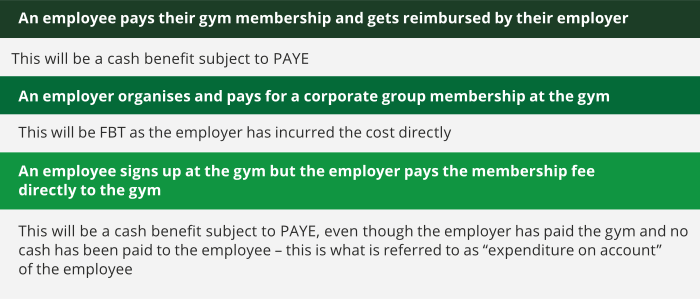
It is this final scenario that often catches employers out, and FBT instead of PAYE is paid.
The Taxation (Annual Rates for 2025–26, Compliance Simplification, and Remedial Measures) Act 2026, enacted in late March 2026, has resolved some of these issues, but certainly not all. From 1 April 2026, employers can choose to tax a reimbursement of an employee for a personal cost through the FBT regime as an unclassified benefit rather than grossing up the amount and taxing it through PAYE. This should help reduce the time and effort involved in working through the payroll implications of grossing up amounts.
That said, the changes do not resolve every particular issue. For example:
- The changes do not extend to situations where an employee incurs a personal expense and the employer agrees to pay for the cost directly – so does not apply in the third scenario above where the amount is expenditure on account of the employee. We understand the intention was there to allow this so we may see a fix in the near future.
- The changes only allows for “PAYEable” benefits to be subject to FBT and not the other way round. This may not seem significant at first glance, but it could matter where an employer would prefer to pay PAYE so as to not need to file FBT returns at all. Hopefully we will also see these FBT benefits included in any future changes.
- The change only applies to unclassified benefits so cannot apply for insurance premiums. This is another area where the distinction between PAYE and FBT can be challenging to work out as it is not always clear who has the premium liability under some group policies. We hope to see some movement to align these benefits with the new PAYE/FBT choice for unclassified benefits.
Overall, these new rules are a welcome step towards aligning PAYE and FBT outcomes, but they do not resolve all the issues many employers are facing. Until these gaps are resolved, employers will still need to pay close attention to the distinction between when PAYE and FBT apply. For now, this is progress, just not full simplification. We also recommend that employers put robust processes in place to ensure that benefits do not fall through the cracks and end up completely untaxed due to misunderstandings about which tax was to be paid.
If you have any queries about FBT and PAYE contact to your local Deloitte tax advisor for more information.
May 2026 - Tax Alerts

