


Shortfall penalties surge as Inland Revenue sharpens its compliance focus
Tax Alert - August 2026
By Angus Isherwood, Amy Sexton and Robyn Walker
Inland Revenue continues to crack the whip on non-compliant taxpayers according to the recent Inland Revenue report on the application of shortfall penalties, with the number of penalties imposed by the Inland Revenue in the 30 June 2025 year nearly double the number imposed in 2024. Deloitte has been tracking the trends over time to show the bigger picture.
The bigger picture
Shortfall penalties (SFPs) are civil penalties imposed on taxpayers who take an incorrect tax position that results in the underpayment of tax (a tax shortfall). SFPs are designed to encourage taxpayers to voluntarily comply and “get it right from the start”.
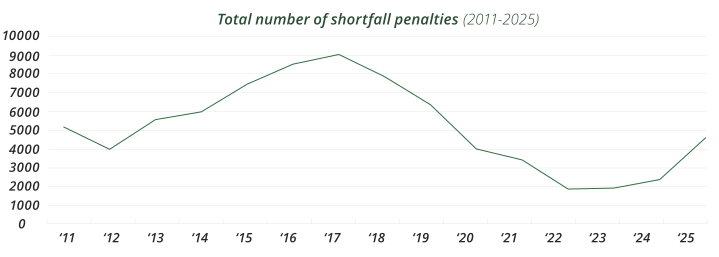
The total number of SFPs imposed in the 2025 tax year was 4,306, a marked increase from the 2,392 imposed in 2024. This reflects a return towards pre-COVID levels, although still well below the peak of more than 8,000 SFPs being imposed in each of 2016 and 2017.
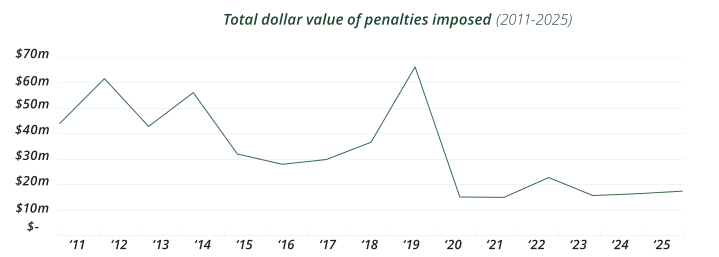
However, the total dollar value of the penalties imposed hasn’t kept up with the raw number. The 2025 income year penalties were only worth 6% more in total than in 2024. This indicates that while there have been more discrepancies identified, they involved smaller shortfall amounts of tax, on average. It’s worth noting that the total penalty statistics are net of reductions, for example, the 100% reduction for certain voluntary disclosures.
Areas of focus
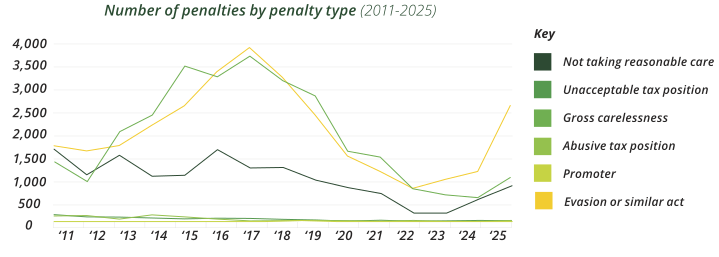
There are a range of SFPs that can be imposed depending on the nature of the taxpayer’s infringement, each coming with a prescribed percentage penalty on shortfall amount. While there were increases for different types of shortfall penalties across the board, “gross carelessness” penalties increased disproportionately compared to other SFPs (a huge 122% from 1,190 in 2024 to 2,639 in 2025).
As the name suggests, a gross carelessness penalty of 40% is imposed when the taxpayer does, or fails to do, something that has a high likelihood of creating a tax shortfall, which would be foreseeable to a reasonable person. It is more than just a simple mistake or a minor lack of reasonable care. Whether a taxpayer has been grossly careless may be influenced by their level of education and experience in tax and/or business. Examples provided in Inland Revenue guidance include situations where taxpayers have been advised to obtain tax advice for their activities but fail to do so, or where a business fails to remedy deficiencies in its internal processes after experiencing tax shortfalls in the past.
Elsewhere, penalties for evasion (deliberately evading tax obligations) 71% increase, and not taking reasonable care (carelessness in taking a tax position) 57% increase, have also seen notable increases from 2024 to 2025. The imposition of the abusive tax position penalty (taking a tax position primarily to avoid paying tax) saw a 300% increase in the number of times it was imposed between 2024 and 2025, however when looking at the dollar value of the penalty amount payable, there was a significant drop from almost $3 million in 2024 to $155,587 in 2025, indicating that while more avoidance cases were identified in 2025, the amounts in question may have been more trivial in nature.
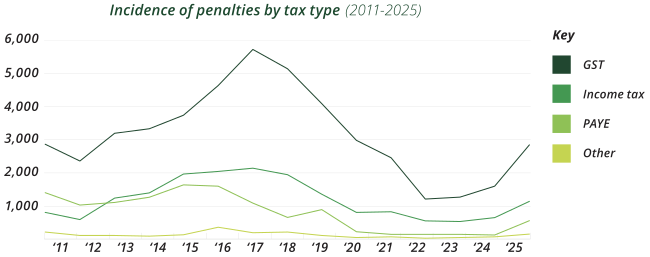
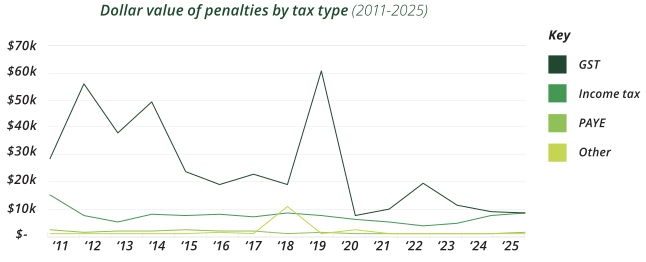
The types of tax liabilities giving rise to SFPs in 2025 have remained roughly proportional compared to 2024. Interestingly, the steady rise in SFPs being imposed for GST shortfalls has continued its steady rise which started in 2022. In fact, the value of penalties imposed (just under $8 million) on GST shortfalls in 2025 is the highest in almost 15 years and has managed to surpass income tax for the first time since we began keeping records in 2011. This may be a sign that it would be timely to conduct a review of your internal GST processes to avoid becoming one of these statistics.
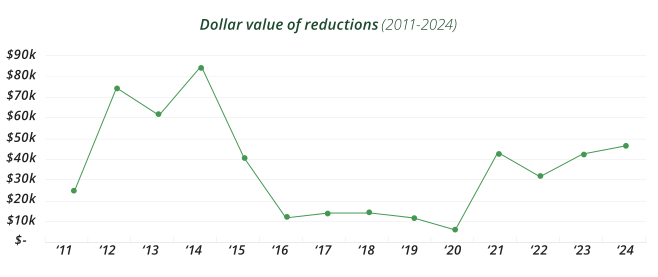
Meanwhile, reductions granted on SFPs are up a significant 16% on
2024. Inland Revenue attributes the increase mostly to taxpayers making
voluntary disclosures before being notified of an audit (discussed further
below).
Best practice to protect your business
Broadly, the report demonstrates that the Inland Revenue is taking an active approach to enforcing compliance and should serve as a reminder that mistakes can be costly. An earlier Inland Revenue report evaluating the direct effects of compliance activity highlighted that Inland Revenue is getting a consistently high return year-on-year on money spent on compliance activities, such as conducting audits and as such, we expect to see Inland Revenue further ramp up their enforcement activities.
It is crucial for businesses to have robust systems in place to address potential issues at the source. Generally, this would include measures such as comprehensive reviews throughout the tax return preparation process, clear roles and chains of accountability, and proper oversight. There are numerous steps that a business can take to manage risk. The most appropriate will depend on the nature of each individual business (see our December 2025 Tax Alert article on Tax Governance).
What should I do if I think I may be at risk?
With that in mind, not everything will go perfectly all the time, and it is inevitable that situations giving rise to a shortfall penalty will occur. If you think there is a chance that you may be liable for a shortfall penalty and want to limit your exposure, your options are simple: come clean or live with the risk of being caught. A taxpayer who discloses their tax shortfall before Inland Revenue discovers it could potentially have any penalties imposed reduced by up to 100% if the disclosure is made before an audit is commenced.
If you are seeking advice on what good tax governance looks like, are considering a participating advisor review, or you are concerned that you may have an issue and need advice on what to do, please contact your usual Deloitte advisor.
August 2026 - Tax Alerts

