
Technology is helping drive sustainability transformation
Deloitte Global’s survey of C-level executives shows how companies are using technology to track sustainability metrics, reduce risks, and support business model transformation
Despite the current economic headwinds, companies continue to invest in sustainability, with a strong emphasis on introducing technology solutions—such as artificial intelligence —for managing external reporting, improving operational efficiency, and driving innovation.
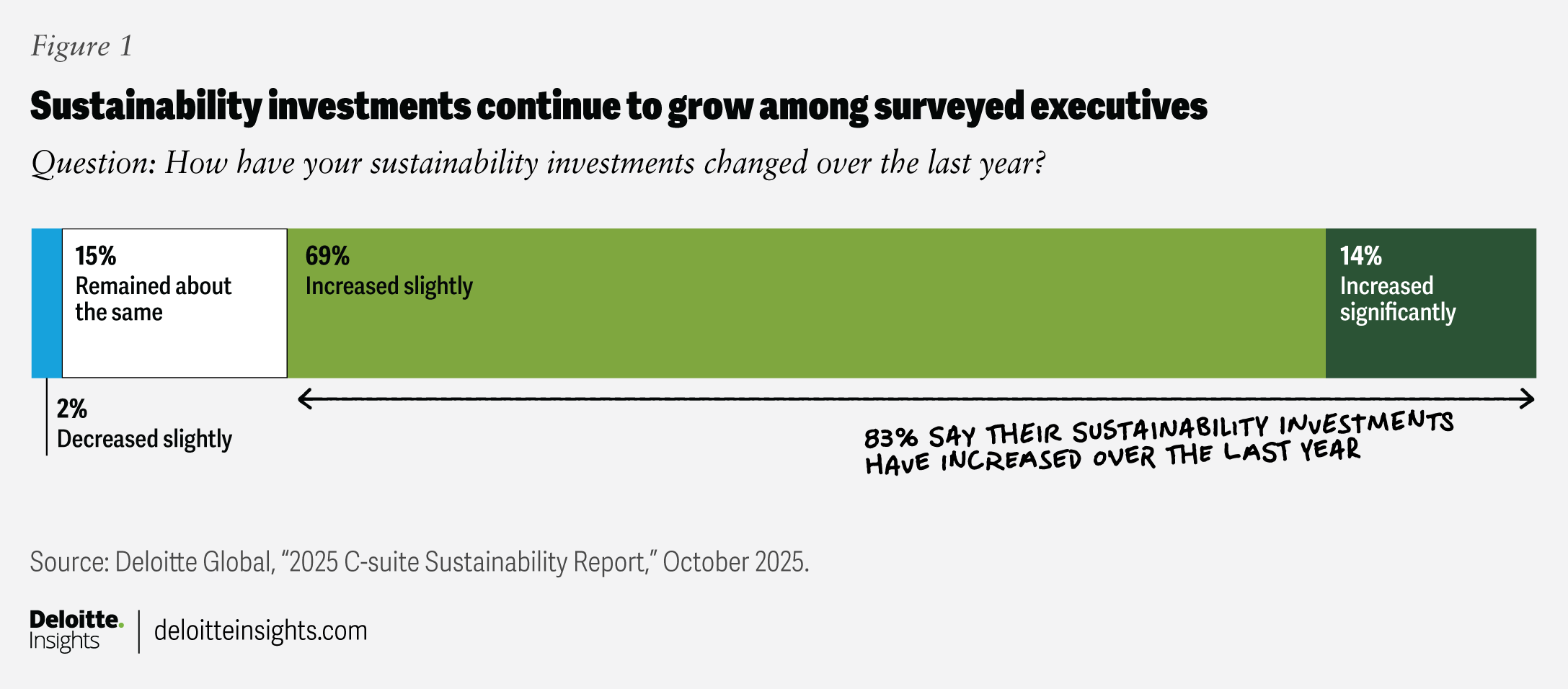
A Deloitte Global survey of more than 2,100 C-level executives across 27 countries in June 2025 shows that 83% of responding executives increased their sustainability investments over the last 12 months (figure 1).
Technology is helping shape the corporate sustainability agenda
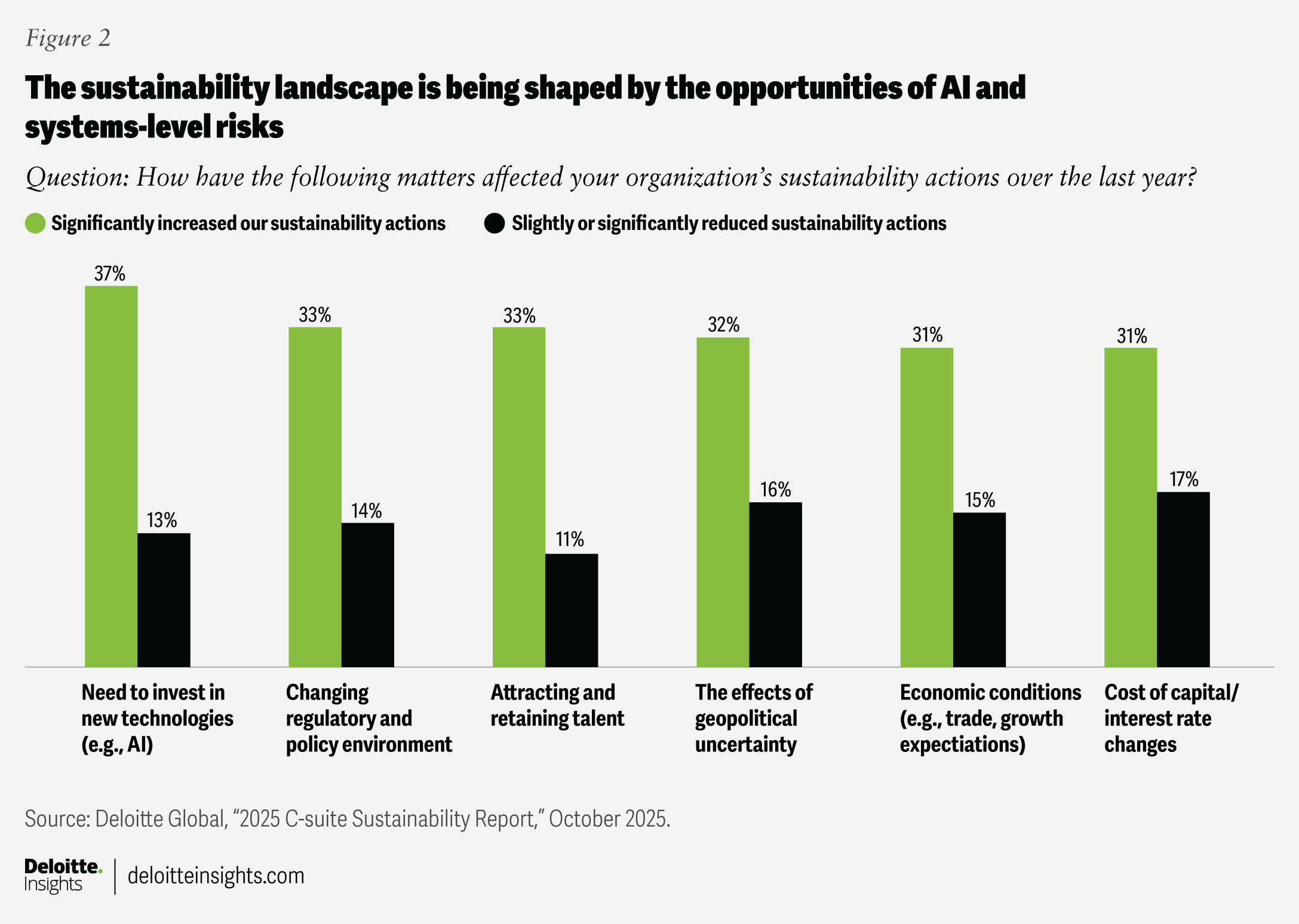
Among the respondents, the “need to invest in new technologies, such as artificial intelligence” seems to be the primary driver shaping corporate sustainability initiatives. The other key factors shaping sustainability programs seem to relate to overall market conditions, such as regulatory and policy changes, competition for talent, and geopolitical uncertainty (figure 2).
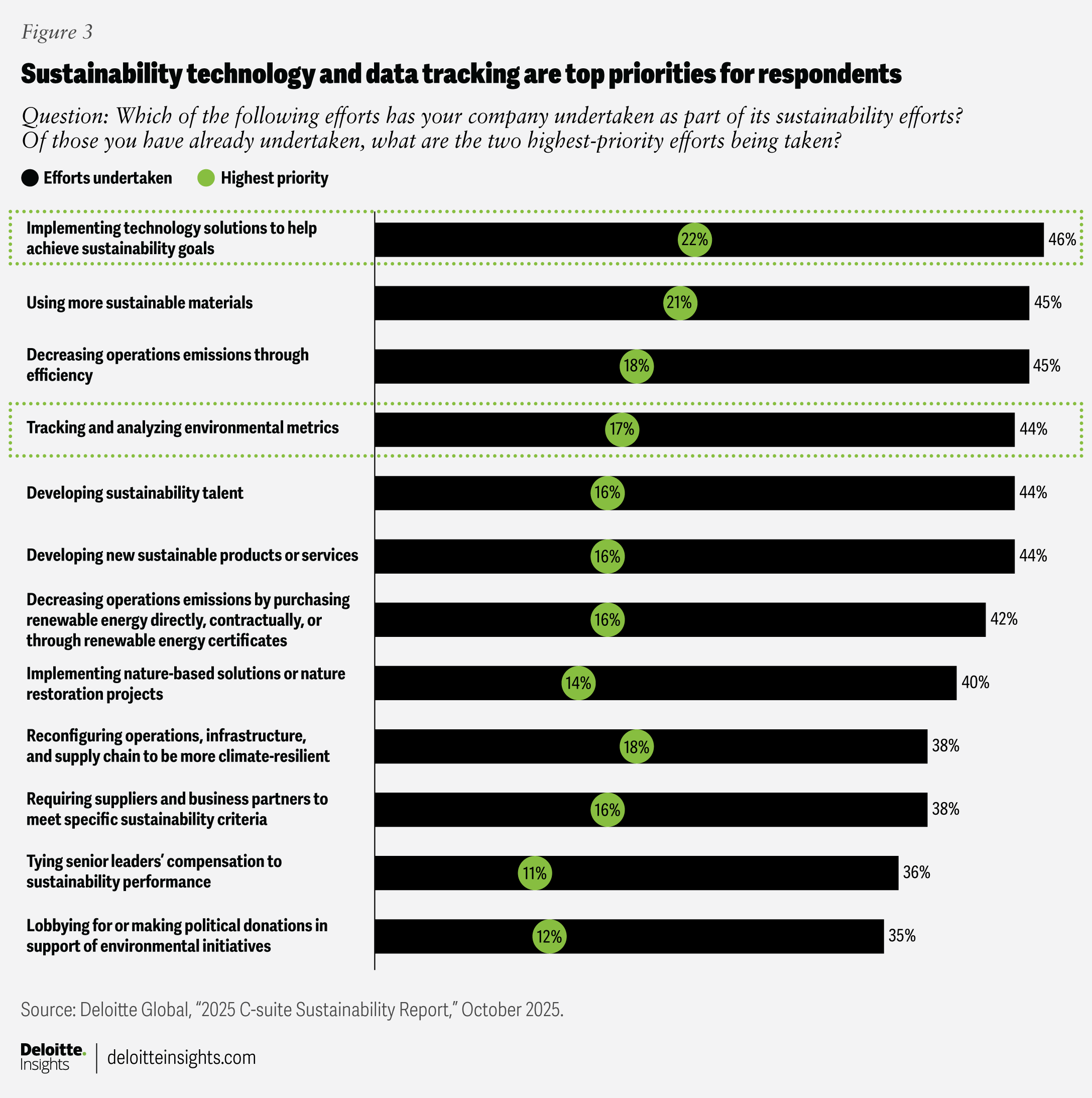
At the same time, respondents indicate that technology solutions are also playing a key role in how companies manage sustainability (figure 3).
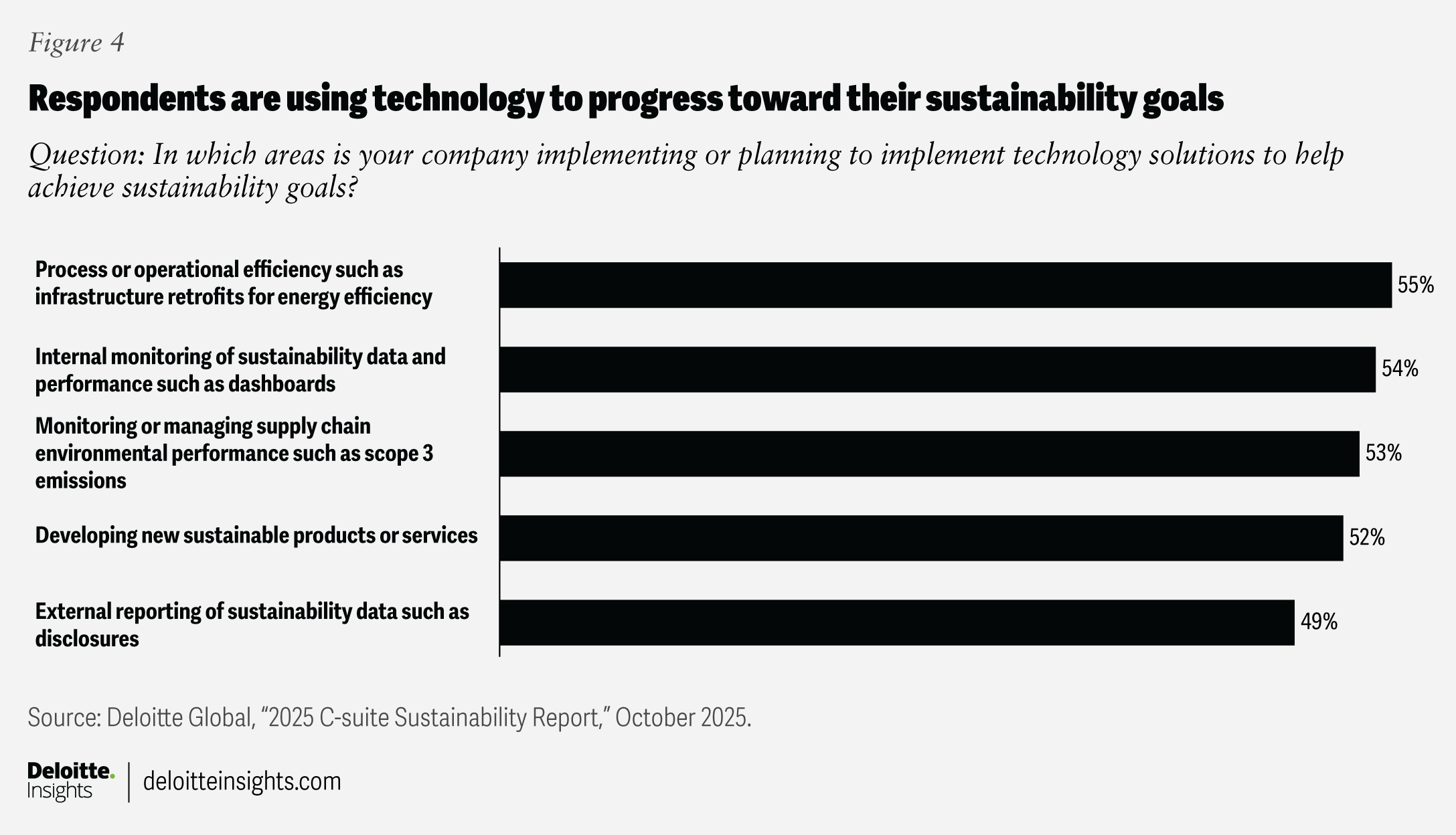
This involves the use of technology for tracking and analyzing environmental metrics internally and reporting sustainability performance externally (figure 4). The sustainability technology infrastructure likely also includes AI for optimizing operations and helping to solve systems-level challenges, such as reducing supply chain carbon emissions.
AI is being used to support sustainability transformation
The use of AI for sustainability is rapidly growing among those surveyed by Deloitte Global. Eighty-one percent of respondents report they are already using AI to further their company’s sustainability efforts, and an additional 16% say they plan to do so in the coming year.
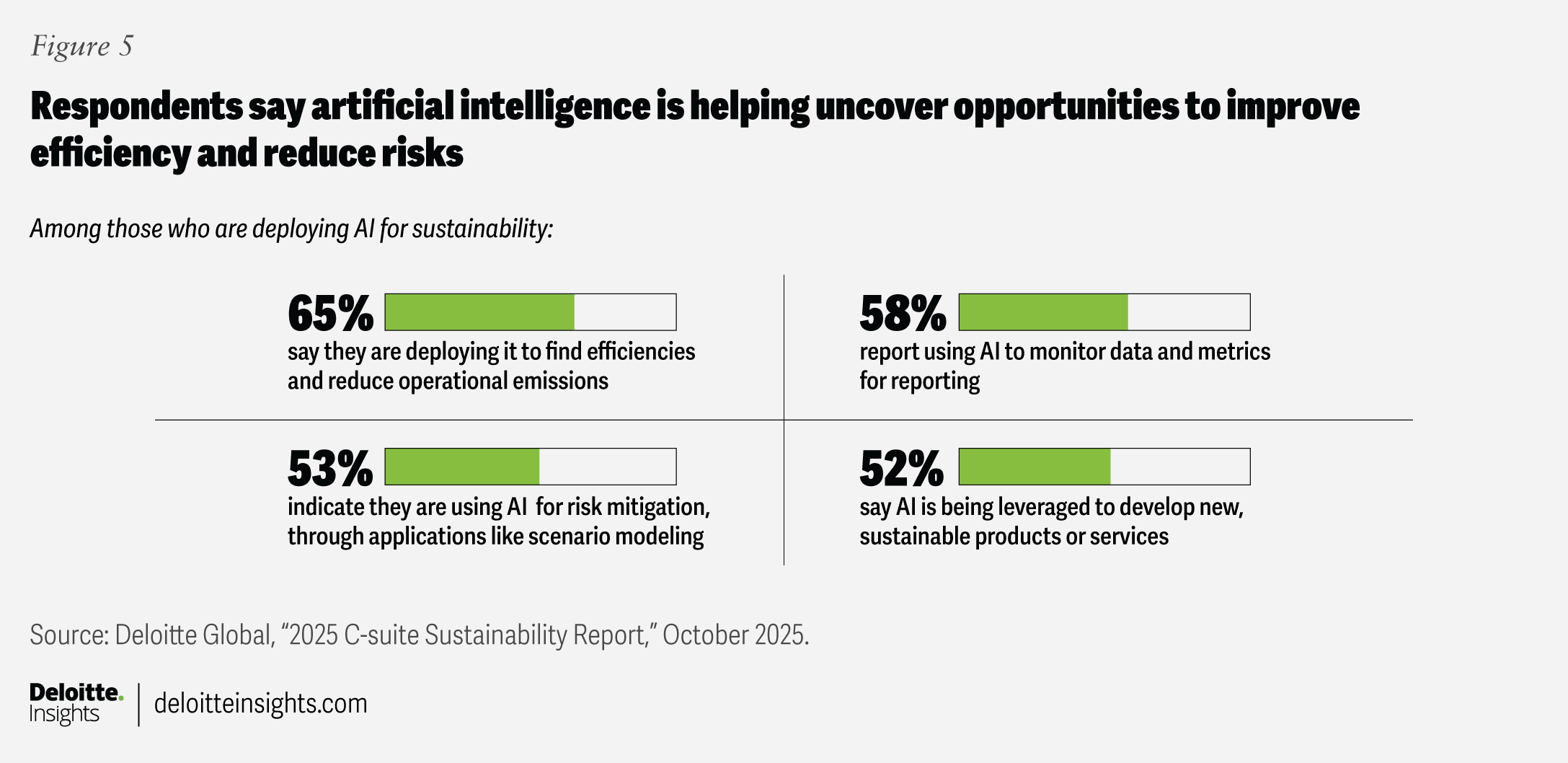
Within a company’s operations, these solutions may be deployed to support strategic decision-making such as identifying opportunities for efficiency, flagging potential risks, or developing new sustainable products (figure 5).
In the energy sector, for example, where demand is growing,1 AI can help utilities forecast short-term demand and reduce power use in real-time. It already provides energy systems with significant gains in efficiency, reliability, and sustainability, and its full potential has yet to be unlocked, according to research by the Deloitte Center for Sustainable Progress.
The key to unlocking the potential of AI for sustainability is in how it is applied—and to what purpose. Based on Deloitte Global’s research, there’s evidence that it is quickly becoming a backbone for sustainability program management, supporting business model transformation, and building resilience over time. As the operating environment for businesses continues to shift in unpredictable ways, that resilience is likely to create new sources of business value in ways that have yet to unfold.
Continue the conversation
Meet the industry leader
Michelle Varney
by
Jennifer Steinmann
Elizabeth Ryan
The authors would like to thank Derek Pankratz, Ashish Gupta, Blythe Aronowitz, Molly Piersol, and Hannah Bachman for their contributions to this report.
Editorial: Elizabeth Payes, Pubali Dey, Hannah Bachman
Design: Molly Piersol
Audience development: Atira Anderson
Cover artist: Molly Piersol