


FBT and health and safety benefits, Inland Revenue draws the line
Tax Alert - June 2026
From time to time along comes a topic that gets people interested, and the fringe benefit tax (FBT) treatment of health and safety benefits is one such topic (and so are mileage reimbursement rates). The level of interest possibly comes because the tax legislation crosses over into the domain of the Health and Safety at Work Act 2015 (HSWA). Finance and tax people know what tax rules require, but health and safety requirements are generally somebody else’s responsibility.
In October 2025 Inland Revenue released draft guidance seeking to provide clarity on when the FBT exemption for health and safety benefits would apply. The draft guidance was not without controversy, with the result being a law change to ensure that personal protective equipment (including clothing) qualifies for the exemption. Inland Revenue took on board feedback received from the consultation process and as a result the final guidance strikes a fair balance between strict interpretation of the law and practical guidance for employers.
What is the health and safety exemption from FBT?
FBT does not apply to the extent a benefit is:
- Related to an employee’s health or safety;
- Aimed at managing risks to health and safety in the workplace as provided under the HSWA; and, either
- Would be excluded by the on-premises exemption if the benefit had been provided on the employer’s premises. The on-premises exemption applies to benefits other than travel, accommodation, and clothing which are provided and used or consumed by the employee on the employer’s premises; or
- Is personal protective equipment, including clothing, that is worn to minimise risks to health and safety.
The exemption exists to exempt minor benefits rather than benefits which provide employees with a substantial private benefit.
What does the Health and Safety at Work Act 2015 require?
Under the HSWA an employer has a duty to eliminate or minimise risks to health and safety as far as is reasonably practicable.
It’s important to note that what is required under the HSWA will differ by employer, this is what makes the provision of guidance tricky. Ultimately it comes down to the judgement of each employer, rather than a hard and fast rule for all employers. For example, the provision of sunscreen to employees who are routinely outside should be exempt, but the same conclusion may not be reached by an employer who’s employees work exclusively inside an office. Both Inland Revenue and WorkSafe recommend that employers prepare and maintain health and safety documents which identify risks and what measures are being undertaken to manage that risk.
Examples
While answers may vary by employer, Inland Revenue do seek to provide some examples of where they likely see boundaries being drawn. The following table of common benefits is adapted from Table 1 in the Inland Revenue statement.
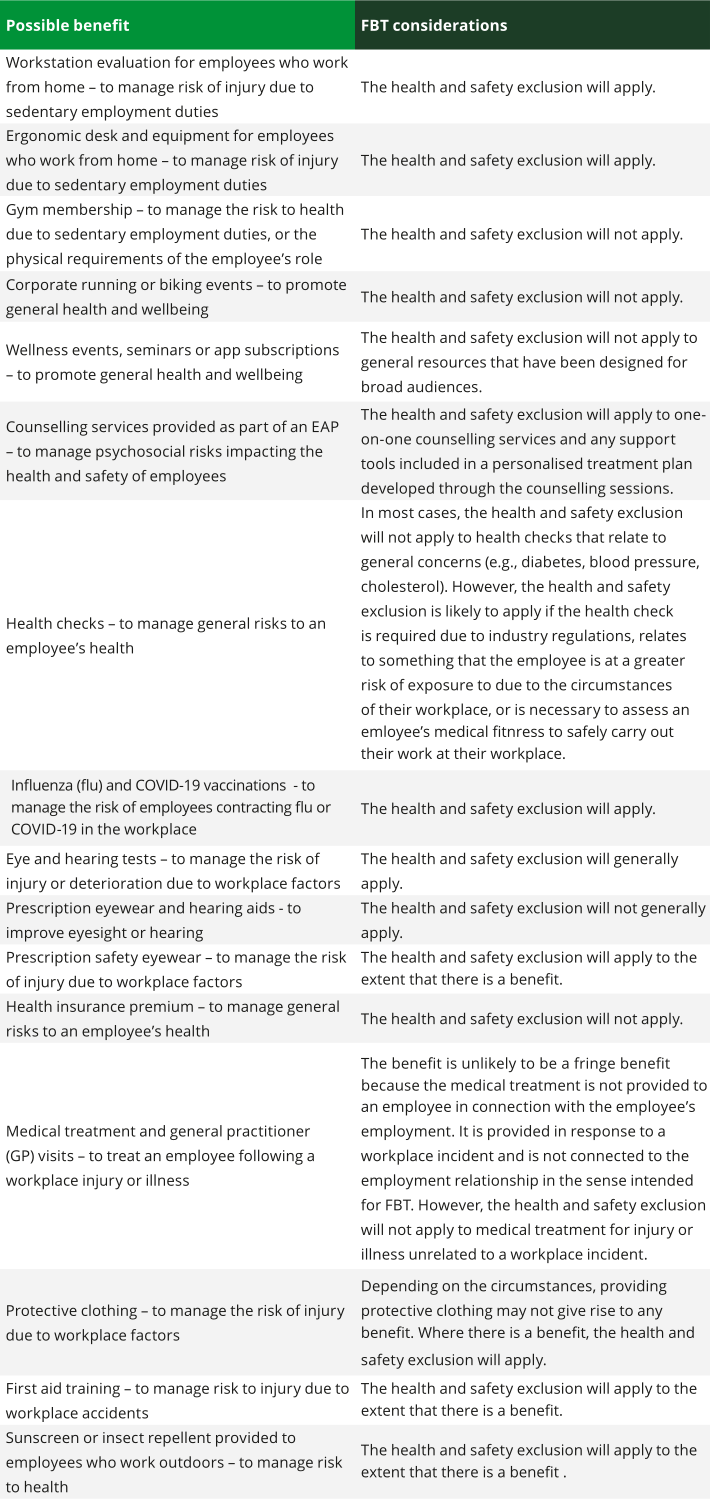
Employee Assistance Programmes
The new Inland Revenue guidance clarifies the Commissioner’s position on the FBT treatment of benefits provided under an Employee Assistance Programme (EAP) (including related online platforms or apps), taking a stricter view than what was previously expressed.
When EAP first became commonplace the services were largely limited to one-on-one counselling for work related stress. But over time the breadth of resources being made available to employees (and their family members) has expanded. The Inland Revenue’s view is that any benefits which are intended to improve a person’s general health are unlikely to qualify for the FBT exemption. The guidance cites wellness resources which are designed for a broad audience on topics such as fitness, nutrition, sleep, parenting and lifestyle habits as being unlikely to be sufficiently aimed at managing workplace hazards.
Because of this change in position, Inland Revenue have advised that the Commissioner will not apply his resources to any periods before 1 April 2026 to determine whether an employer has applied the position outlined in the finalised guidance to benefits provided as part of an EAP. We recommend that employers speak with their EAP provider to understand what benefits are being provided and how sufficient information can be provided on invoices (while maintaining employee privacy) to allow an assessment of the FBT treatment of services to be undertaken.
For more information on FBT, please contact your usual Deloitte adviser.
June 2026 – Tax Alerts
- Plenty of small, but meaningful, tax changes in Budget 2026
- Back on the road: fringe benefit tax changes coming for
motor vehicles - FBT and health and safety benefits, Inland Revenue draws the
line - Mileage matters: Inland Revenue’s 2026 rates are here
- GST at 40, Officials seek views on reform priorities
- AI in tax – revolution, risk or somewhere in between?
- Inland Revenue’s transfer pricing focus continues
- Snapshot of recent developments

