


Make AI lift the system, not just the individual
Part one of a short series on the technology operating model - and the shifts agentic delivery demands.
By Julene Marr and Everett Toews
We keep being asked the same question: what can AI do for our delivery teams, and how much faster can it help us ship value? It's a fair instinct, and the potential is real. But the better question sits underneath it: how should we design the way we operate? That means the structure of teams, the systems they own, the governance around them, and where people and agents work well together. The gains rarely come from making individuals faster one at a time. They come from the system as a whole.
The data backs the concern. Deloitte finds AI spend climbing while ROI stays elusive and 84% of companies haven't redesigned jobs to fit AI. They bolt the technology on and leave the operating model untouched - like fitting a jet engine to a bicycle. In delivery, that ‘frame’ is your technology operating model, and a faster engine simply amplifies any underlying issues.
AI is an amplifier. Point it at a healthy delivery system and it compounds the strengths but point it at a broken one and it amplifies that too, faster and more visibly. DORA's research has also found this common theme that AI lifts throughput but raises delivery instability. So, the question isn't whether to use AI, we should and the teams moving early will benefit. The real question is whether your operating model allows AI to lift the whole system or just helps you move faster in the wrong direction.
Take a customer-onboarding squad, building bespoke cloud applications connected to a legacy core they share with several other teams. They bring AI in and individuals get noticeably quicker, which is good news, until you look at the system around them.
The rollout is lumpy. Some teams are lucky – greenfield environments where AI can move quickly and the benefits show up fast. Others are deep in brownfield, unpicking years of organically grown artisan systems, where the gains are thinner and they become a choke point, reaching burnout faster. Some build on SaaS platforms, with vendors pushing to make everyone an agentic engineer, sometimes turning on tools before the guardrails are ready. In this example, the squad sits firmly in the brownfield, working on a legacy platform. And it’s not just about coding anymore - AI now reaches across the whole squad’s delivery lifecycle, from shaping work to running it.
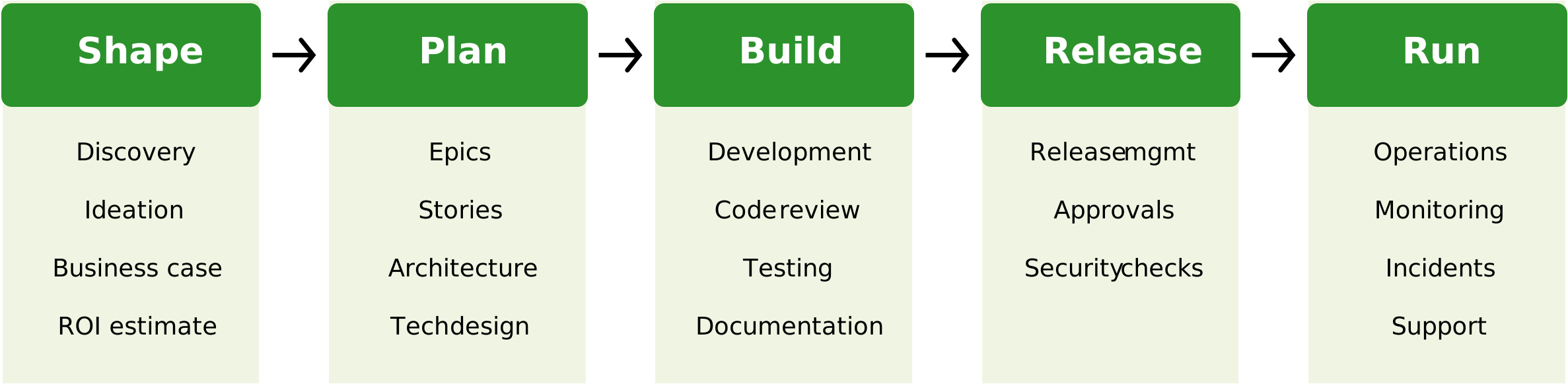
Figure 1. AI applies across the whole delivery lifecycle — not just build.
Accelerate one stage and the constraint just moves to the next. For our squad, the faster output started colliding with the other teams on the same core, with ownership never clearly drawn and governance that couldn't keep pace. That's the worst outcome: accelerated chaos. People and agents overlapping, only faster; team structure fighting the architecture it must deliver on and boundaries unclear.
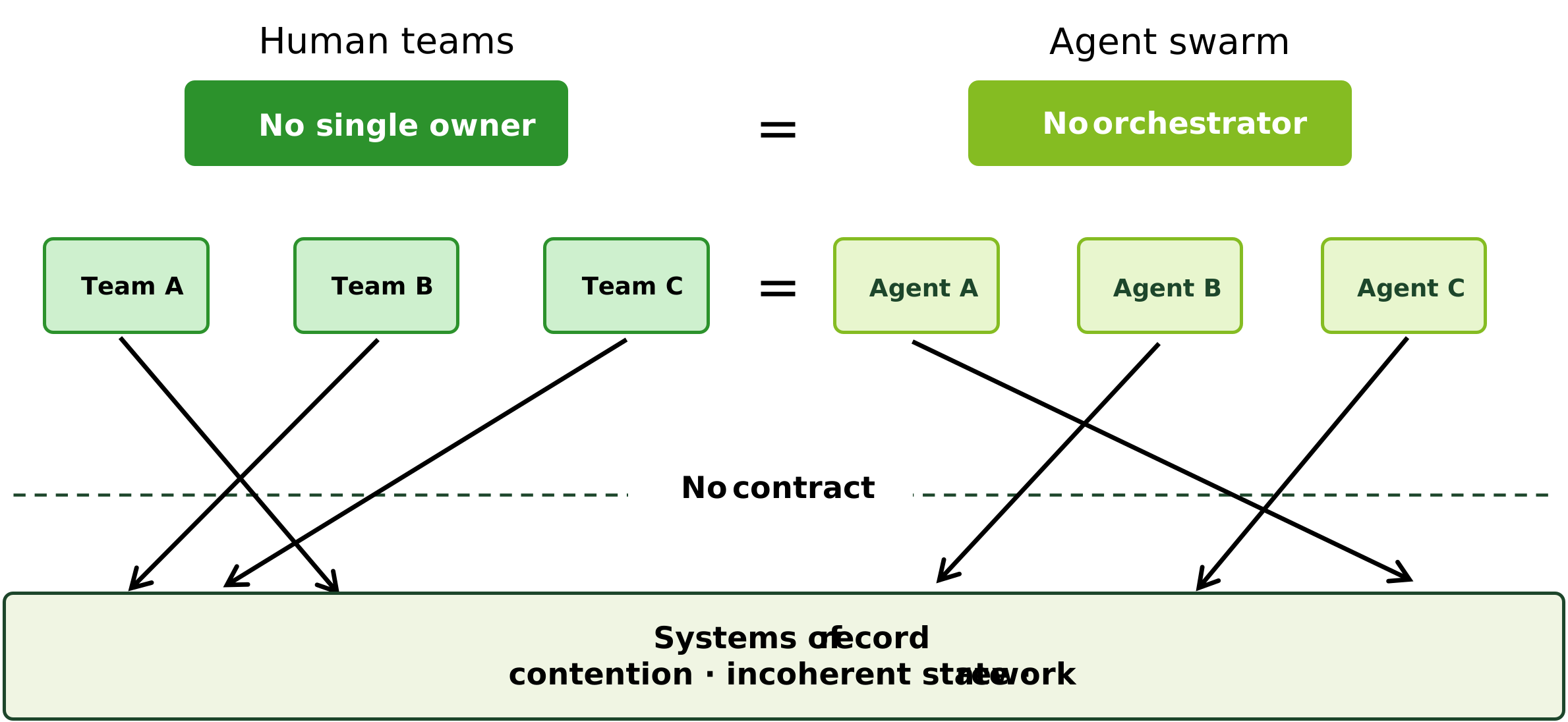
Figure 2a. The broken pattern — no owner, no contract, contention on shared systems.
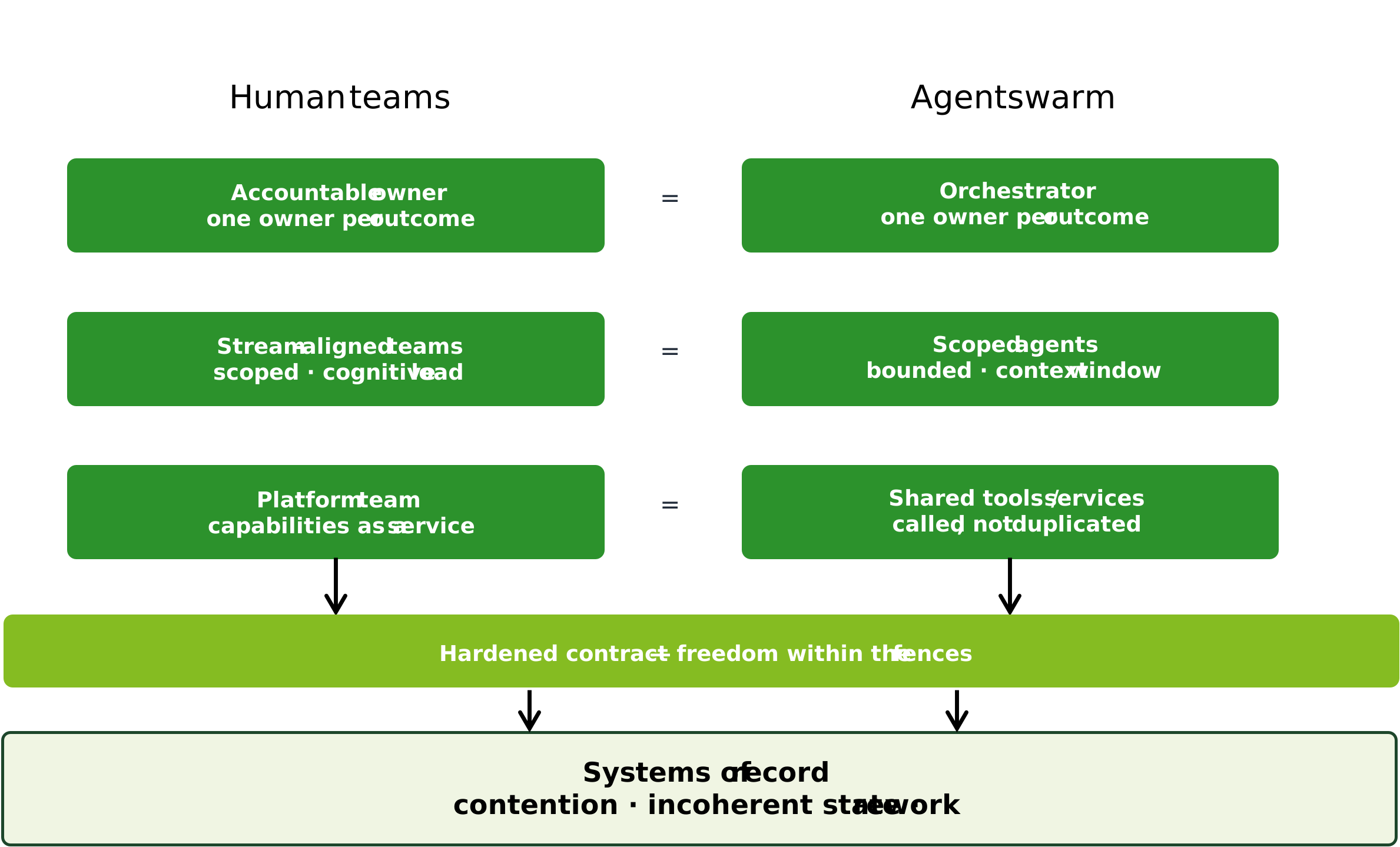
Figure 2b. The same shape done well — one owner, bounded scope, shared services, a hardened contract. Humans and agents share it.
The same shape shows up whether the actors are people or agents, because coordination complexity is a property of the problem, not of who does the work. A swarm of agents with no clear owner, all writing to the same systems, is just your hardest team-structure problem at machine speed.
The challenge is the same but takes a different shape when working on shared SaaS platforms. In SaaS environments, there are no natural seams between applications to define the contract within a single tenancy. When you add inbuilt agentic tooling – and a shared instance used by many teams and citizen builders – those boundaries don’t emerge on their own. This isn’t a new problem, we’ve solved for this before and we know the patterns to apply to align our teams, processes, people and architecture. However, now we need to be even more deliberate upfront.
The real risk is repeating the J-curve of adoption and deepening its productivity dip each time. Not because of AI itself, but because of the tendency to optimise for individuals instead of the system. If we ignore the value stream design, architecture, roles, processes and operations, we accelerate fragmentation. The outcome is not optimising for more, smaller teams. It's fewer teams with broader scope and clearer ownership, fewer boundaries to cross, less coordination, more of the system moving at once and understanding the pacing of the teams inside it. We need to consider people, agents, technology and governance as one system, designed together rather than bolted on.
For organisations who’ve done this successfully, the turning point wasn't more AI. It was redrawing team boundaries around clearer slices of the system, establishing ownership and creating clean contracts with the core platforms they depend on. Crucially, it was paired with a ruthless enterprise appetite to accelerate the wider operating system around them. Then AI productivity gains were measurable at an enterprise level, not just the individuals within it.
This is the first in a short series. Next: designing the operating model – thinking about considerations for structuring and stream-linking teams, the boundary between fast and slower clock-speed work and readying your platforms for an agentic world where people, process, agents and governance are designed together.
Sources and further reading
- DORA — State of AI-assisted Software Development (2025) and the ROI report (2026)
- Deloitte — Rethinking operating models for humans with agents (drawing on the State of AI in the Enterprise 2026 survey)
- METR — randomised studies on AI's real effect on developer productivity
- Team Topologies — team design for fast flow, and AI as infrastructure for agency
- Ethan Mollick — research-based writing on AI, work and teams (One Useful Thing), including the Cybernetic Teammate study



