
US health care can’t afford health inequities
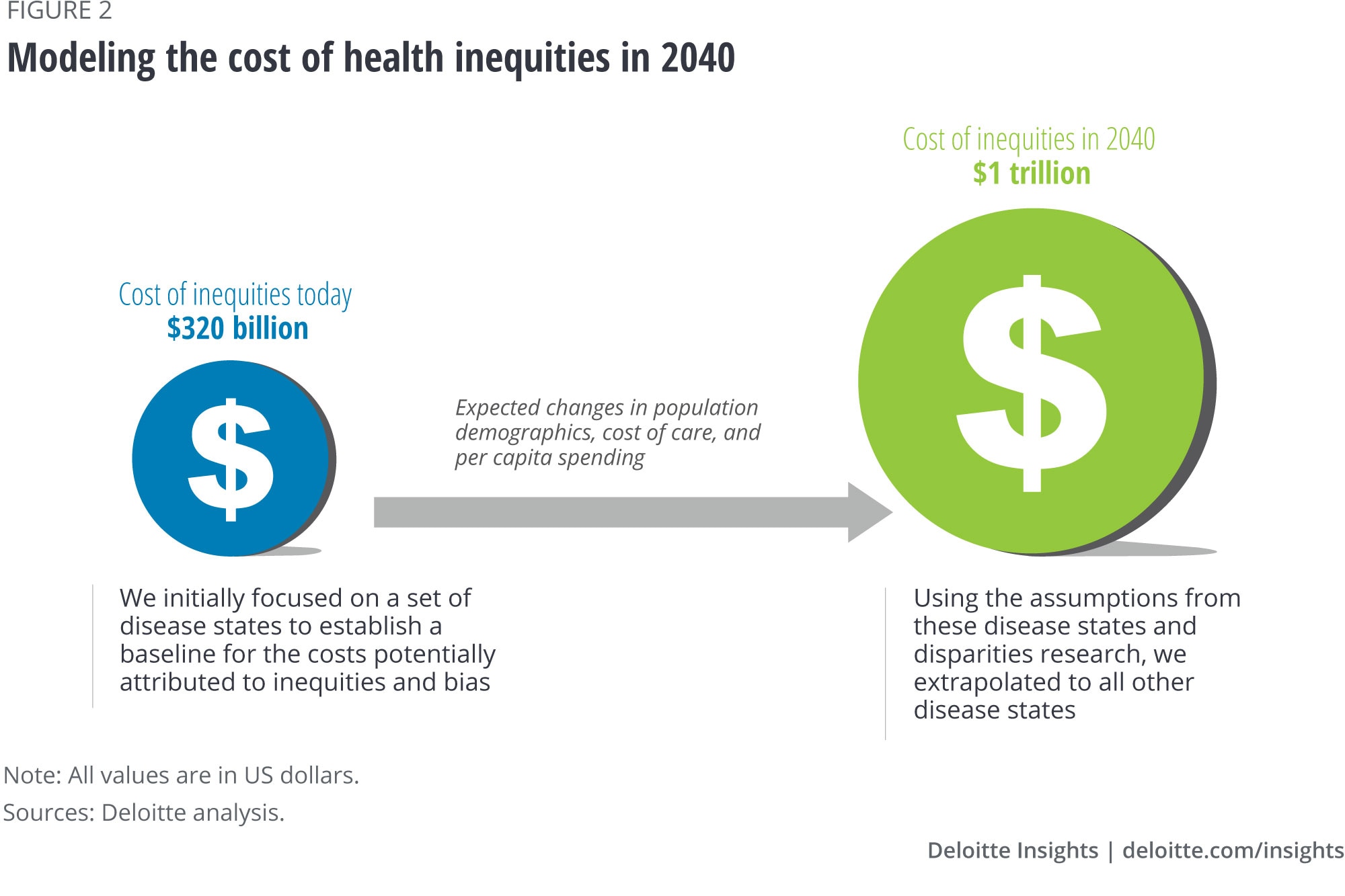
Inequities in the US health system cost approximately $320 billion today and could eclipse $1 trillion in annual spending by 2040 if left unaddressed.
Inequities across the US health system limit underserved people’s access to affordable, high-quality care, create avoidable costs and financial waste that span society, and impact every individual’s potential to achieve health and well-being. To understand how far-reaching this issue is, Deloitte’s actuarial team developed a model to quantify the link between health care spending and health care disparities related to race, socioeconomic status, and sex/gender. The team analyzed several high-cost diseases (e.g., diabetes, asthma, and cardiovascular disease), determined the proportion of spending that could be attributed to health inequities today, and trended the spending to 2040—while accounting for changes in population and per capita spending.
Our actuaries concluded that health inequities account for approximately $320 billion in annual health care spending signaling an unsustainable crisis for the industry. If unaddressed, this figure could grow to US$1 trillion or more by 2040. If the United States reaches this threshold, we could see a direct impact on affordability, quality, and access to care beyond the challenges that already exist. The projected rise in health care spending could cost the average American at least $3,000 annually, up from today’s cost of $1,000 per year. And the increase in spending likely would have a greater impact on historically underserved populations. This avoidable expense (in dollars and lives) is the result of an inequitable health system and could have major consequences for the health and well-being of all individuals. No individual, family, or health system is equipped to sustain that kind of inefficiency and its implications. We can begin to address this by designing today for an equitable future.
Deloitte’s 2021 report, Breaking the Cost Curve, described how new business models, technological breakthroughs, consumers armed with highly personalized data, and regulations that encourage change could lead to a dramatic deceleration of health care spending by the year 2040. However, health inequities are a major barrier to this vision. In fact, the current trajectory of health care spending is compounded by health inequities (figure 1). As our vision for the Future of Health™ continues to unfold, we’re watching health care spending accelerate and inequities in health and outcomes become more prevalent across race, sex/gender, age, location, and disability status.
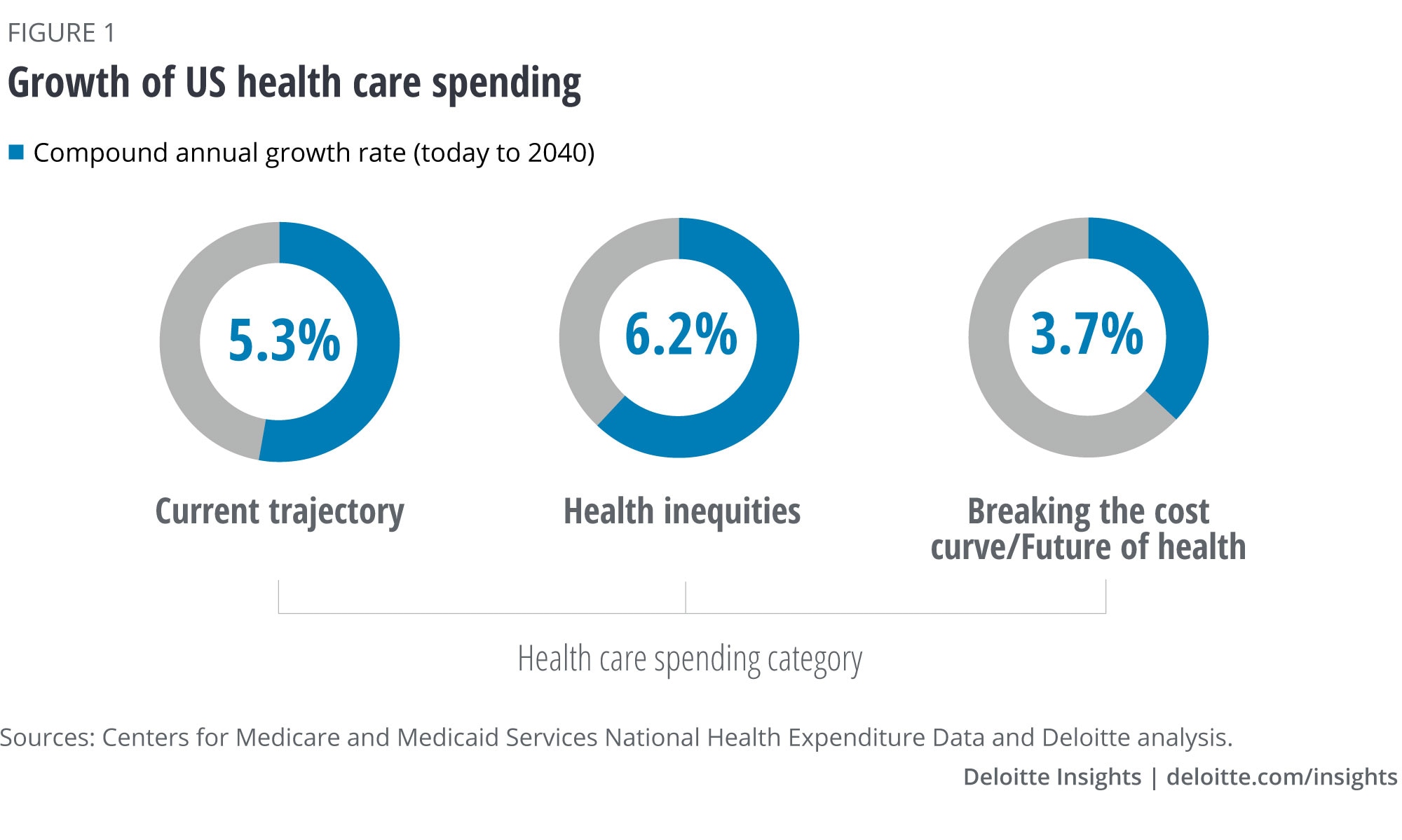
Every organization should plan to address health inequities by designing and enabling the future of health care around people and equity. Health care incumbents, industry disruptors, community organizations, and government agencies each have a role to play in removing the barriers that lead to health inequities and turning unaffordable costs into opportunities. This should include: intentionality in design, rebuilding trust, partnerships, measurement, and addressing individual and community level inequities.
Addressing health inequities can help business leaders, boards of directors, and companies improve health outcomes and reduce health care spending by addressing the drivers of health (DOH), removing biases and inefficiencies in care, and enabling data and technology to help monitor, diagnose, and deliver care. In turn, this approach can have a positive impact on health outcomes, patient experience, quality of life, and the greater health and well-being of all individuals.
Health inequities stand in the way of affordability, health, and well-being
The health care sector is under pressure to reduce health care spending while increasing quality of care. Persistent health inequities have a substantial impact on health outcomes and spending. However, the industry hasn’t found a way to address them within this context. Quantifiable differences in health-related outcomes have been documented across many dimensions, including race, gender, age, location, disability status, and sexual orientation. Health inequities can be seen across a wide range of conditions including, hypertension, asthma, diabetes, cancer, mental health, and heart disease. Some communities have lower life expectancies and higher instances of certain diseases simply due to their zip codes. For instance, public health researchers recently drew attention to two neighborhoods in Kansas City—Blue Hills and Armour Hills. In Blue Hills, people die an average of 14 years earlier due to social, economic, and environmental disparities compared to people living in Armour Hills.1
In addition to the negative impact on outcomes and spending within the health system, health disparities can have broader consequences for the economy and quality of life. Health disparities account for roughly $42 billion in lost productivity per year, not including additional economic losses due to premature deaths.2 Health disparities also can have devastating consequences on the quality and value of life for the people, families, and communities most impacted.
“The underlying problem of health care spending is health inequity.”
With more attention on the US health system’s inequities, communities, company executives and board members, regulators, investors, employees, and the general public likely will continue pushing the industry to address health equity. Darrell Gray II, MD, chief health equity officer at Elevance Health, noted that there is “a lot more dialogue on health equity in the industry today. [Which stakeholders] will collaborate to make a meaningful impact towards achieving health equity is a key question. Collaboration and community engagement are instrumental to our ‘Health equity by design’ approach at Elevance Health.”
Achieving health equity could have greater implications beyond improving care for historically underserved groups: Inequities impact everyone, privileged and underprivileged alike. In fact, as Pierre Theodore, MD, vice president health disparities, Johnson & Johnson Global Public Health, explained, “When you address inequities for one population, you raise health for all populations.” In addition to the societal benefits of addressing health disparities, prioritizing health equity could help stakeholders achieve their goals by reducing unnecessary health care spending while improving health outcomes and patient experience. Also, the benefits of addressing health inequities extend beyond reducing unnecessary spending. Making health equitable could extend life expectancies, improve the quality of life, and enable the ability to thrive as individuals, communities, and society. “We are focusing on cost savings. But what's also valuable is the quality of life that you gain,” said Anupam Jena, MD, PhD, professor of health care policy at Harvard University.
Methodology: Measuring the potential cost of health inequity today and in 2040
Unnecessary health care spending due to structural inequities and biases is well documented. Research has shown that health care spending tends to be higher among certain populations due to delayed care, access challenges, missed diagnoses, and limited access to the latest scientific advances as well as proper preventive services.5 A 2011 study, “Estimating the economic burden of racial health inequalities in the United States,” calculated both the direct and indirect costs of racial and ethnic disparities in health care.6 This study has been a foundation for the industry and was useful in quantifying the link between health care spending and health inequities in our modeling.
What are the health care costs of health inequity today and how might those costs grow if they aren’t addressed? Deloitte’s health actuaries projected the trajectory of unnecessary health care spending among populations that typically experience socioeconomic, racial, and sex/gender inequities. While there are many other types of inequities, such as age and ability, this analysis focused on those that are most frequently interconnected and documented. The model also factored in populations that might face multiple biases.
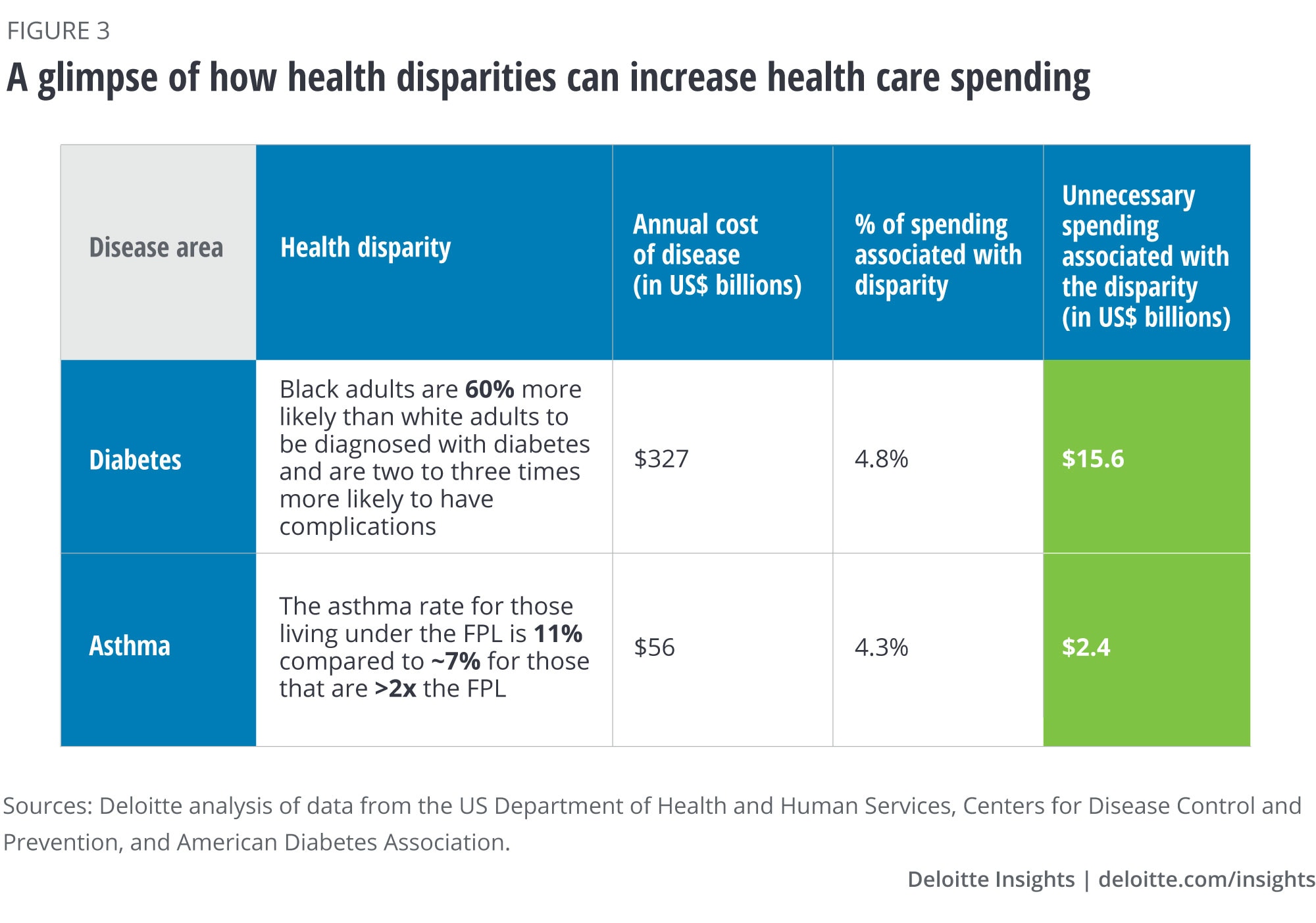
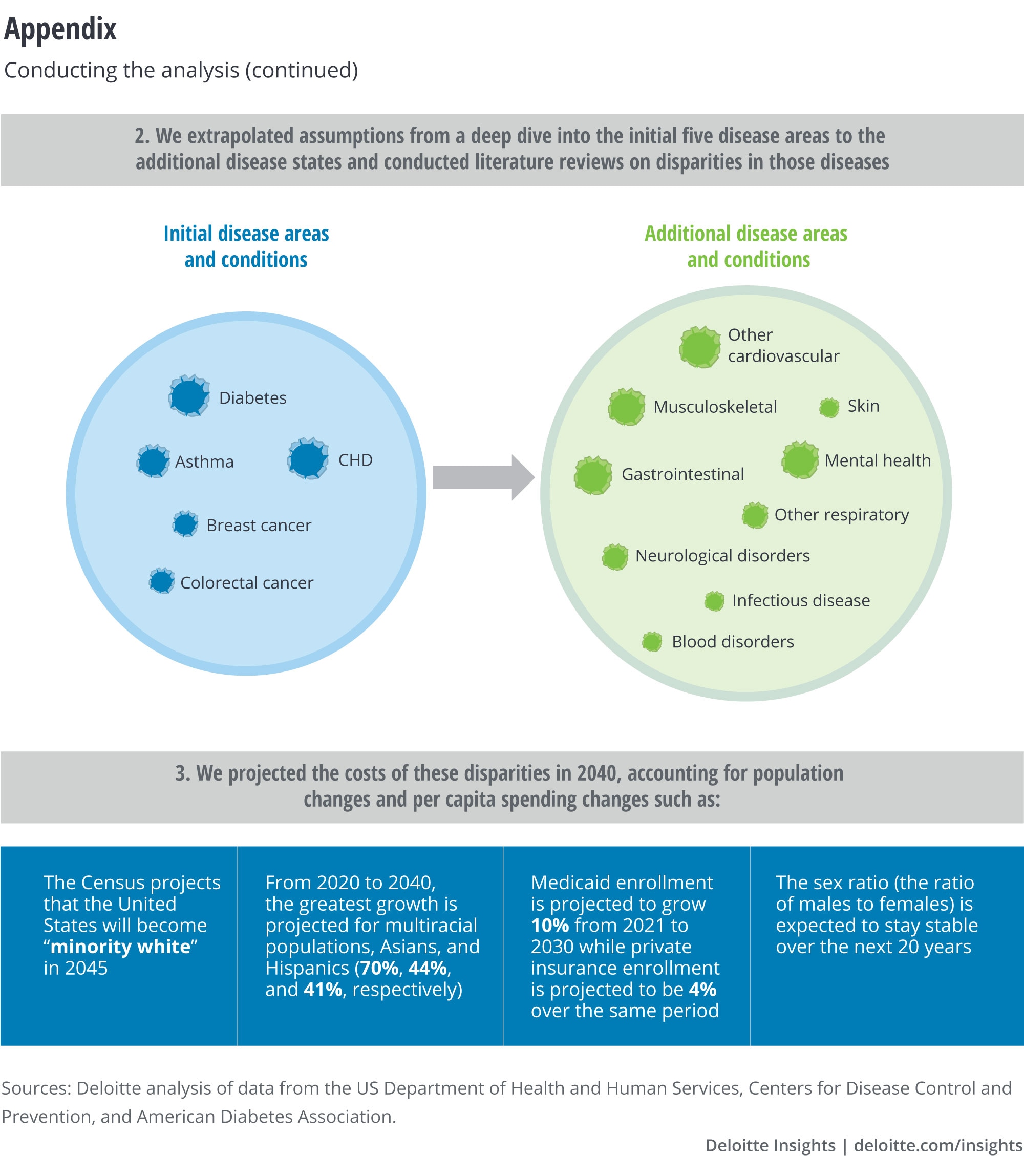
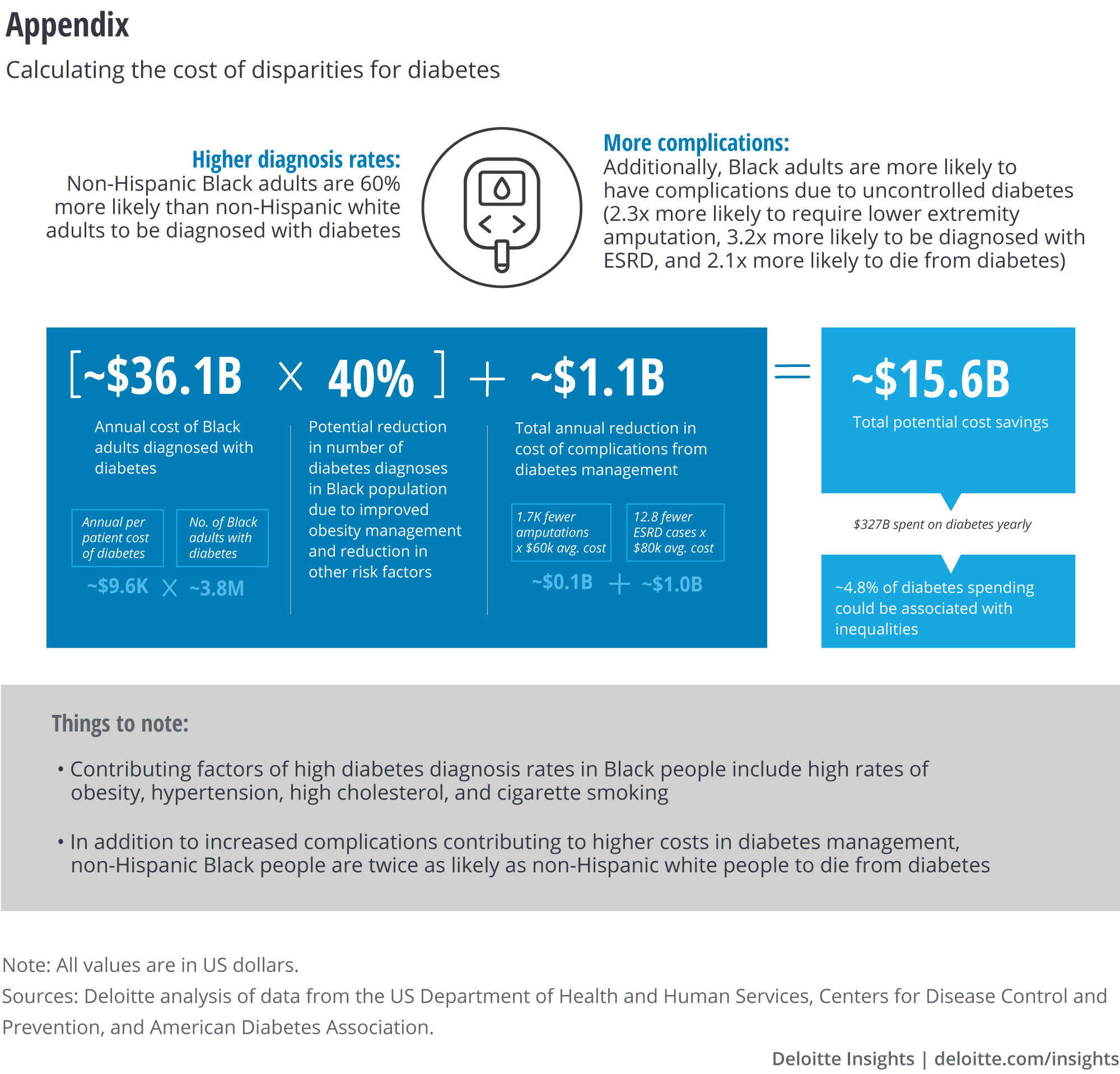
Deloitte’s model looked at several high-cost diseases such as breast cancer, diabetes, colorectal cancer, asthma, and cardiovascular disease. For these diseases, our actuaries determined the proportion of spending that could be attributed to health inequities. For instance, Black adults are 60% more likely than white adults to be diagnosed with diabetes and two to three times more likely to have complications, according to research.7 Racial inequity often contributes to a late diagnosis and comorbidities. Our analysis determined that 4.8% of spending on diabetes is associated with health care disparities, which results in $15 billion in unnecessary spending. Similarly, health care spending on asthma is about $56 billion a year.8 About 4.3% of those costs are related to income disparities, which can result in late diagnoses and challenges in accessing appropriate care and medications (figure 3).
This bottom-up approach was used to estimate the percentage of spending due to inequities for various disease states. Aggregated and projected for our analysis, the cost of health inequities today is approximately $320 billion and could top $1 trillion by 2040. (Refer to the “Appendix” for the detailed methodology).
The path to a truly equitable health care system
If left unaddressed, health inequities and the additional $1 trillion in overall spending can have profound implications for people, organizations, and the world. Health care costs likely will rise to an unsustainable level, resulting in unaffordable bills and declining health and productivity for the population. Health care stakeholders should consider acting now to mitigate these future consequences because we can’t afford to allow health inequities to go unaddressed (see sidebar, “A lot is at stake, but who are the stakeholders?” for more information).
What will it take to eliminate health disparities and achieve a better future of health? As companies are developing products and services, investing in their communities, partnering with others, and improving the diversity, equity, and inclusion of their workforce, they should consider designing for equitable health. This can help ensure the health and well-being of all individuals and provide access to affordable, high-quality care in all communities. Here are five underlying mechanisms that should be considered:
1. Be intentional: Stakeholders across the health care ecosystem should approach health care’s future with intentionality and engage in continuous thinking on health equity. Infusing equity-centered thinking into business choices now is something that should be prioritized to build wellness-focused, outcomes-driven prevention and delivery systems that seek to serve everyone, regardless of race, ethnicity, and socio-economic status. As Pierre Theodore, MD, vice president health disparities, Johnson & Johnson Global Public Health, told us, “Interventions to offset disparities cannot be imposed on a population. Interventions should instead be designed collaboratively in direct consultation with representatives of the population experiencing health inequity.”
2. Form cross-sector partnerships: The current set of health care stakeholders can’t solve for this on their own because the magnitude and complexity of the problem is too significant. In fact, as David Meltzer, professor, and director of The Center for Health and The Social Sciences, University of Chicago, explained, “Health care as only a piece of a much bigger problem is important in thinking about what this transformation looks like.” To truly enable health equity, organizations should form partnerships across the industry. It likely will require current actors, new actors, and the government to collectively make a change. Health care organizations should collaborate with agencies, organizations, and coalitions that work on initiatives to address the root causes of health inequities. As Samantha Artiga, director, racial equity and health policy program, Kaiser Family Foundation, recommended, “You need to look outside of health care for the mechanisms. Understanding the drivers outside of health care and working with the partners and sectors outside health care, will be key.”
3. Measure progress: Accessible, platform-agnostic, and inclusive data and technology infrastructure paired with representative data collection, key performance indicators, and ongoing evaluation likely will be necessary to define and track progress in tackling health equity. Adaeze Enekwechi, PhD, operating partner, health care, Welsh, Carson, Anderson & Stowe, noted that, “Currently we have care gaps for underserved populations, and yet health care data is in pockets across the system. This creates significant data and information challenges. This is important to call out (on what we need to address) for equitable outcomes.”
4. Address individual and community-level barriers: Up to 80% of health outcomes are affected by social, economic, and environmental factors. These DOH (also known as social determinants of health) include physical environment, food, infrastructure, economy, wealth, employment, education, social connections, and safety.18 There is extensive evidence that these nonmedical factors can have a negative impact on health. Moreover, barriers, such as health and digital literacy and care infrastructure, can hinder access to care. Addressing the DOH, removing barriers to access, and creating healthy environments will likely require investments in data, technology, and public health infrastructure at the federal, state, and local level. To advance health equity, “payers and providers have a significant role to play. But we can’t do this alone. There is a dire need for cross-industry collaboration and community engagement, optimization of the public health infrastructure, and investment in data and technology interoperability and standards,” said Darrell Gray II, MD, chief health equity officer, Elevance Health.
5. Build trust: Trust across the system, from individual practitioners to institutions and in data and technology, is crucial. It will be important to rebuild trust with people and communities intentionally by understanding needs, improving experiences, and building a more diverse and inclusive workforce. As Lovisa Gustafsson, vice president for controlling health care costs, The Commonwealth Fund, shared, “How do you build trust when there have been centuries of mistrust, for good reason. Trying to find a way to make everyone move in the same direction through trust (will be an important mechanism).”
There’s no question that we all can play a role in achieving greater health equity. After all, it’s a societal issue that could improve quality of life and help individuals and communities thrive. Addressing health equity not only can help improve health outcomes for the groups most impacted by health care disparities but can help ensure better well-being and care for all people. It can also position organizations to reduce health care spending, improve quality and outcomes, and enable health and wellness. As we move toward the future of health that we envision, stakeholders face a choice between embracing the opportunity to design equitable health for all or letting history dictate the future. We should make the choice now while it’s still ours to make.
Appendix: Research methodology
We undertook a multipronged research approach to quantify and vet the costs of health inequities. The key stages included:
Defining the scope
At Deloitte, we believe health inequities can be the result of multiple biases. Based on a literature review and the input of credible sources to make meaningful assumptions, our research focuses on three significant forms of biases: socioeconomic (including class), racial (including culture and language), and gender. Our analysis didn’t study biases related to age, ability, and sexuality due to paucity of data and credible sources.
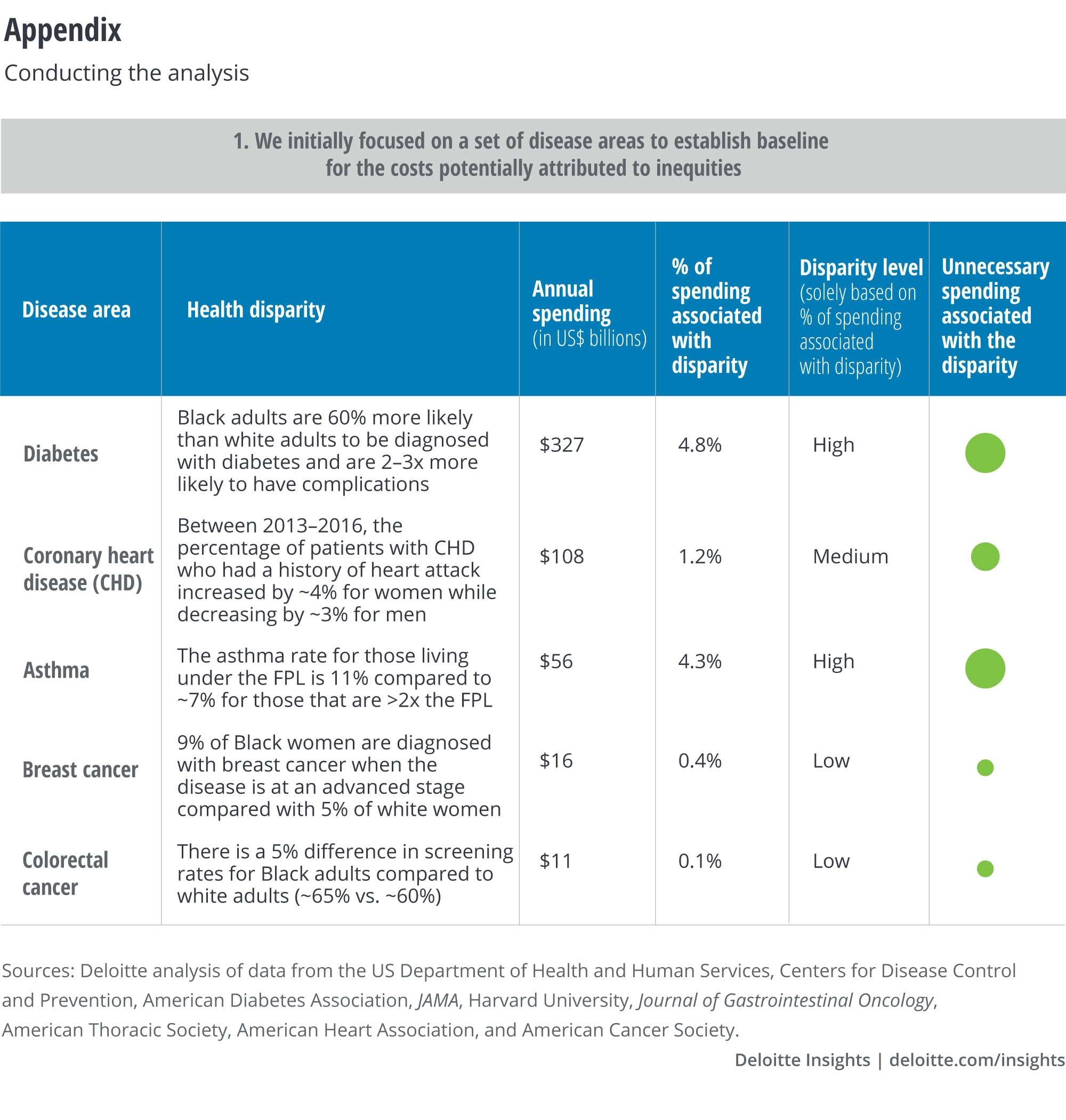
Conducting the analysis
To arrive at the costs of health inequities—both today and in 2040—we took a three-step approach:
Vetting the analysis with external experts
We conducted multiple small group discussions and individual interviews to review our analysis with external subject matter experts. We consulted with a group of seven academics, economists, health equity experts, and executives from health care and life sciences organizations. The panelists and interviewees reacted to the analysis estimates and added their perspectives on how we can achieve greater health equity. The experts include:
Samantha Artiga, director, racial equity and health policy program, Kaiser Family Foundation
Adaeze Enekwechi, PhD, MPP, operating partner, healthcare, Welsh, Carson, Anderson & Stowe
Darrell M. Gray, II, MD, MPH, FACG, chief health equity officer, Elevance Health.
Lovisa Gustafsson, vice president, controlling health care costs, The Commonwealth Fund
Anupam B. Jena, MD, PhD, Ruth L. Newhouse professor of health care policy, department of health care policy, Harvard Medical School
David Meltzer, MD, PhD, director, The Center for Health and The Social Sciences, University of Chicago
Pierre R. Theodore, MD, vice president health disparities, Johnson & Johnson Global Public Health
The executives’ participation in this article are solely for educational purposes based on their knowledge of the subject and the views expressed by them are solely their own. This article should not be deemed or construed to be for the purpose of soliciting business for any of the companies mentioned, nor does Deloitte advocate or endorse the services or products provided by these companies.
This publication contains general information and predictions only and Deloitte is not, by means of this publication, rendering accounting, business, financial, investment, legal, tax, or other professional advice or services. This publication is not a substitute for such professional advice or services, nor should it be used as a basis for any decision or action that may affect your business. Before making any decision or taking any action that may affect your business, you should consult a qualified professional adviser. Deloitte shall not be responsible for any loss sustained by any person who relies on this publication.
BY
Andrew Davis
Asif Dhar
Neal Batra
Dr. Jay Bhatt
Wendy Gerhardt
Brian Rush
Yale Yoon supported the development of the concept, storyline, and implications.
Deloitte’s health actuarial team—Brian Rush, Yale Yoon, Maria Fendrich, Steph Falk, Stefani Klapperich, Sulekha Mandal, Radhika Gupta, Sam Muthoka, and Sarah Gorzek—conducted the literature review, analysis, and modeling.
Peggah Khorrami and Maulesh Shukla assisted in interpreting the data, conducting the external expert sessions, and writing sections of the report.
The authors would like to thank Asif Dhar, Elizabeth Baca, Nicole Kelm, Matt Piltch, and Megan Woody for their expertise and help in shaping this research.
The authors would also like to thank Laura DeSimio, Rebecca Knutsen, Zion Bereket, and the many others who contributed to the success of this project.
This study would not have been possible without our research participants who graciously agreed to participate in the interviews. They were generous with their time and insights.
Cover image by: Natalie Pfaff and Kevin Weier