


NIS2 transposed into Luxembourgish law: What organizations need to know
11 May 2026
Regulatory News Alert
At a glance
On 5 May 2026, Luxembourg formally transposed into its national law the NIS2 Directive (Directive [EU] 2022/2555, following the originally implementation deadline of 17 October 2024. This new legislation, Loi du 5 mai 2026 concernant des mesures destinées à assurer un niveau élevé de cybersécurité, entered into force on 10 May 2026.
NIS2 represents a key development in the EU’s cybersecurity framework, substantially expanding the range of entities subject to cybersecurity obligations and imposing enhanced requirements on both essential and important entities. The directive targets sectors considered particularly exposed to cyber threats, including public administration, transport, and digital infrastructure and services, as highlighted in the ENISA 2025 Threat Landscape Report.
In Luxembourg, the new regime is expected to create significant compliance challenges, especially for an economic landscape largely composed of small and medium-sized businesses (SMBs) alongside multinational corporations.
Why NIS2 matters
NIS2 aims to strengthen cybersecurity and resilience across critical sectors in Europe, particularly against state-sponsored attacks, supply chain breaches, and increasingly sophisticated cyberthreats. Articles 20, 21, and 23 introduce key requirements relating to governance, cybersecurity risk management, and incident reporting that organizations should not overlook.
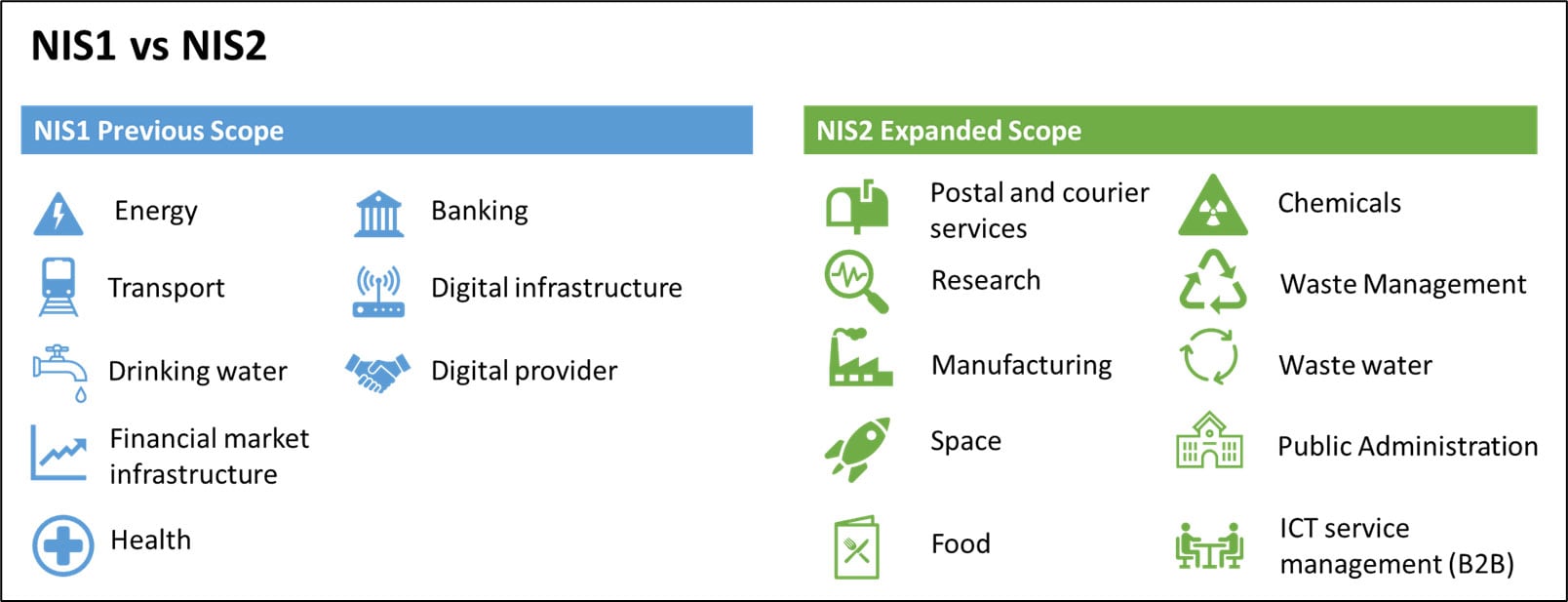
Replacing NIS1, the Directive significantly broadens its scope to cover additional sectors and distinguishes between essential and important entities. It also establishes stricter compliance requirements, harmonized reporting obligations across the EU, and administrative fines of up to €10 million or 2% of global annual turnover.
Key elements of NIS2: Focus on articles 20, 21, and 23
1. Article 20 (Governance), transposed under Article 13 of the Luxembourg law: Management bodies are required to approve and oversee cybersecurity risk measures and may be held directly liable for non-compliance. Cybersecurity training is mandatory for management and recommended for staff.
2. Article 21 (Cybersecurity risk management), transposed under Article 12 of the Luxembourg law: Entities must implement proportionate technical and organizational measures, including risk analysis, incident handling, supply chain security, secure development practices, asset management, multi-factor authentication (MFA), and encryption. The framework adopts an “all-hazards” approach covering both digital and physical environments.
3. Article 23 (Reporting obligations), transposed under Article 14 of the Luxembourg law: Entities must notify authorities of significant incidents within 24 hours through an early warning notification, followed by a detailed update within 72 hours and a final report within one month. Entities must also promptly inform service recipients of significant cyber threats where relevant.
Adaptations of the Luxembourg transposition
Luxembourg’s implementation of NIS2 closely follows the original directive while introducing certain national adjustments aimed at addressing local policy and operational considerations.
Notably, the Luxembourg law supplements Article 21 of the directive in two respects:
4. Essential and important entities must use an appropriate risk evaluation framework designed by the competent authority, which may require the use of a specific risk analysis tool (e.g., SERIMA).
5. Essential entities must implement the security measures required under the first two paragraphs of Article 21 and notify the competent authority accordingly. Further details on the modalities, notification timeline, and format are expected to be clarified by the competent authority.
Challenges ahead for Luxembourg entities
Luxembourg’s economy, particularly its financial sector, data centers, and SMEs, will be significantly impacted by NIS2, with many organizations falling within scope for the first time. This creates major compliance challenges, especially for businesses with limited cybersecurity maturity, resources, or prior regulatory exposure.
Organizations will need to quickly assess the applicability of NIS2, including in cross-border contexts, while strengthening governance, elevating cybersecurity oversight to management level, and enhancing third-party and supply chain risk management.
Main challenges expected:
1. Low cybersecurity maturity: Many newly regulated organizations, such as smaller manufacturers, logistics firms, or medium-sized municipal bodies, may lack established cybersecurity governance, internal expertise, and security awareness, making compliance particularly challenging at the outset.
2. Resource and skills gaps: Budget constraints, limited personnel, and a lack of in-house specialists may hinder the implementation of technical measures and incident reporting processes.
3. Applicability assessment: Determining whether NIS2 applies, and whether an entity qualifies as essential or important, can be complex, particularly for cross-border groups due to the fragmented implementation of the Directive across EU.
4. Risk assessment and security measures: Conducting risk assessments and implementing proportionate technical and organizational controls require specialized knowledge that many entities may not yet possess.
5. Supply chain security: NIS2 requires organizations to strengthen oversight of third-party providers, creating additional challenges for SMEs when negotiating cybersecurity standards and contractual requirements with larger suppliers.
6. Reporting obligations and enforcement risks: Strict incident reporting deadlines and increased regulatory scrutiny may be difficult to manage for organizations lacking mature response and reporting capabilities, while exposing them to potential penalties for non-compliance.
In practice, these challenges often result in difficulties implementing basic cyber hygiene measures, training staff, formalizing internal policies, and establishing effective incident handling systems, all while facing increased regulatory scrutiny and potential financial penalties.
Practical quick wins for NIS2 compliance
Organizations can take several practical steps to begin their NIS2 compliance journey and strengthen cyber resilience:
1. Establish basic governance: Obtain board support for a cybersecurity program, appoint a cybersecurity lead, and define clear roles and responsibilities to meet initial governance and accountability requirements.
2. Perform gap analysis: Assess existing practices against key Article 21 requirements, focusing on foundational controls such as password policies, MFA, and incident reporting.
3. Set up a simple incident response process: Implemented a basic escalation and reporting procedure capable of meeting the 24/72-hour and the 30-day notification deadlines.
4. Launch cybersecurity awareness training: Train staff on common threats such as phishing and social engineering and maintain attendance records for audit purposes.
5. Identify critical assets: Map key business systems and their supportive ICT assets (e.g., client databases, financial records, and operational platforms) to prioritize protection and monitoring efforts.
6. Implement foundational security controls: Prioritize practical measures such as regular software updates, strong password policies, MFA, and access restrictions. A pragmatic, phased approach often the most effective starting point.
Conclusion
The transposition of NIS2 into Luxembourg law marks a major development in the EU’s cybersecurity strategy. For many organizations newly brought within the scope, the Directive introduces significant compliance obligations and operational challenges, but also an opportunity to strengthen resilience and cybersecurity maturity.
Organizations should now assess the applicability of NIS2 and take proactive steps to enhance their governance, risk management, and security capabilities to ensure compliance.
Deloitte Luxembourg is ready to support entities in navigating these new requirements and strengthening their resilience against evolving cyberthreats.
How Deloitte Luxembourg can help and practical steps forward
Deloitte Luxembourg supports organizations at every stage of their NIS2 compliance journey, regardless of their level of cybersecurity maturity. Our Cybersecurity team can assist with:
1. Applicability assessment: Determine whether NIS2 applies to your organization and identify the relevant obligations.
2. Readiness assessment: Evaluate current cybersecurity capabilities, identify compliance gaps, and assess overall cyber hygiene and risk exposure.
3. Remediation roadmap: Define prioritized actions and develop a pragmatic roadmap aligned with both regulatory expectations and operational realities.
4. Risk assessment: Support the execution of the annual risk assessment required by the competent authority using the prescribed framework and tools.
5. Awareness and training: Deliver tailored cybersecurity awareness programs and NIS2-focused training for management and staff.
6. Security controls and risk management: Assist with the design, selection, and implementation of appropriate technical and organizational security measures.
7. Policy and incident response procedure: Develop governance documentation, incident response plans, and reporting processes aligned with NIS2 notification requirements.



