

Deloitte at CERAWeek 2026
Deloitte was proud to be an Agora sponsor at CERAWeek 2026, where the energy industry comes together to help tackle some of today’s biggest challenges.
Energy and chemicals companies are navigating a new era of complexity: aging infrastructure, rising demand, and operational volatility are driving the need for smarter, more connected operations. By integrating artificial intelligence (AI) into operations, organizations can help modernize energy infrastructure, turn data into real-time insights, optimize efficiency, and build resilient, future-ready operations.
At CERAWeek, Deloitte leaders showcased how connected, AI-driven operations can help turn data into decisions, optimize performance, and improve energy efficiency. Deloitte’s approach combines deep industry experience with advanced technology to help organizations sense, predict, and act across the full asset life cycle.
Meet Deloitte’s leaders

Andrew Swart

David Yankovitz

Ann Scheuerman

Zillah Austin

Beth McGrath

Johannes Wiik

AI, infrastructure, and the new energy imperative
Agora pod 2
This session will explore how accelerating AI adoption and digital transformation are reshaping infrastructure demands, operational models, and long-term capital strategies across complex, asset-intensive industries. It will highlight practical approaches to strengthening resilience, enabling sustainable growth, and positioning organizations to lead amid rapid technological and energy system evolution.
Speaker:
-John Mennel, Managing Director, Deloitte Consulting LLP
Bridging talent gaps in the energy workforce
NextGen Amphitheater
A widening talent gap challenges the energy sector as emerging technologies transform job roles and demand new skills critical for industry competitiveness and growth. Organizations must rethink workforce development to attract, retain and upskill talent in the face of rapid technological change. Innovative strategies and cross-sector collaboration are essential to align workforce capabilities with future industry needs. What’s at stake is not only operational resilience but also the sector’s ability to lead the energy transition. Which strategies most effectively attract and retain top energy talent? How can workforce development anticipate and meet future industry needs?
Speaker:
-Kate Hardin, Executive Director of the Deloitte Center for Energy & Industrials, Deloitte Services LP
Advanced plastics recycling for a circular economy
New Energies Hub
Advanced recycling technologies are transforming plastics circularity by addressing the limitations of traditional mechanical methods and unlocking new sustainability pathways. Breakthroughs in polymers and solvent-based processes enable high-quality material recovery, expanding the range of effectively recyclable plastics. These innovations reduce waste, lower reliance on virgin materials, and help industries meet ambitious climate and circular economy goals. The critical challenge lies in scaling solutions that balance environmental impact with economic viability.
Speaker:
- David Yankovitz, Global Energy & Chemicals Leader, Deloitte Global
Embodied AI: What robots can now do
AI Hub
The convergence of robotics and advanced AI is creating "embodied AI" capable of automating workflows and business processes and performing complex physical tasks in hazardous energy environments. These robots can now conduct inspections, maintenance, and emergency response in previously inaccessible areas, but stakeholders must address high-capital costs and the human-robot interface. What are the most impactful use cases for embodied AI today? How do we ensure safe and effective human-robot collaboration? What new skills will the future energy workforce require to fully integrate embodied AI?
Speaker:
-Harpreet Kaur, Principal, US Energy & Chemicals - Smart Operations Lead, Deloitte Consulting LLP
AI-powered smart operations that drive true industry advantage
Energy and chemicals companies face unprecedented disruption amid rising demand. Deloitte’s AI-powered smart operations embed intelligence at the core of operations, connecting assets, people, data and systems to deliver real-time insight, predictive performance, and faster decisions.
Contact us for a demo or meeting to experience Deloitte’s innovative smart operations solutions and assets deloitteatceraweek@deloitte.com

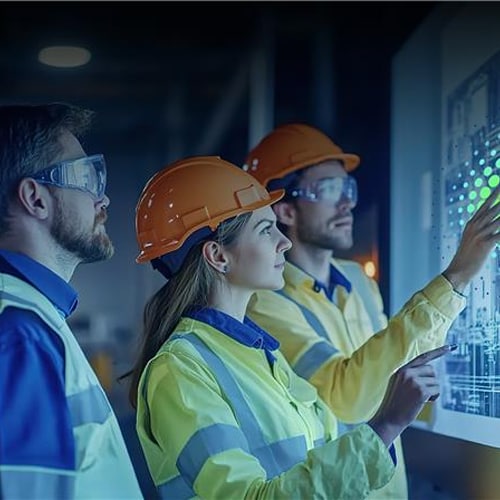
IntelligentOps™
IntelligentOps™ is an AI-enabled operations platform that drives rapid improvement of manufacturing and operations KPIs by connecting your workforce with contextualized data, insights and prescriptive actions.
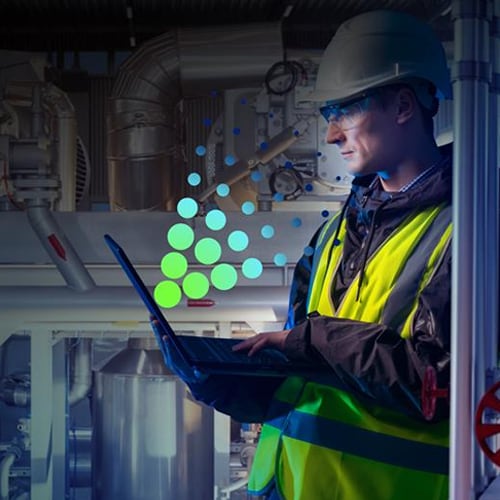
Enterprise AI Navigator
Enterprise AI Navigator combines deep industry knowledge, proprietary models, and real-time data to help leaders prioritize AI investments, decide when to act, and scale effectively—offering a blueprint to improve today and reimagine the enterprise of the future.
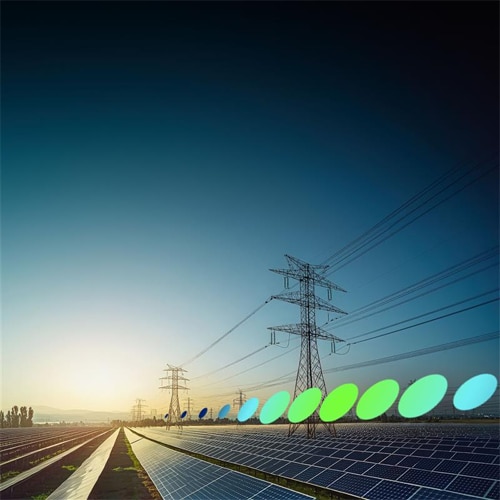
ElectrifiedGrid™
ElectrifiedGrid™ is a strategic grid planning platform for distribution utilities that combines a digital twin with advanced energy modelling to assess the impacts of expected future loads on grid infrastructure and determine potential solutions.
Opens in new window
Opens in new window
Join Deloitte’s Agora pod session
23rd March, Monday 2PM CST
The Agora pod session topic, “AI at scale: Transforming energy systems and enterprise operating models,” spotlights how energy leaders are making AI strategic infrastructure to help drive reliability, cost advantage, and real-time performance at scale.
As global energy markets become more complex and competitive, the organizations that lead are those embedding intelligence deeply into both enterprise operations and infrastructure systems. Artificial intelligence has moved beyond theoretical applications to become strategic infrastructure.
According to Deloitte Global’s AI for Energy Systems report, AI has the potential to deliver 3,700 terawatt-hours (TWh) of annual energy savings by 2030, roughly triple the energy it consumes, and generate more than US$200 billion in annual cost savings through smarter system optimization and asset performance management. For the energy industry, this represents more than efficiency gains, it signals a paradigm shift in how operational performance, asset reliability, and real-time decisioning could be delivered at scale across the value chain.


