
Business resilience hinges on workforce resilience, on and off the job
Deloitte research suggests that weather events are increasingly disrupting daily life, impacting workers’ productivity, and prompting households to prepare for the worst
An organization is only as resilient as its people. As weather shifts grow more frequent and severe,1 companies should be attuned to how those events impact all aspects of their business, including facilities, infrastructure, supply chains, and what’s often their most valuable asset—employees.2 And those impacts aren’t confined to when an employee is on the clock. Workforce resilience is a core operational concern for nearly every company. Absenteeism during extreme events, degraded performance during heat waves, and uneven recovery after disruptions can undermine continuity plans that are built around assets and suppliers alone.
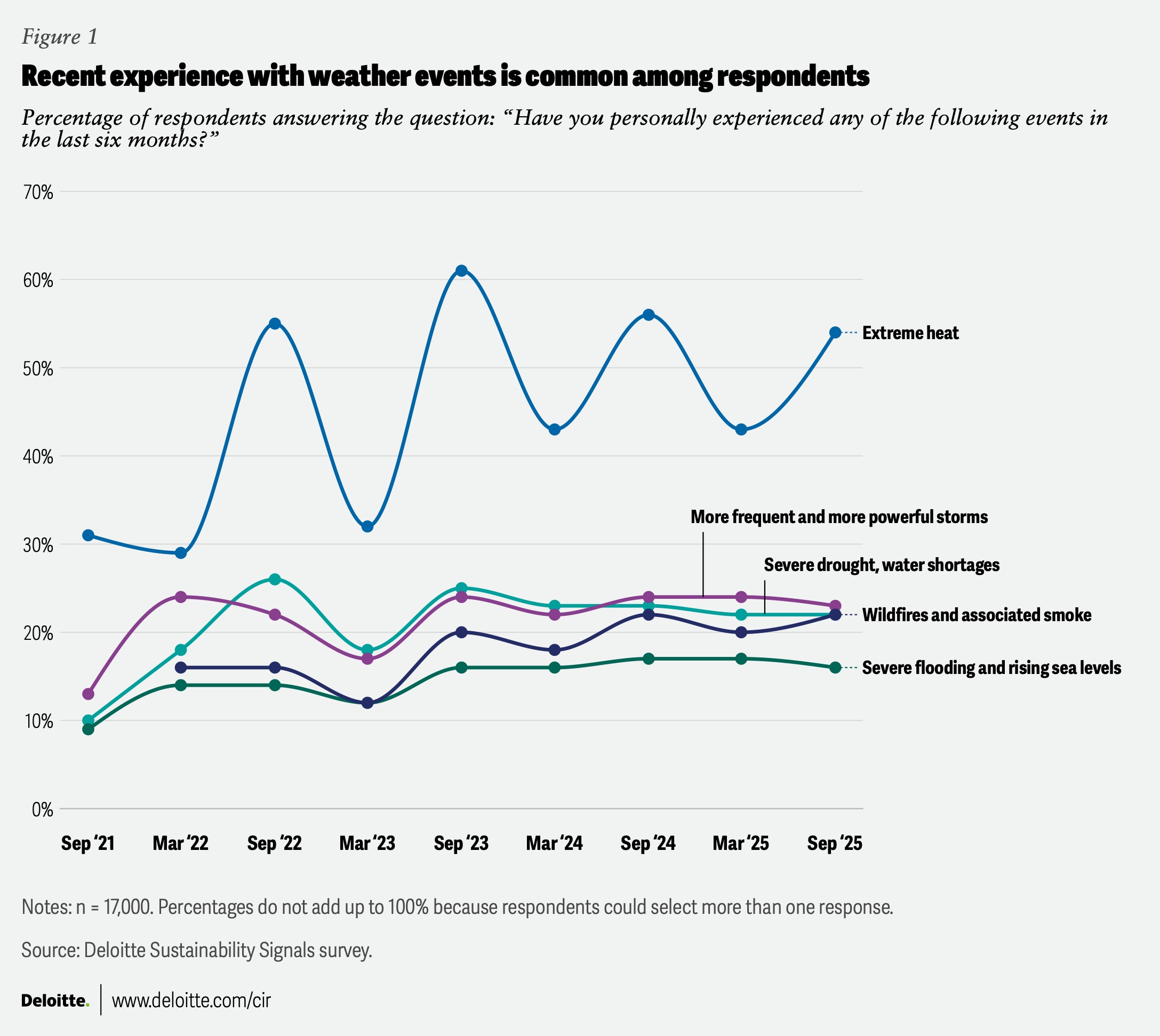
Deloitte’s survey of individuals’ sustainability-related experiences across nearly 20 countries indicates that direct experience with a variety of weather events is pervasive and, in some regions and among some cohorts, becoming increasingly common.3 Globally, 66% of respondents said they had experienced one or more extreme weather events in the last six months. More than half of the respondents reported living through extreme heat. Weather-related disruption is often a frequent condition shaping day-to-day workforce and household dynamics.
Weather events are disruptive for many workers
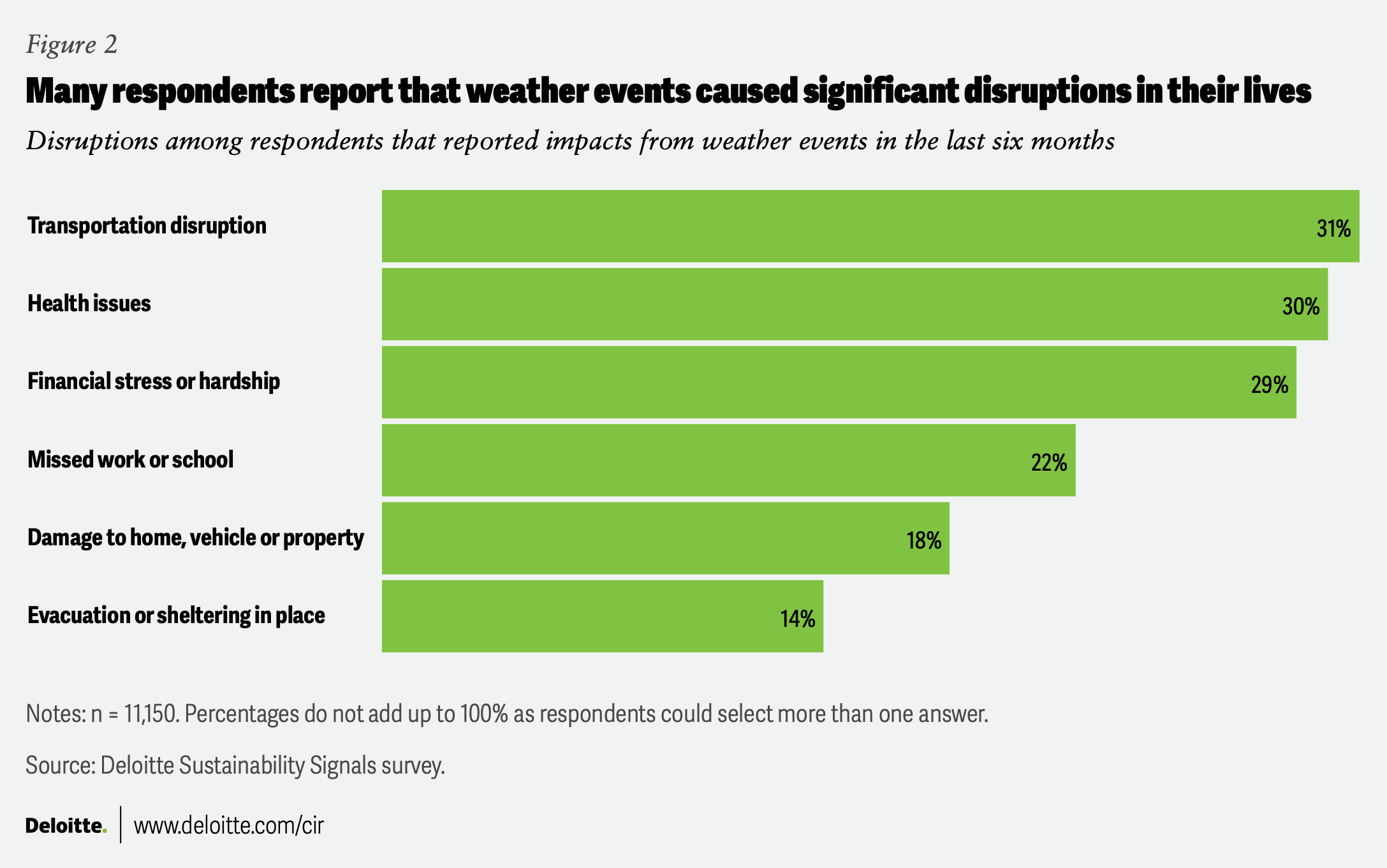
For many respondents, significant weather events are more than just mild inconveniences, disrupting their daily lives and creating a variety of hardships that in turn impact companies. Of those who experienced extreme weather recently, 22% said it caused them to miss work or school, jumping to 35% among those ages 18 to 34. Among all respondents, 31% said extreme weather had disrupted transportation, 30% said it had caused health issues, and 29% said it had created financial hardship. An additional 18% experienced damage to their property or vehicle, and 14% had to evacuate or shelter-in-place. For employers, these impacts extend beyond missed shifts: Health issues and financial stress can impact productivity4 and work quality.5
Many respondents are taking steps to shore up their resilience
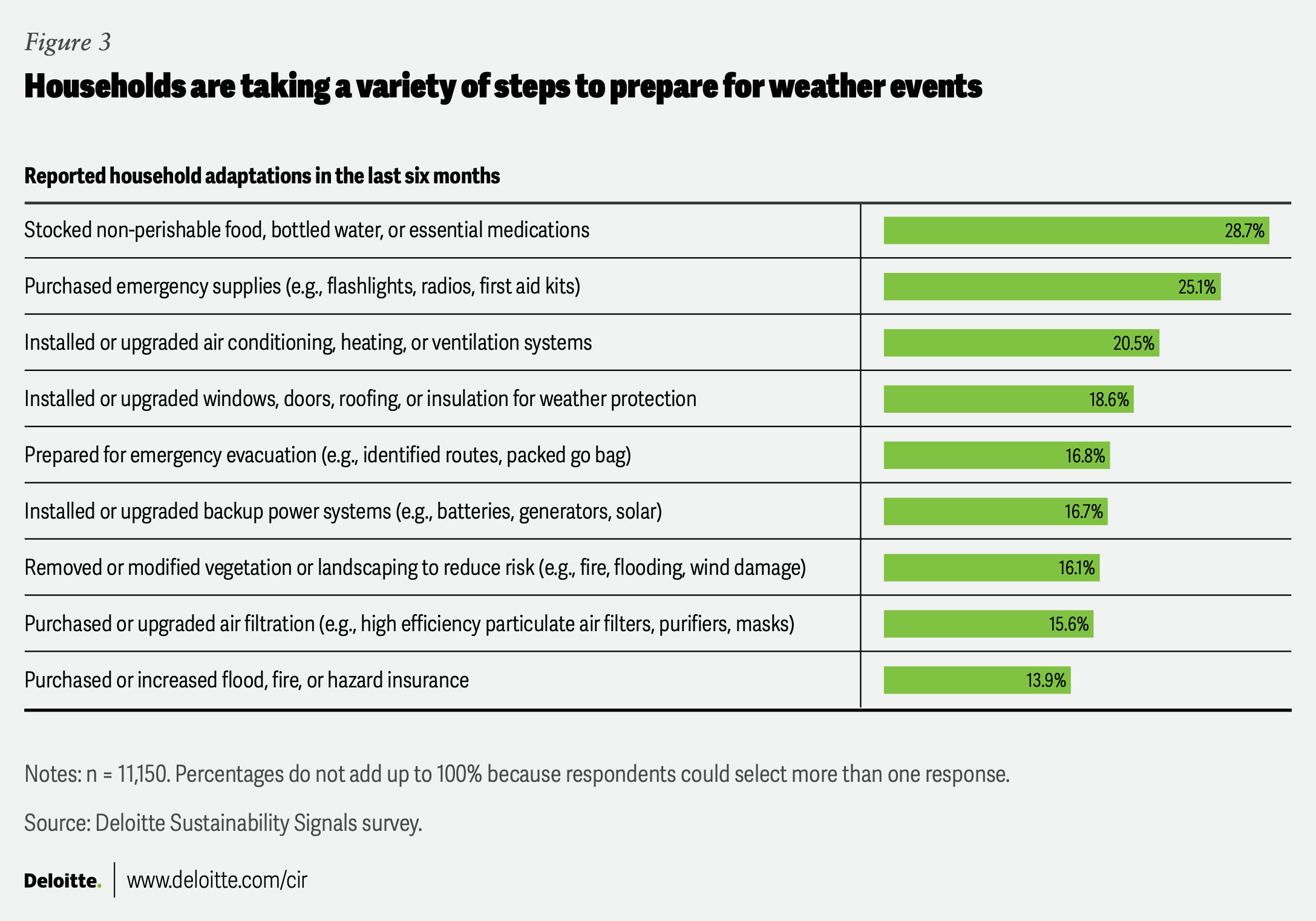
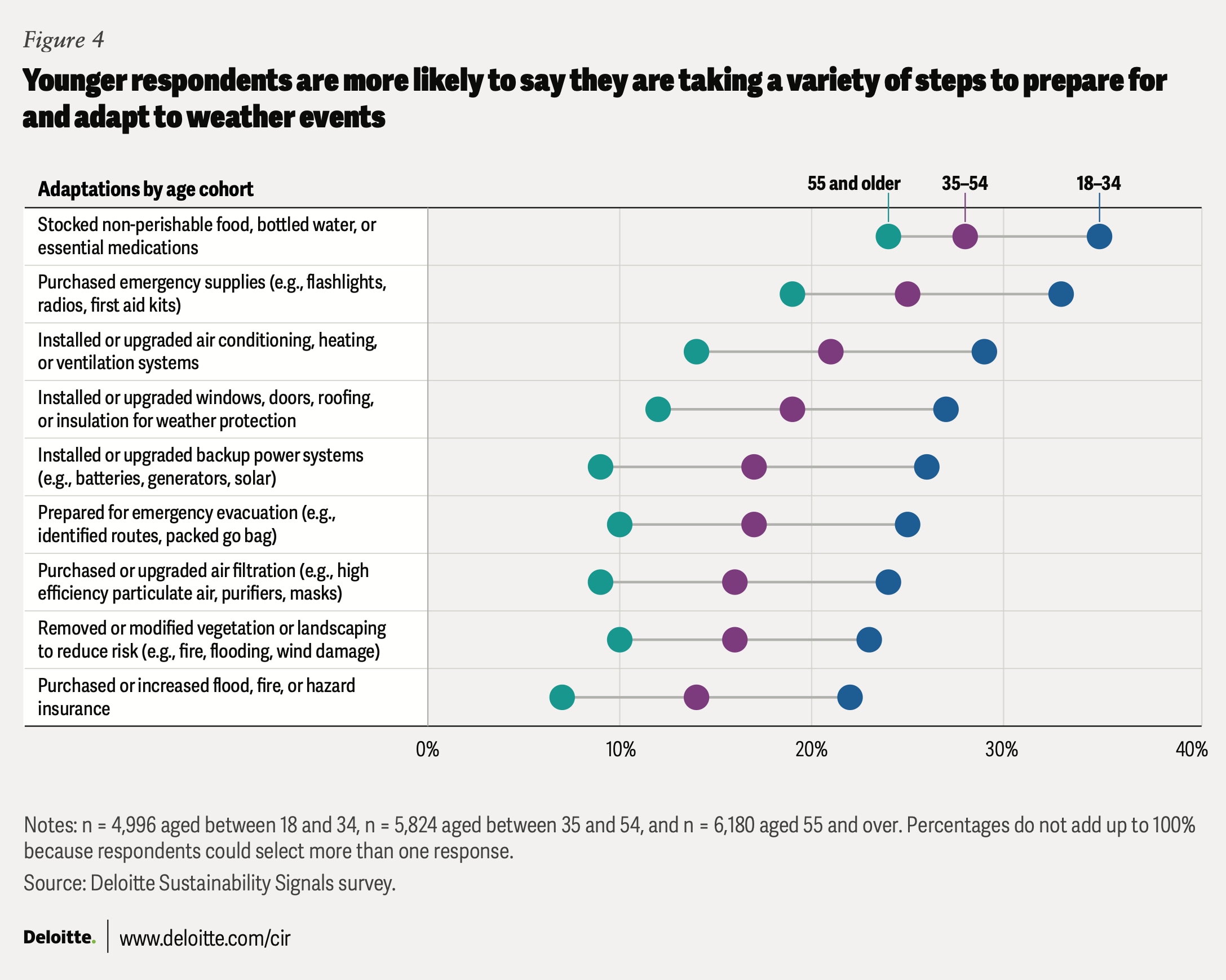
Fifty-four percent of people across 17 countries now report taking steps to increase their personal and household resilience in the face of weather and challenging environmental conditions. Lower-cost steps to increase general preparedness were the most common: Twenty-nine percent of respondents globally said they’d stocked non-perishable food and other supplies in the past six months, and 25% reported purchasing other emergency supplies like flashlights or first aid kits. In the wake of the third-hottest summer on record in the Northern Hemisphere,6 more than 1 in 5 respondents said they’d recently invested in heating, ventilation, and air conditioning upgrades. Working-age respondents (those over the age of 18) were significantly more likely to say they had taken steps to bolster their personal resilience compared to participants from other age groups (figure 4).
That respondents are making these investments independently is instructive, suggesting heightened risk perception and an implicit transfer of adaptation costs from systems and institutions to individuals. For companies, this raises a strategic question: To what extent should workforce resilience be part of a company’s enterprise risk management and human capital strategy?
Implications for business resilience
As weather events increase in frequency and volatility, organizations that fail to account for household-level impacts on workers may systematically underestimate their exposure. To begin integrating workforce considerations into operational resilience planning, leaders can start by asking questions such as:
- Where are we vulnerable to business continuity interruptions? Which roles, sites, and teams are most vulnerable to weather-related impacts and absenteeism due to transportation, caregiving, or infrastructure disruption? How effective are contingency plans when multiple employees or groups are affected simultaneously?
- Where could we offer specific support? What measures are in place to help workers cope with heat stress, poor air quality, and other environmental stressors? Where could modest interventions—such as flexible scheduling, cooling support, backup power stipends, emergency leave, or transit assistance—meaningfully reduce productivity loss and employee strain during peak events?
- How are we managing exposure and retention across the organization? How do impacts intersect with income, age, and role, and what does that mean for retention, engagement, and long-term talent risk?
The frequency and severity of extreme weather are likely to increase in the years ahead.7 By recognizing it as a workforce issue impacting personal and operational resilience, organizations can better align investments with the realities that employees and the business face. In doing so, organizations not only protect operational performance, but also build a more adaptive, loyal, and resilient workforce in the face of growing climatic uncertainty.
Continue the conversation
Meet the industry leader
By
Laura Bryce
David R. Novak
The authors would like to thank Aditi Vashishtha for her contributions to the data analysis and development of this article.
Editorial (including production and copyediting): Elizabeth Ryan, Prodyut Borah, Sayanika Bordoloi, Pubali Dey
Design: Molly Piersol and Harry Wedel
Cover image by: Meena Sonar
Knowledge Services: Agni Wagh
Visit the Deloitte Center for Integrated Research
Access more insights on some of the most complex issues facing businesses today.