
Deloitte Finance Trends 2027: Shaping the next era of stakeholder value
In this year’s Finance Trends report, Deloitte finds finance leaders moving deeper into AI and technology decisions—and expanding their teams to help steer the change
Many chief financial officers are increasingly operating in a dual role: leading the transformation of finance teams while helping shape business strategies as senior executives and, often, board members. They are expected to influence where the organization places its next bets, how those investments are governed, and how value is defined, measured, and achieved.
Evidence of this broader shift in the role of the CFO and the finance function is woven throughout this year’s Finance Trends report. Now in its second year, the research findings highlighted in Finance Trends are based on a cross-industry survey of 1,434 finance leaders—CFOs or executives one level below—across 26 countries, representing some of the world’s largest companies. Deloitte also conducted one-on-one interviews with 12 finance executives to learn how these trends are playing out across their organizations (see methodology).
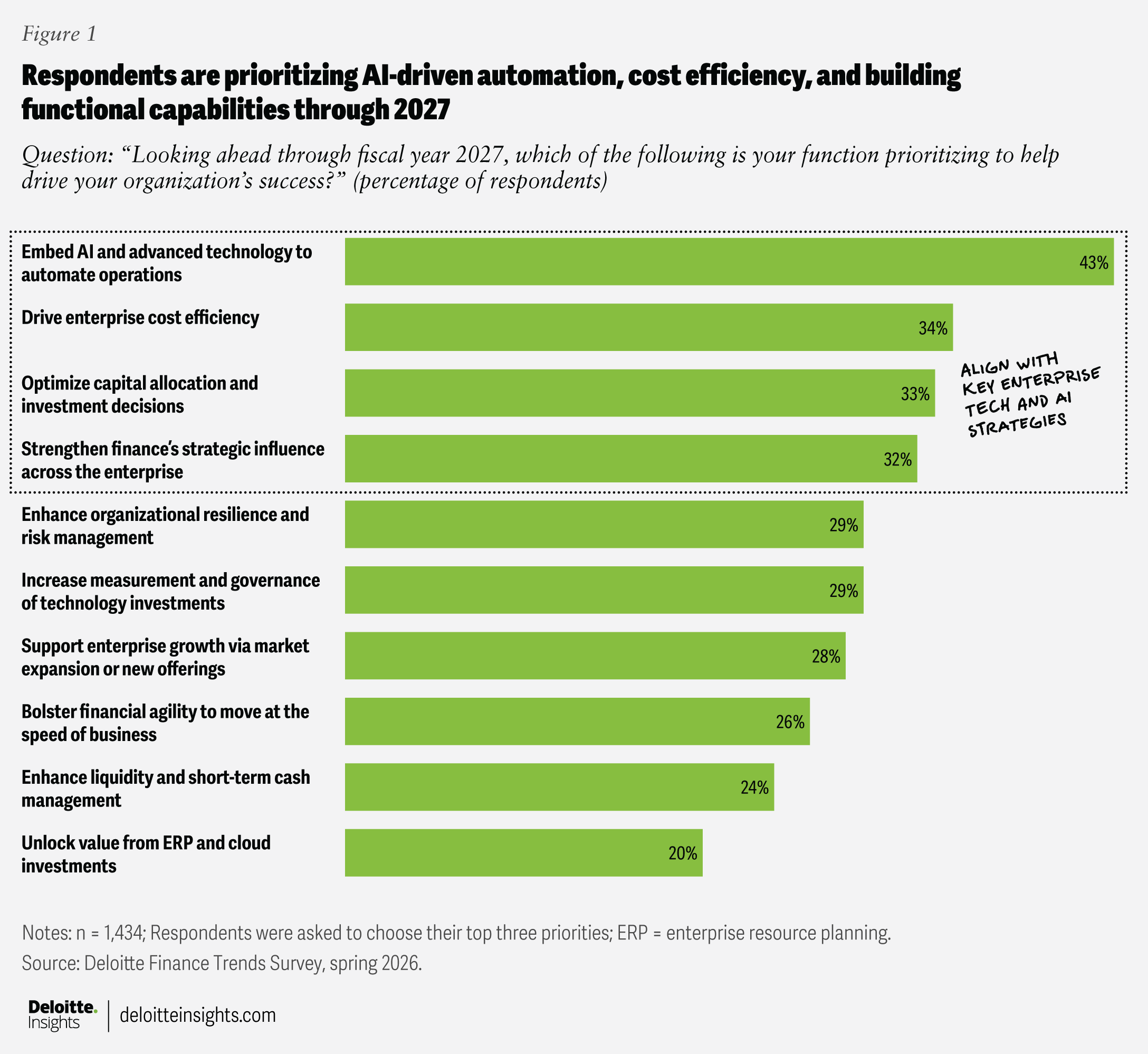
Our research shows how finance leaders are orchestrating change while ensuring stakeholder value remains at the center of strategic discussions—especially when the path forward is ambitious, ambiguous, or both. Survey respondents’ top priorities to help drive the organization’s success through fiscal year 2027 reflect this broad, strategic view: embedding AI and advanced technology to automate operations (43%), driving enterprise cost efficiency (34%), optimizing capital allocation and investment decisions (33%), and strengthening finance’s strategic influence across the enterprise (32%) (figure 1).
This report examines five trends that are likely to have the most impact on finance leaders globally through 2027. From tech strategy to cost discipline, capital allocation to transformation, respondents’ top priorities underpin each of these trends.
1. An expanding mandate: Tech investment and deployment strategies can place finance leaders at the center of enterprise decision-making
As AI use expands across organizations, key strategic questions are moving onto finance’s agenda: where to fund technology innovation, how to measure its costs and benefits, who owns and governs the data, and how reliable AI outputs need to be for each use case. Finance leaders are stepping into this ambiguity as integrators who can connect strategy, investment, risk, and performance.
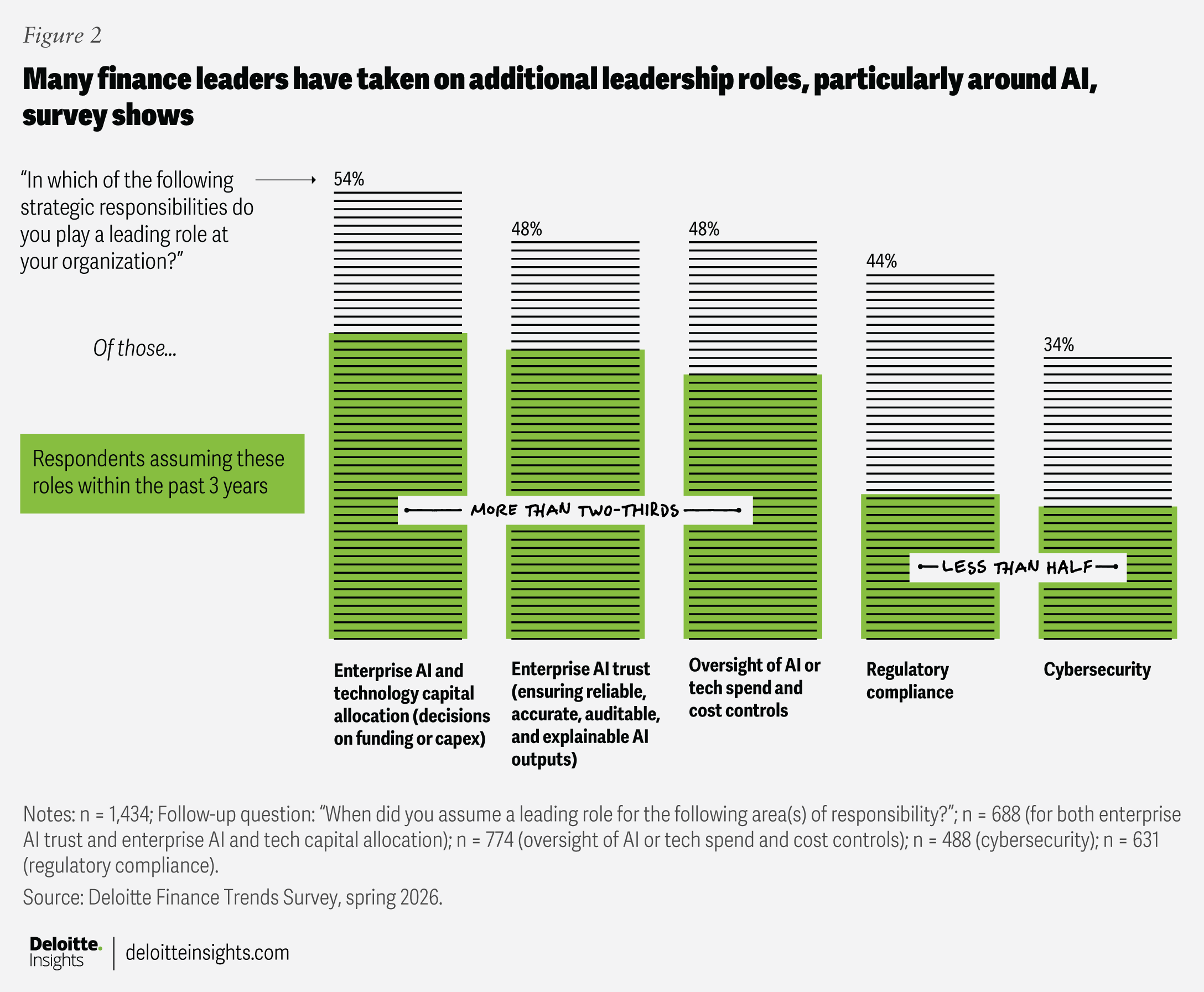
Our survey shows how—and how quickly—many finance leaders’ mandates may be expanding. When asked which responsibilities they lead outside the traditional scope of finance, respondents most often cite cross-enterprise AI and technology capital allocation (54%); AI trust, including ensuring reliable, accurate, and explainable AI outputs (48%); and oversight of AI and technology spending and cost controls (48%). Among respondents who have taken on these responsibilities, more than two-thirds have done so within the past three years, outpacing regulatory compliance and cybersecurity, the fourth and fifth most-cited new responsibilities (figure 2).
Finance leaders increasingly have a say in tech strategy because their core skills are critical to improving AI’s return on investment, according to the leaders we interviewed. “At its core, finance provides a measurement function and measurement is a critical feature for making sure there is value and benefit from AI investments,” says Tim Deacon, executive vice president and chief financial officer at international financial services company Sun Life. “It’s table stakes, but it gets the finance function, and the CFO, a seat at the table to help drive value creation.”
Improving finance’s responsiveness: 3 focus areas
When asked where finance most needs to improve responsiveness to help the organization move faster, respondents identify three areas: providing real-time financial data and insights to the business (48%), responding to external market shifts (36%), and rapidly reallocating capital and funding (34%). To get there, respondents plan to focus on these priorities through 2027:
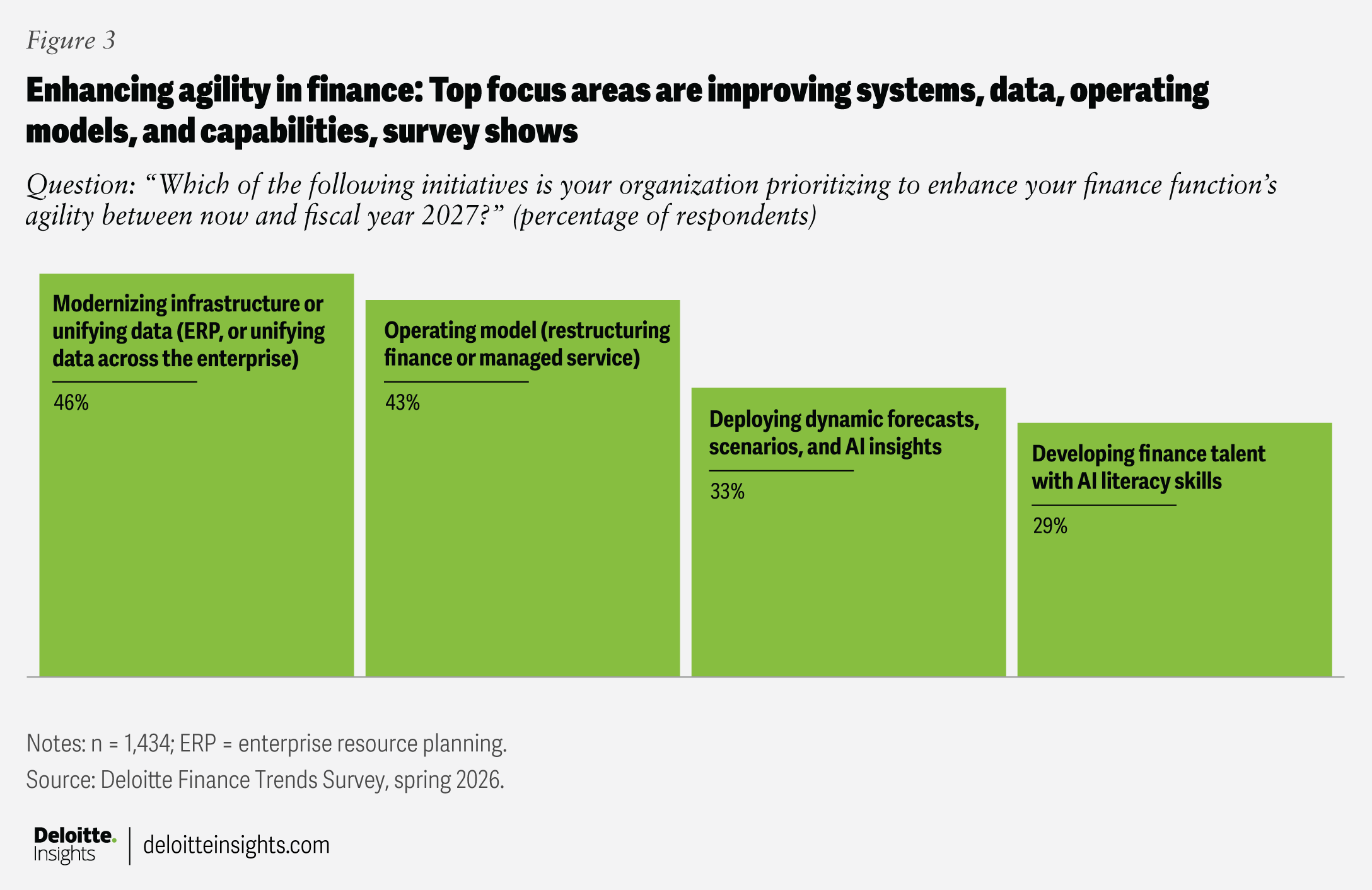
- Strengthening data and technology foundations: Nearly half of respondents (46%) plan to invest in modernizing core enterprise resource planning (ERP) platforms or unifying finance, management, and tax data (figure 3). Finance leaders we interviewed say it’s important to have clearer data ownership and integration standards to support better decision-making. They also describe how AI can act as an orchestration layer, connecting previously isolated systems and reducing manual reconciliation.1 At Sun Life, for example, Deacon describes AI as helping aggregate data and “almost skip a step” in developing a robust data lake for core reconciliation efforts.
- Rewiring how finance work gets done: A similar percentage of respondents (43%) plan to change how work is completed within finance, either by restructuring the function or working with outside partners to operate portions of it. And as AI scales, CFOs can help redesign work, roles, decision rights, and partner relationships to help ensure AI-created capacity translates into better decisions and enterprise value.2 Bikash Prasad, CFO for global agriculture company UPL Ltd., describes this shift as a push toward “touchless accounting: tax, treasury, investor relations, FP&A [financial planning and analysis], and controllership.”
- Building talent models that put AI insights into action: One-third of respondents (33%) plan to deploy more dynamic forecasting, scenarios, and AI insights while 29% plan to upskill finance talent with more data and AI literacy skills. Among those focused on upskilling, more than one-third are creating cross-functional problem-solving assignments that pair technical leads with soft-skill development goals. To broaden employees’ experience across disciplines, Alphabet Finance uses its Bungee program to place finance talent in 6- to 12-month temporary assignments outside their normal roles, Google Cloud CFO Kobi Bar-Nathan says.
2. Human-led, AI-powered: Finance as the hub of responsive, trusted intelligence
Last year, Finance Trends’ AI-related findings focused on whether and how AI could be embedded in finance workflows. This year, the focus is on whether finance has the core capabilities—trusted, fit-for-purpose data, clear ownership and controls, and AI-ready talent—to scale those tools responsibly and help the business make better decisions.
Calibrating AI autonomy to associated risks
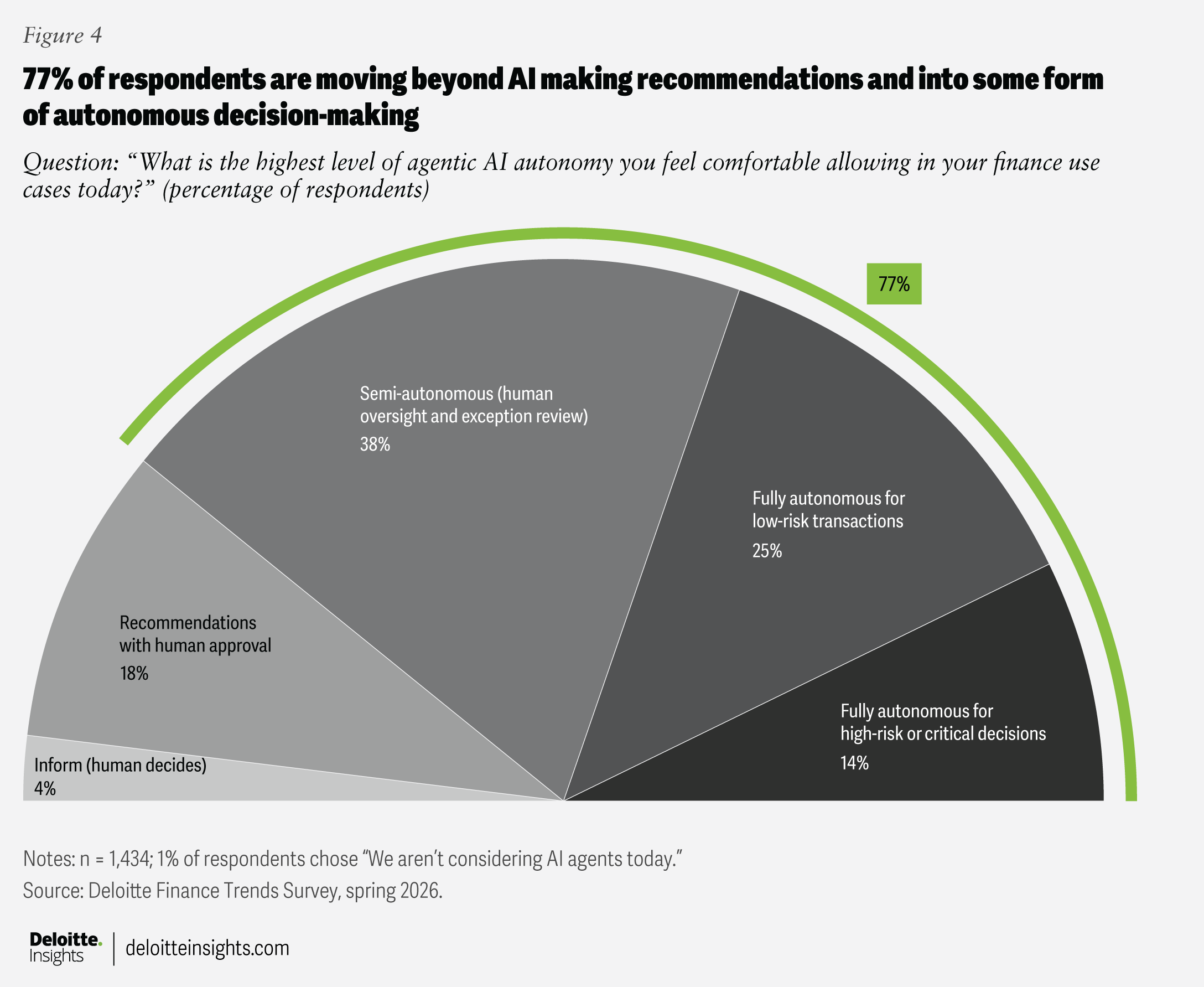
Most survey respondents (77%) say they’re comfortable with agentic solutions moving beyond only providing recommendations and into some form of autonomous decision-making. But only 14% say they’re comfortable with using fully autonomous agents for more critical decisions (figure 4). In interviews, leaders stressed the importance of calibrating AI autonomy to risk levels, pointing out that strong human oversight should be maintained for higher-risk activities, such as regulatory reporting and tax.
When we asked finance leaders about their agentic AI aspirations and scaling readiness through 2027, 42% say their ambitions exceed current capabilities because they need to establish stronger controls before scaling. Further, lack of trust in AI output quality among employees is cited as a top barrier to adoption (41%) among those who believe their ambitions exceed current capabilities.3
These findings underscore the need for CFOs to establish clear decision-making frameworks and controls to make human-led, AI-powered finance transformation successful.
Broadening finance skills for agentic AI adoption
To help scale agentic workflows, finance leaders might also need to broaden the core capabilities on their teams, including hiring change management experts, data scientists, and engineers alongside MBAs and professionals with experience in investment banking and consulting, according to the finance leaders we interviewed.
Three examples show how finance leaders are expanding their teams to support agentic finance:
- Investing in adoption before automation: Before Hewlett Packard Enterprise launched an agent designed to reimagine their manual, static executive reporting process, finance leaders examined underlying processes, roles, and workforce implications. They also hired two change management professionals to facilitate. “That's money well-invested in terms of bringing those roles into the team and really driving change management and ensuring that we have the adoption and the success criteria,” says Bobby Jutley, HPE’s vice president of finance strategic transformation delivery.
- Building trusted data foundations: Carlos Alberto Pereira, CFO of Frimesa, Brazil’s largest food processing cooperative, established the company’s 10-person data intelligence team as a foundation for trusted AI use. The team curates information, strengthens governance and data quality, and integrates external data so the business can generate reliable queries across agentic controllership, pricing, and operations.
- Creating a safe experimentation environment: North American financial services company EQB Inc. created an “experimentation studio” to test how agentic workflows could improve long-standing finance processes in a controlled environment. In one case, the team replicated a key quarterly report with 91% accuracy in results, reducing a three-day process involving several people to roughly 10 minutes. Experimenting in a controlled setting with human oversight can increase productivity and enhance trust in agentic processes. Just as important, it can help cultivate a stronger culture of human-machine collaboration.
3. Finance’s next AI challenge: Managing AI cost complexity at scale
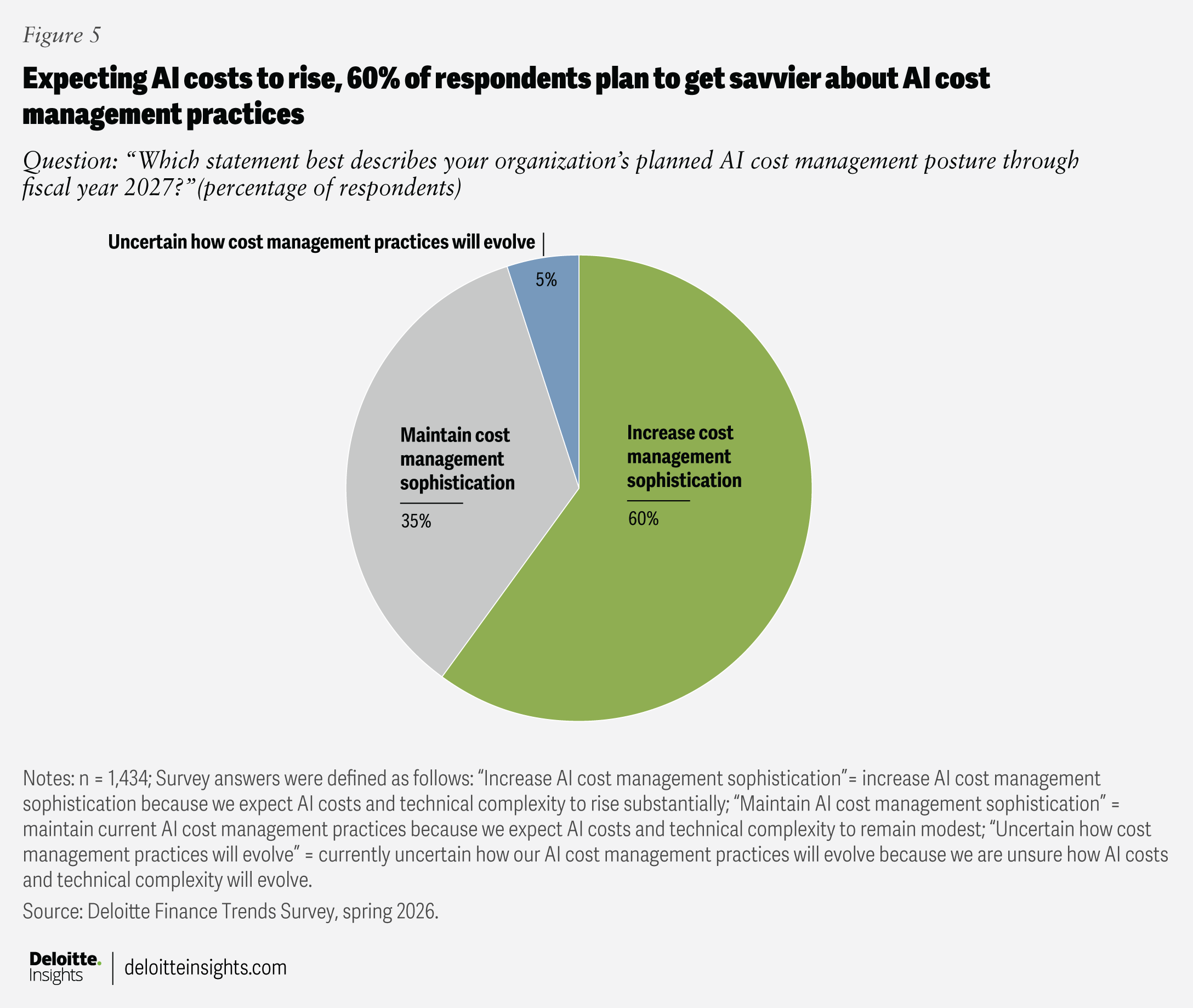
Many respondents (60%) expect AI costs and complexity to rise substantially through 2027. Therefore, they say they’ll need to adopt more sophisticated AI cost management practices. In contrast, 35% plan to maintain current practices because they believe costs and technical complexity will remain modest (figure 5).
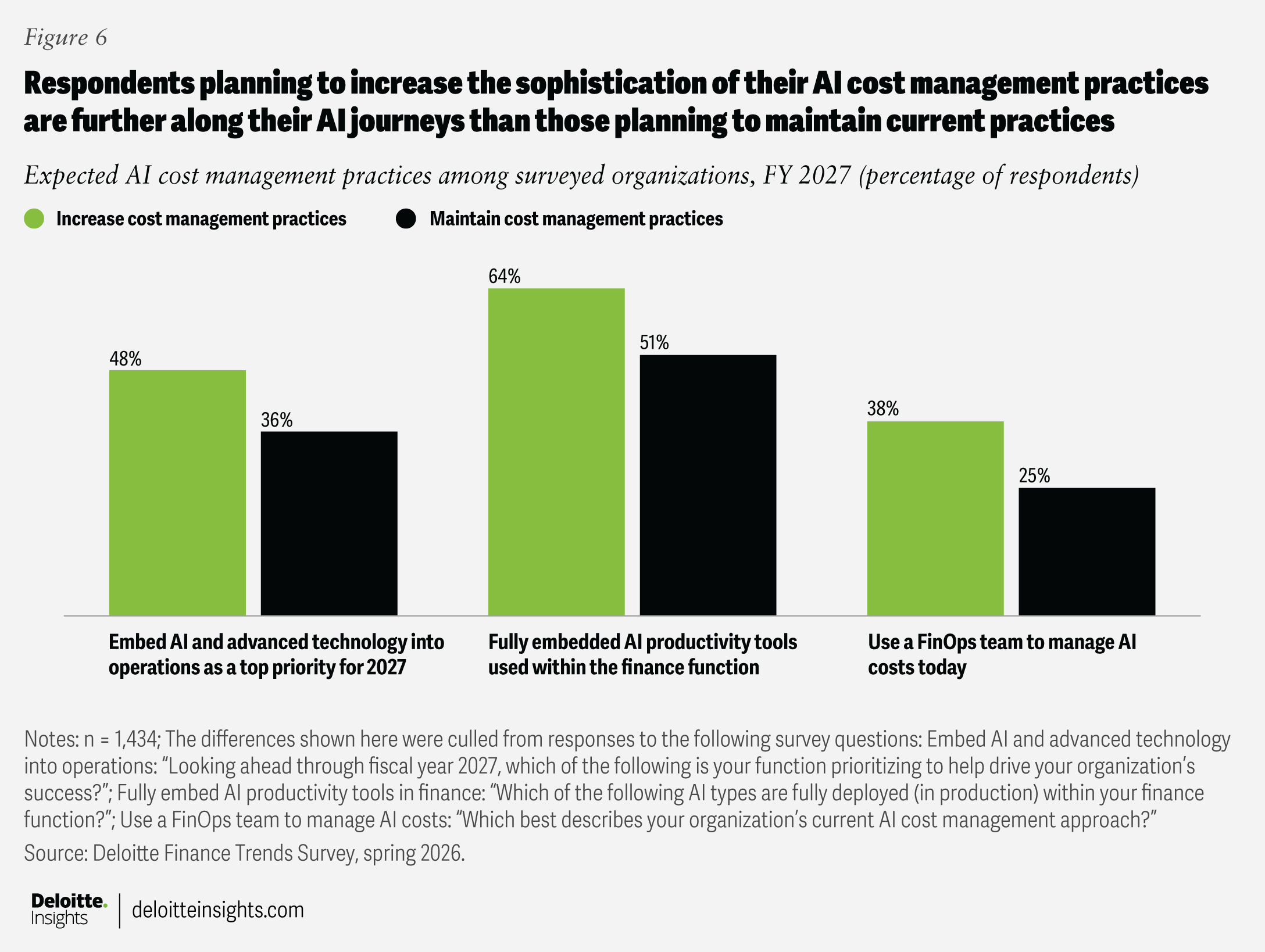
Notably, respondents who expect AI costs to rise are more likely to work at more AI-mature companies than those who expect costs to stay around current levels (figure 6), according to how respondents answered questions about their organizations’ AI journeys. For example, those who expect costs to rise are more likely to prioritize embedding AI and advanced technology into operations (48% versus 36%); have embedded AI productivity tools within the finance function (64% versus 51%); and, maybe most tellingly, are more likely to already have a FinOps team managing costs today (38% versus 25%).
AI costs can be difficult to manage and predict.4 Token consumption may be the most visible usage metric, but other factors, such as workload type, data center capacity, and hosting strategy can affect the cost of generating and scaling AI outputs in nonlinear and potentially volatile ways.5
Approaches to navigating a complex cost environment
As AI costs become harder to forecast, allocate, and govern, respondents cite several challenges: uncertain regulatory or compliance requirements (20%), complex cloud and vendor billing for AI compute (19%), and integrating usage data with ERP and finance systems (15%). To address them, here are three actions gleaned from our executive interviews:
- Set guardrails around experimentation. Finance leaders need visibility into which tools, data sources, and workflows are being used. “The harder part of this equation is the explosion of different tools and then knowing which tool to use for what purpose,” Mike Spencer, head of finance at Salesforce, says. It can help to inventory tools, understand underlying objectives of use cases, and align capabilities to business needs before experimentation turns into unmanaged spending. As pilots move into production, finance teams may need stronger visibility and controls to manage AI usage, costs, and accountability at scale.
- Model vendor cost exposure before pricing changes. As early-adoption credits expire, vendor subsidies diminish, and new pricing models take hold, finance teams could review strategic vendor terms before new AI pricing models are fully established, including data access rights and renewal risk.6 Some existing agreements also might be giving companies broader access to data than vendors are likely to offer in future deals, so finance leaders will need to evaluate where current contracts preserve flexibility and where that flexibility could decrease. Global staffing company Adecco Group’s Global CFO, Valentina Ficaio, says over the next two years, her team plans to identify where agentic solutions can scale with customers, clarify enterprise needs, and better understand where there is willingness to assume higher future costs ahead of future contract renewals.
- Plan for potential revenue scenarios. Many respondents still judge AI through a productivity lens, as 36% cite time and productivity metrics as key to evaluating AI investments, compared with 23% who cite revenue enablement. But as AI costs rise, finance leaders will need a fuller view of value. Rising AI costs could be deemed acceptable if the AI investments help increase company revenue, margin, or enterprise value. Sun Life’s finance team is developing “hypothesis-driven forecasts” to better understand AI investments’ potential impact, Deacon says. “We haven’t yet seen the full power and benefit that AI will bring, particularly on revenue opportunities,” he says. “The cost efficiencies are a lot clearer, but there’s currently more uncertainty on the revenue that can be generated from these AI models and how related AI costs will evolve.”
4. The geographic complexities of investment strategies: How tech sovereignty may drive new choices across the globe
When it comes to external risk factors, respondents’ top three concerns reflect the fragmented global tech landscape they’re operating in: cyber threats and AI-driven risks (31%), economic uncertainty (29%), and geopolitical tensions (24%). Each ranks higher than in last year’s Finance Trends survey findings—especially cyber threats and AI-driven risks.
Relatedly, the survey indicates that many finance leaders plan to prioritize tech sovereignty: organizational or national independence and ownership of data, vendors, and supply chains. Nearly two-thirds of respondents (63%) regard tech sovereignty as a strategic differentiator that enables trust, resilience, and long-term value. And 84% say it will reshape their organizations’ technology related capital allocation decisions through 2027 (figure 7).
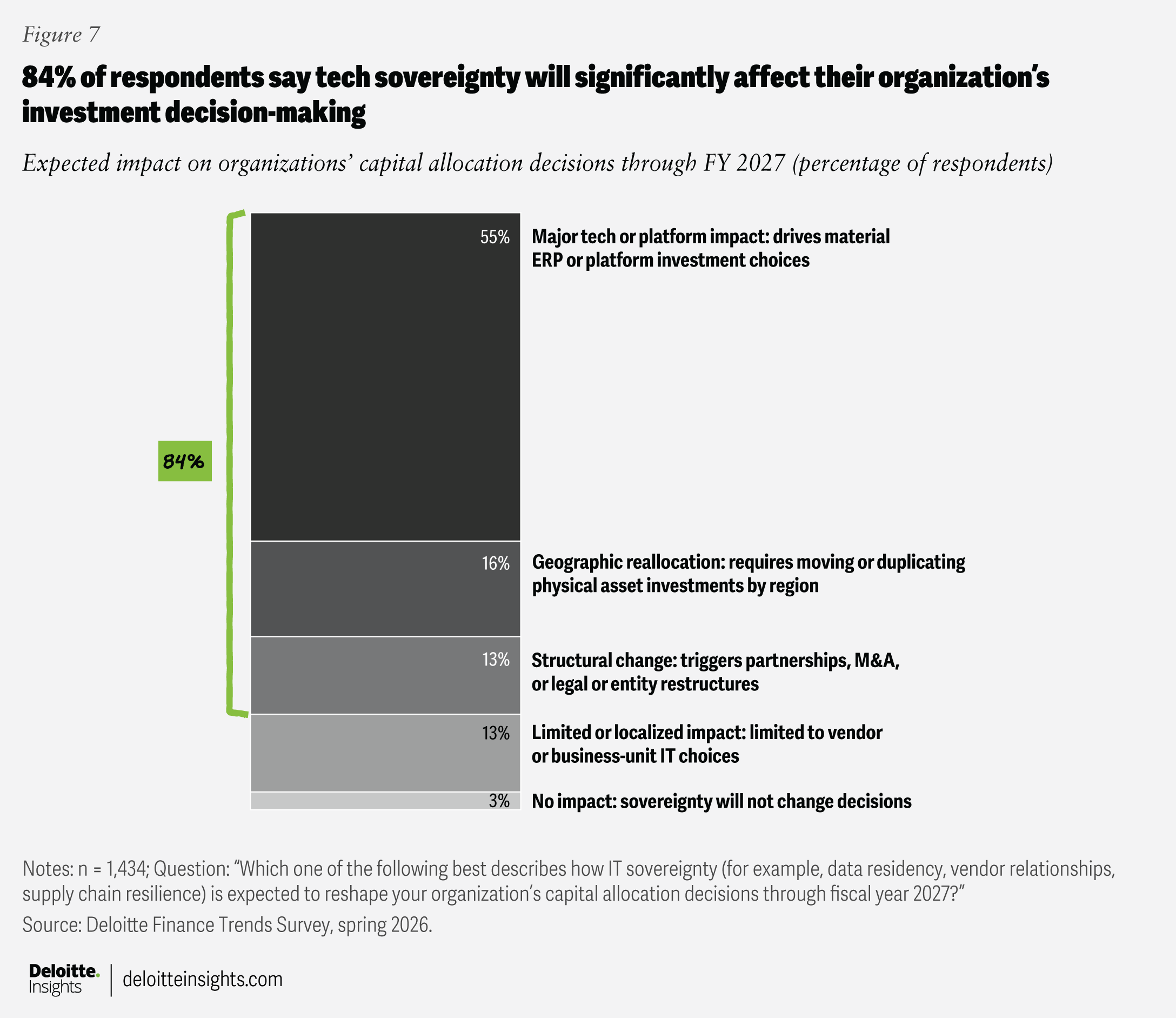
Among the anticipated changes, 55% of respondents expect tech sovereignty to have a major impact on their technology platform investment choices; 16% say it will impact where physical assets are reallocated, by region; and 13% expect it to affect major structural changes, such as new partnerships, decisions about mergers and acquisitions, or legal or entity restructures.
Getting ahead of increasing regulations
Many governments are establishing their own AI and data governance regulations and guidelines. To date, more than 60 countries have launched national AI strategies.7 Many of these aim to maintain data residency, model development, computing, and talent within the country or region’s borders. Some leaders we interviewed noted that evolving regulations can add uncertainty to long-term technology investments, particularly when future requirements may alter how those technologies are deployed or governed.
To manage the growing volume and complexity of regulatory requirements through 2027, 49% of respondents plan to use AI or automation for routine compliance tasks, 43% will focus on strengthening their data governance and lineage for auditability, and 32% say they will work on improving alignment between financial and operating reporting.
Andrea Unruh, global senior finance director at Koch, describes how her organization’s finance team is becoming more proactive about understanding the global regulatory environment to better support key investment decisions. “We can remove barriers [which] enable growth, capital allocation, and acquisitions,” she says. When Unruh’s team enters new regions, for example, they work to better understand reporting requirements, such as pillar 2, rather than waiting until filing returns.
5. Rethinking the funding playbook: The fragmented process of deciding what to fund and how to fund it
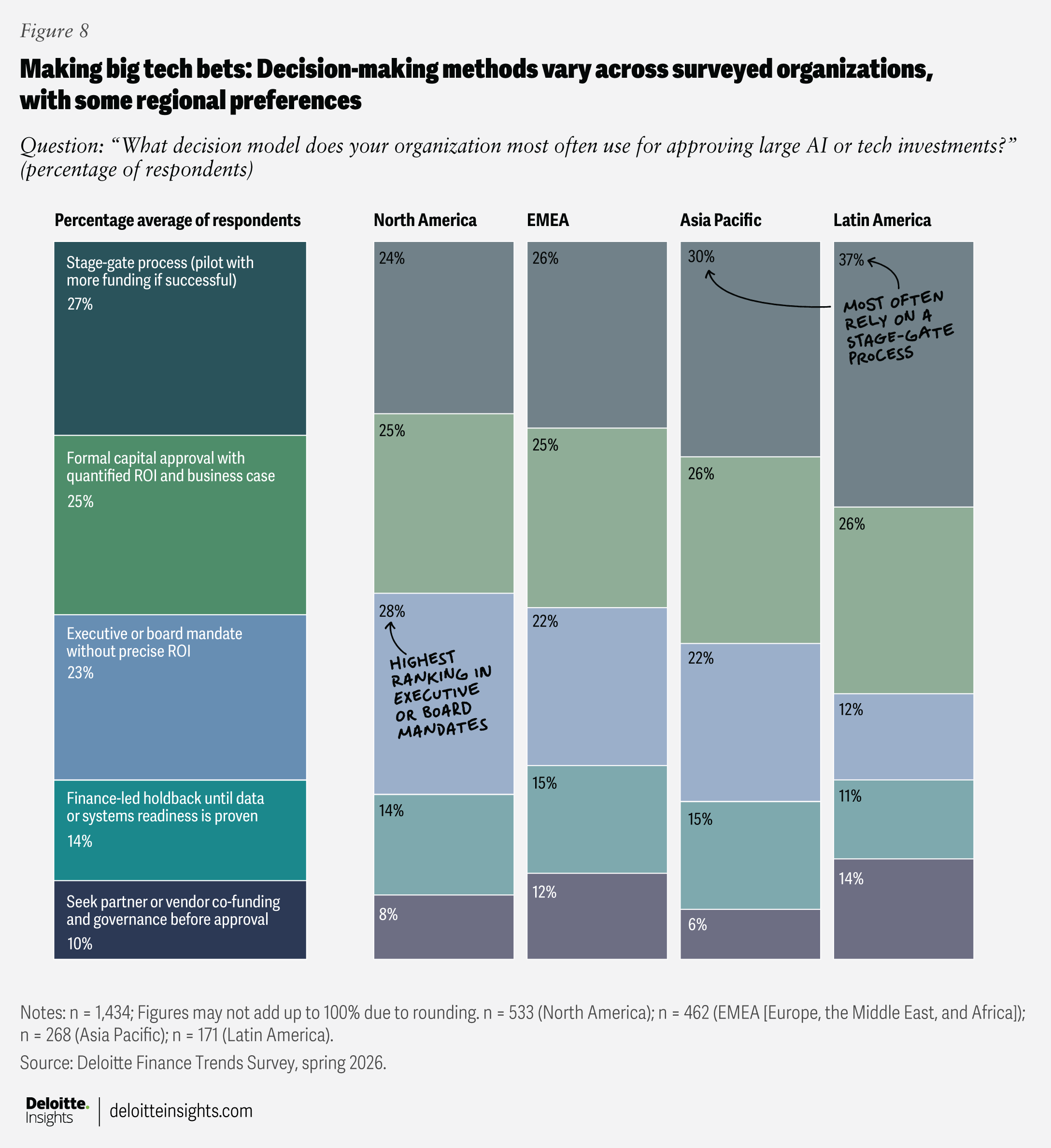
As tech budgets rise,8 many finance leaders are navigating a growing number of investment options. When asked how they most often approve large AI and technology investments, 66% of respondents indicate they use an internally driven process that puts measurement at the forefront (figure 8).
Among these, 27% of respondents primarily rely upon a stage-gate process, where funding starts with a pilot and more funding may be added if goals are met at each stage. Another 25% have a formal capital approval process in place that requires quantified ROI and a business case. Conversely, 23% of respondents—and 28% of North American respondents—say executive or board mandates drive most of these investment decisions without having a measurement process in place to gauge success.
To balance the need to move fast but with purpose, Canada-based financial services company EQB Inc. introduced a C-suite investment committee to strategically allocate capital. According to CFO and Head of Strategy Anilisa Sainani, each investment needs to answer five questions around strategic fit, economic value, risk appetite, operational feasibility and alignment, and nonfinancial KPIs to be used to hold the business accountable if funded. Answering these questions acts as a “catalyst to having conversations around an enterprisewide view,” Sainani says, that prioritizes “progress over perfection.”
Growing responsibly: Emerging pathways for tech investments
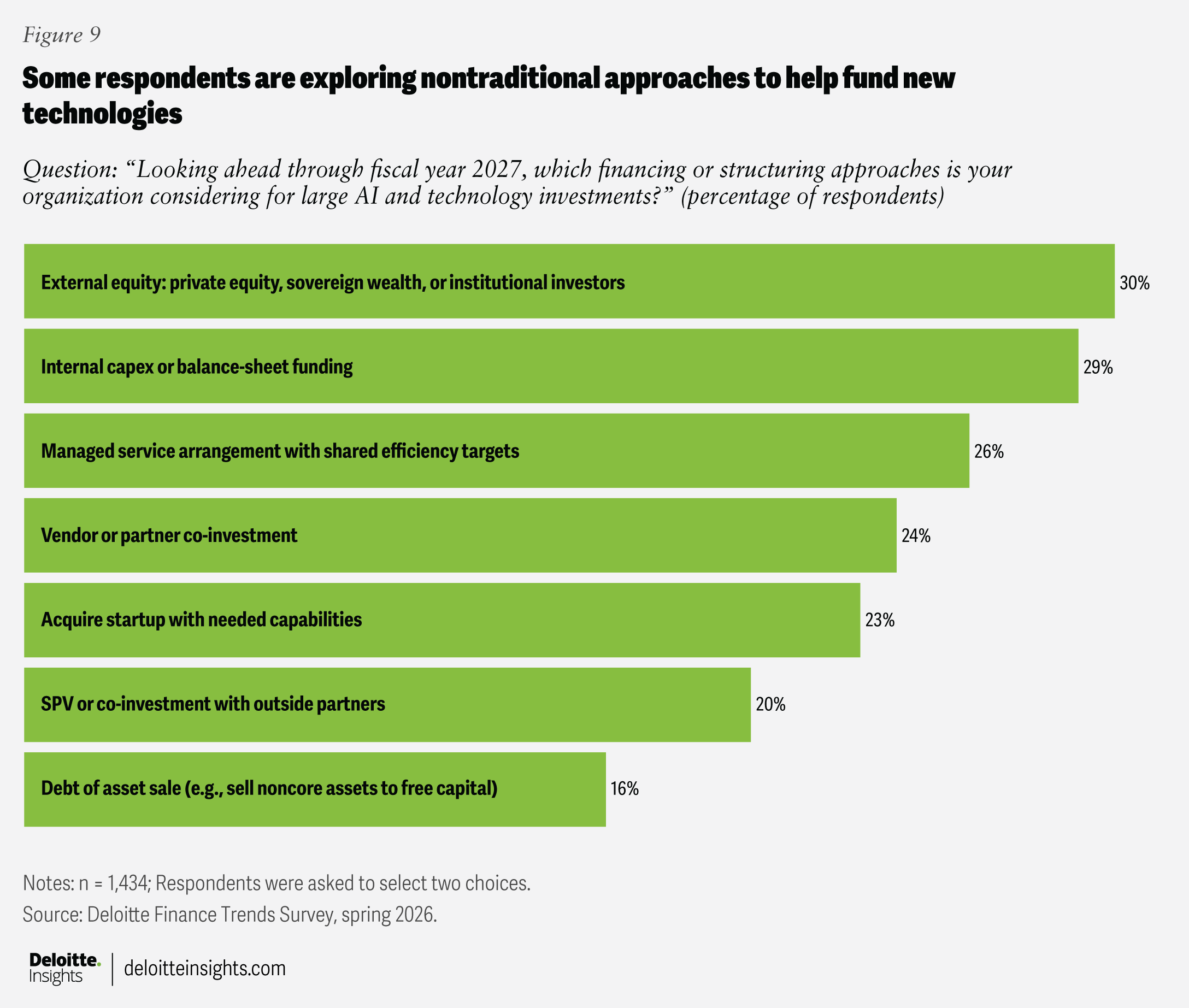
Respondents plan to explore a variety of technology funding mechanisms throughout 2027 (figure 9), mainly from traditional internal capital expenditure or balance sheet funding (29%), or alternatively from equity, sovereign wealth, and institutional investors (30%).
Other respondents are considering alternative methods, including:
- Managed services arrangements with shared efficiency targets: Most commonly, 26% of respondents plan to explore new managed service relationships with shared efficiency targets.
- Creating co-investment vehicles with outside partners: More than 20% of respondents are exploring alternative investments instruments, like special purpose vehicles with outside partners. Interviewed leaders also point to the need for more creative financing approaches as technology investments scale. In some cases, organizations may seek co-investment structures that pair internal technology assets with external partners’ infrastructure expertise, specialized capabilities, or long-term capital.
These emerging funding pathways point to a broader shift in what finance is being asked to enable: greater flexibility, visibility, and speed in how technology investments are structured and deployed to maximize value creation. This may be especially true for private equity-backed businesses, where that mandate can be even more acute.9 Finance leaders may be expected to strengthen controls, improve data-driven accountability, and help shape their organization’s value story for a future transaction or monetization event.
Preparing for the future of finance
Bar-Nathan of Google Cloud believes finance is the group that “enables responsible growth.” The findings from our survey and interviews of more than 1,400 finance leaders around the world echo that sentiment. The data indicates that, increasingly, finance leaders will likely need to go beyond optimizing their function and will play a more strategic and cross-functional role, helping their enterprise decide where to place its next bets: testing boldly, governing carefully, and keeping value creation at the center of every move.
Continue the conversation
Meet the industry leaders
Mojgan (Mo) Vakili
By
David Anderson
Ed Hardy
Diane Ma
Timothy Murphy
Dave Turk
Mojgan (Mo) Vakili
The authors would like to thank the following Deloitte subject matter advisors for their contributions to this article: Neal Baumann, Jessica Bier, Andrew Blau, Jeffrey Bloom, Casey Caram, Emma Cox, Gillian Crossan, Isabelle Dassier, Tim Davis, Jessica Day, Priya Ehrbar, Brian Hansen, Isabelle Gent, Nick Grewal, James Glover, Vincent Gouvernuer, John Hearn, Kate Jago, Nicola Johnson, Rebecca Kapes, Thomas Klingspor, Christian Koropp, Geoff Kovesdy, Sergi Lemus, Victoria Levy, Rob Massey, Rithu Mathur, Chinmay Nair, Tara Nicholson, Gina Primeaux, Alfred Popken, Adam Reilly, Parag Saigaonkar, Nikki Schutt, Markus Seeger, Evan Shea, Patrick Shelley, Daniel Siegel, Tim Smith, Andrew Swart, Jamie Weidner, Benush Venugopal, and David Zager. The authors would like to thank Deloitte’s core project team including Aditya Narayan and Nirmal Peter Paul Kujur for assisting with research and analysis and Saurabh Rijhwani for developing core marketing assets.
Editorial (including production and copyediting): Karen Edelman, Sayanika Bordoloi, Cintia Cheong, and Anu Augustine
Design: Molly Piersol
Cover image by: Sofia Laviano
Knowledge services: Agni Wagh