
INDIA ECONOMIC OUTLOOK, OCTOBER 2026
Private capital–fueled economic growth might be knocking on India’s doors soon
After years of infrastructure and government spending–driven growth, emerging indicators suggest private capital may finally be ready to drive India’s economic expansion
India’s investment story has garnered significant attention lately: In the first quarter of fiscal year 2026 to 2027,1 gross fixed capital formation grew by 11.9% in India2—the strongest in four years. High-frequency indicators have also been signaling a strengthening of private investment over the past two quarters, despite global uncertainties.
Read more from the collection
Economics
For an economy where private consumer spending has been the main driver of domestic demand in the past few years, the relatively subdued contribution of private investment has left an important growth pillar underleveraged. Recent signs of a turnaround are, hence, important.
Why does this matter?
The positive effects of private capital expenditures often extend beyond direct contributions to economic value: Investments generate demand for capital goods, construction, logistics, and business services. The resultant capacity supports future production, employment, and productivity, and subsequent multiplier and supply-side effects mean that even a modest increase in private investments can drive larger, long-term positive outcomes for growth, beyond GDP contributions.
Historically, every significant growth acceleration in modern India has been powered by a private investment boom: The high-growth era of the mid-2000s was driven largely by a surge in private corporate capex, peaking at 18.2% of GDP.3 Currently, it is down to 10.2%.4
In time, India’s growth ambitions will become increasingly capital-intensive as it continues to build capabilities in strategic sectors (such as semiconductors, electronics, defense, clean energy, and advanced manufacturing). Rapid digitization will also require investments in artificial intelligence and related computing infrastructure, which, in turn, will require large upfront investments in capacity, technology, and supporting ecosystems. Hence, India will have to raise its investment rate substantially over the next decade to sustain high growth levels.
Government spending largely drove economic growth over the last six years; sustained increases in public capex were expected to have multiplier effects like improving infrastructure, lowering logistics and transaction costs, and eventually lead to crowding in of private investment.
But that is taking longer to materialize: Successive shocks—from the COVID-19 pandemic to geopolitical conflicts—along with supply-chain disruptions and uncertain global demand, have weakened business confidence and delayed investment decisions. Volatile foreign capital flows have added to uncertainties.
But we believe that some of the positive effects of public investments may now be starting to show: Better physical and digital infrastructure, stronger connectivity and logistics, and healthier corporate balance sheets with improved demand visibility have all strengthened the conditions required to boost private investment. If these translate into a sustained private capex cycle, it may provide India with an important growth engine.
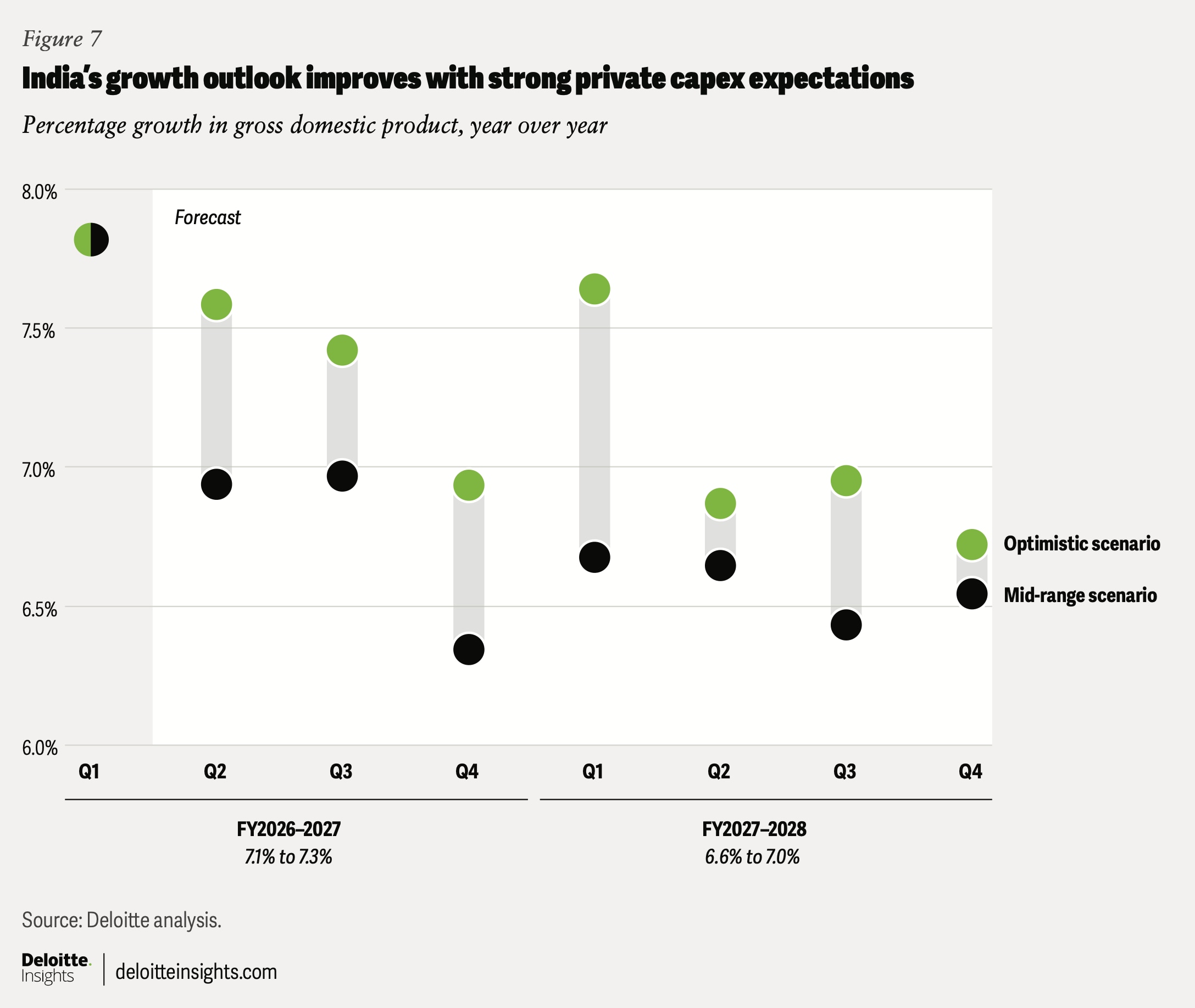
We expect India’s economy to grow between 7.1% to 7.3% in fiscal 2026 to 2027, followed by 6.6% to 7% growth in the subsequent year (see “Key assumptions for Deloitte projections” for scenarios used in these calculations).
While consumer spending is likely to remain steady, with downside risks stemming from inflation and the fading impact of tax measures, we expect capital formation to play a greater role in supporting growth and expanding India’s productive capacity over the medium term.
In this edition, we examine whether India is finally seeing the beginning of this crowding-in effect on private capital, and assess how policy and public infrastructure investments have shaped the business environment, whether recent macroeconomic indicators point to a revival in private capital formation, and what could help turn these early green shoots into a sustained investment cycle.
India awaits private investment despite infrastructure buildouts
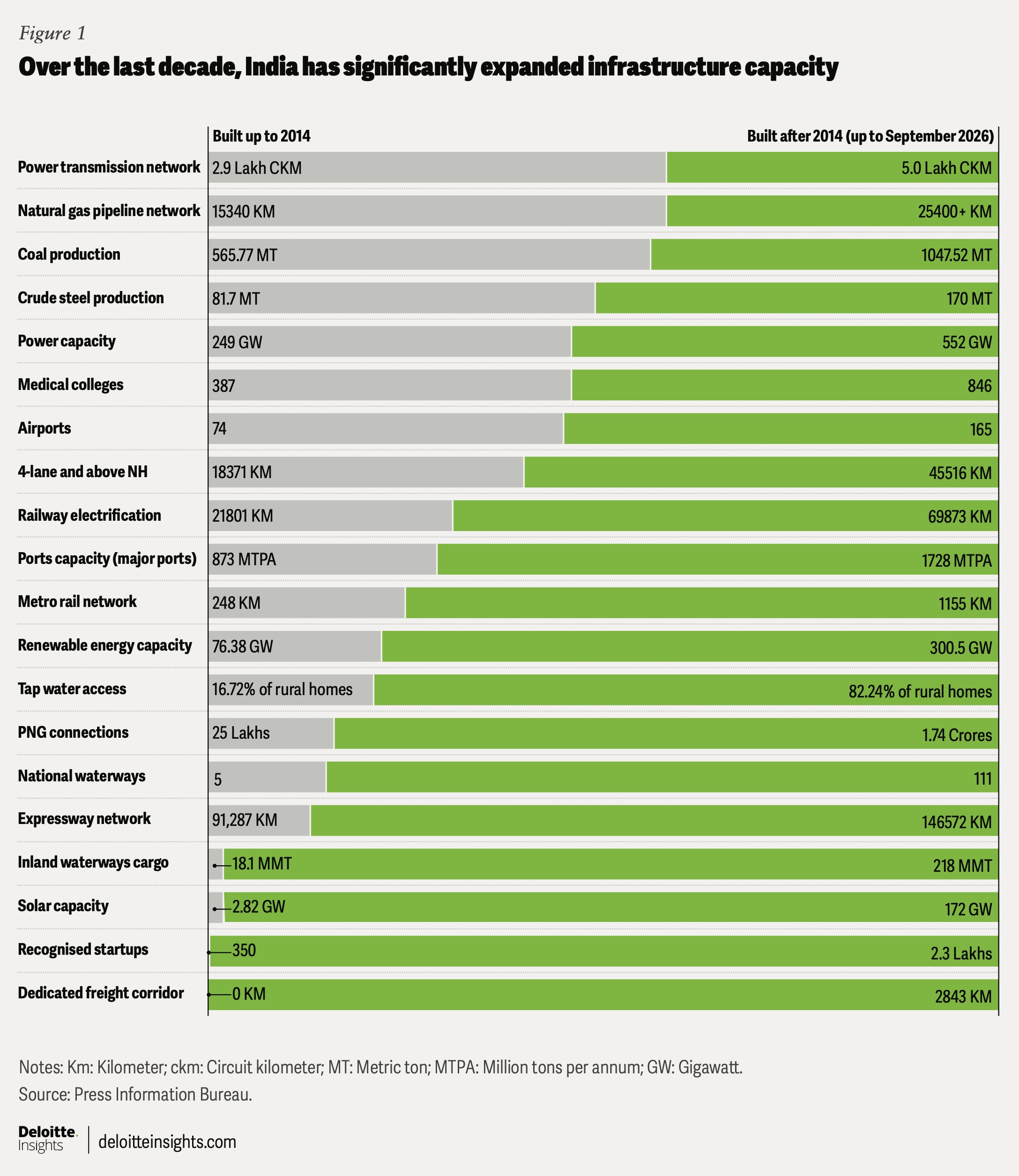
Government had recognized infrastructure as one of the biggest constraints to Indian growth ambitions well before the pandemic: A substantial share of current Indian infrastructure capacity was built out since 2014 (figure 1).
Most of India’s dedicated freight-corridor capacity, solar capacity, expressways, inland waterways’ cargo capacity, national waterways, piped natural gas connections, and tap-water access infrastructure were added after 2014.5 In fiscal 2019 to 2020, the government launched the National Infrastructure Pipeline, envisaging large-scale investments across energy, roads, railways, ports, urban infrastructure, and other sectors.6
The intent went beyond creating physical assets: Better connectivity, reliable power, and more efficient logistics were expected to reduce the cost of doing business, improve access to markets, and eventually boost returns on private investment.
That intent was subsequently backed by a sharp increase in public capex. The momentum accelerated after the pandemic as the government used infrastructure spending both to support economic recovery and strengthen productive capacity. Roads and railways received a significant share of central government investment, while states invested in roads, water, and other infrastructure.
Investments in digital infrastructure complemented this physical infrastructure push, as digital payments and public digital platforms expanded financial inclusion, lowered transaction costs, and enabled businesses to access consumers and markets more efficiently.
Consequently, India’s capex increased from 1.4% of GDP in fiscal year 2019 to 2020 to 4.4% of GDP in fiscal 2025 to 2026.7 Public investment averaged 6.7% of GDP between fiscal 2018 to 2019 and fiscal 2022 to 2023, according to the International Monetary Fund.8
Such strong capex was expected to eventually attract private capital investments. A study by the International Monetary Fund found that an additional rupee of public investment could raise private investment by around 1.1 rupees to 1.25 rupees after eight quarters—with infrastructure investments and completed projects having a stronger impact on lowering logistics and transaction costs.9 All of this could translate into improved market access and raised productivity of private capital.
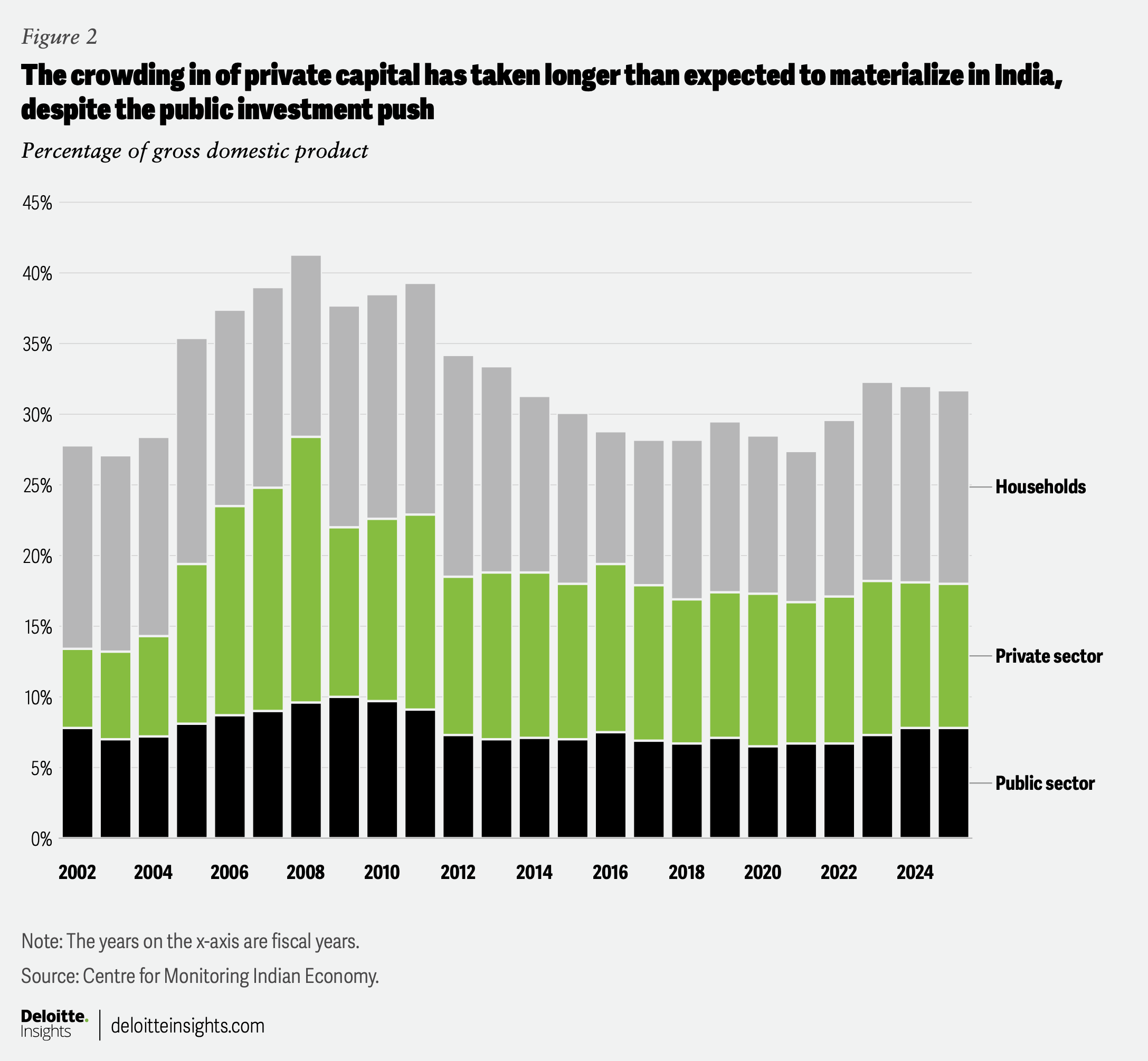
Yet, the anticipated crowding-in of private investments was slow to materialize. The share of private investments fell after fiscal 2018 to 2019 (figure 2), and is currently hovering around 10%.
The reason may be in a combination of three factors:
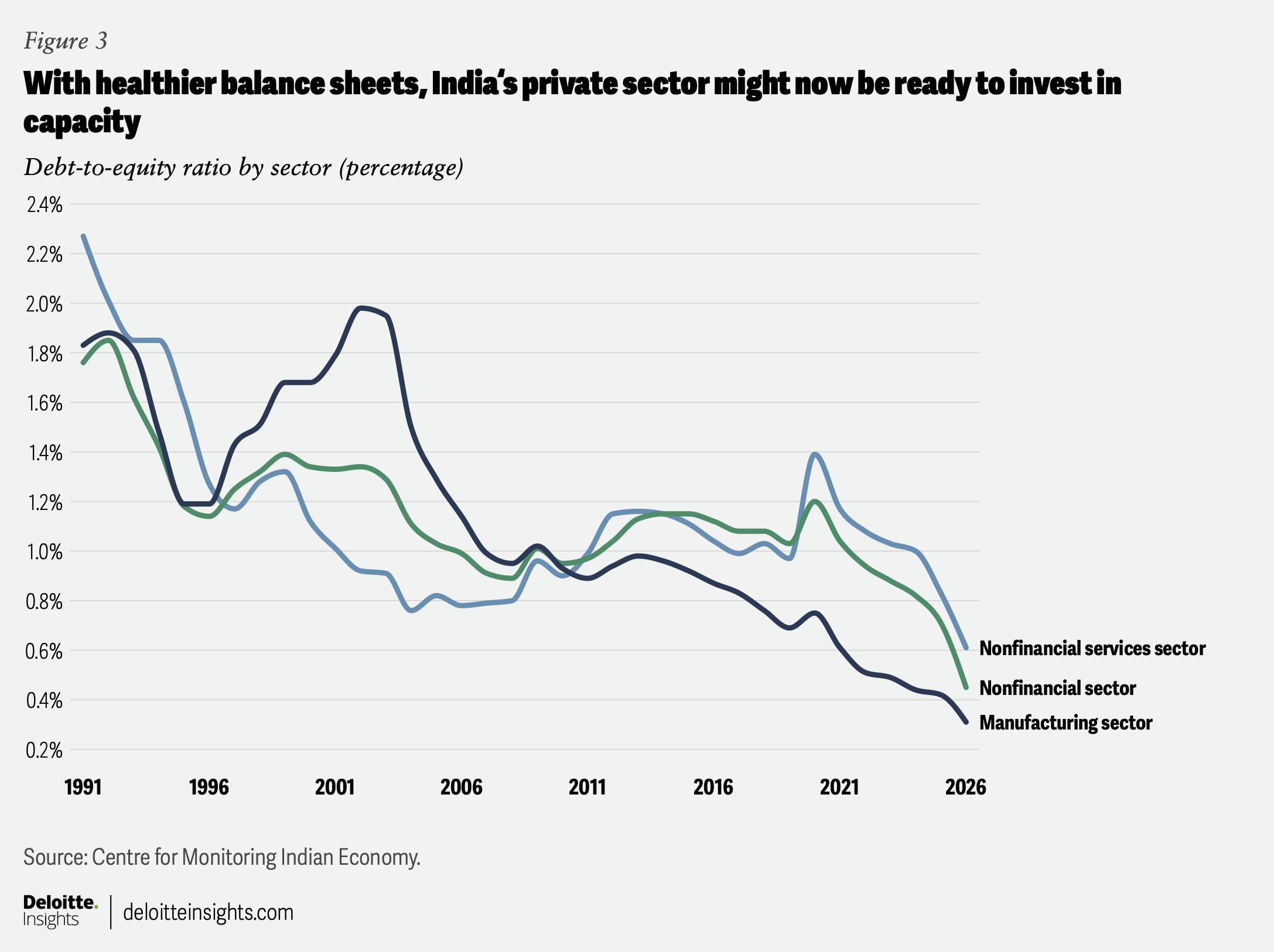
- Corporate deleveraging: Indian corporations spent much of the previous decade deleveraging and repairing balance sheets after the investment boom of the 2000s (figure 3), with little incentive to add capacity until preexisting levels were better utilized and demand was clearly visible.
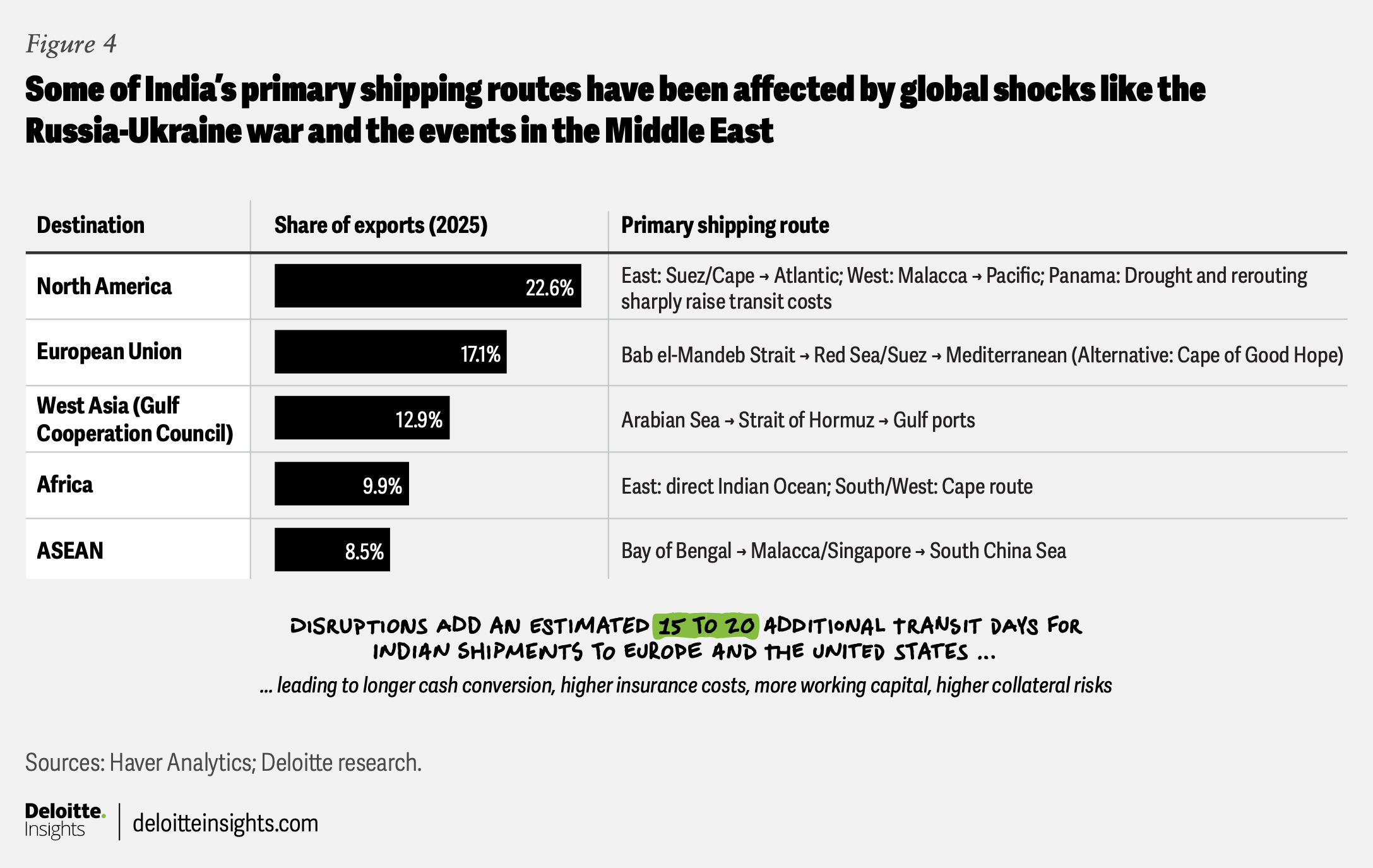
- Repeated global shocks: The period in which India’s infrastructure push was expected to help crowd in private capital coincided with an extraordinary sequence of global shocks (the development of the National Infrastructure Pipeline was followed almost immediately by the pandemic. The recovery, thereafter, was disrupted by the Russia-Ukraine war, sharp commodity-price hikes and high inflation, monetary tightening, the conflict in the Middle East, disruptions along critical shipping routes, and heightened trade and tariff uncertainty (figure 4).
- A higher threshold for committing capital: Corporate profitability and physical capital formation diverged after the pandemic, despite low corporate leverage (figure 5). Persistent uncertainty appears to have held back investment due to uncertainty.
A study by the Reserve Bank of India corroborates this, finding that higher uncertainty reduced aggregate capital formation and prompted firms to adopt a “wait-and-see” approach, explaining why stronger balance sheets did not translate more quickly into private capex.10
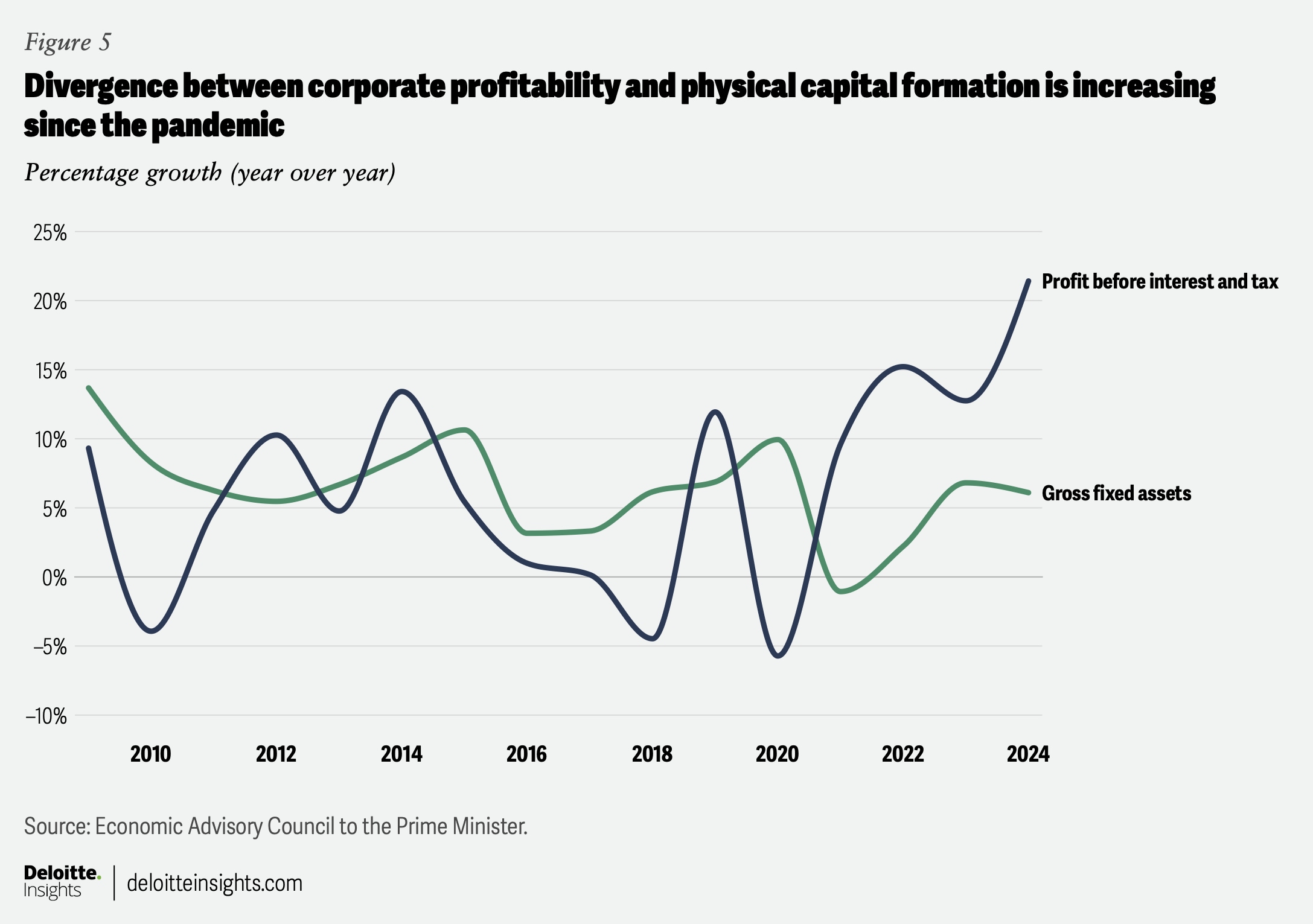
This is perhaps why the investment response needs to be viewed differently. The absence of an immediate private capex boom did not necessarily mean that India’s infrastructure push had failed to crowd in investments. The transmission itself may have been delayed as successive shocks raised the hurdle and uncertainties for businesses to commit capital.
Is India approaching a private investment cycle?
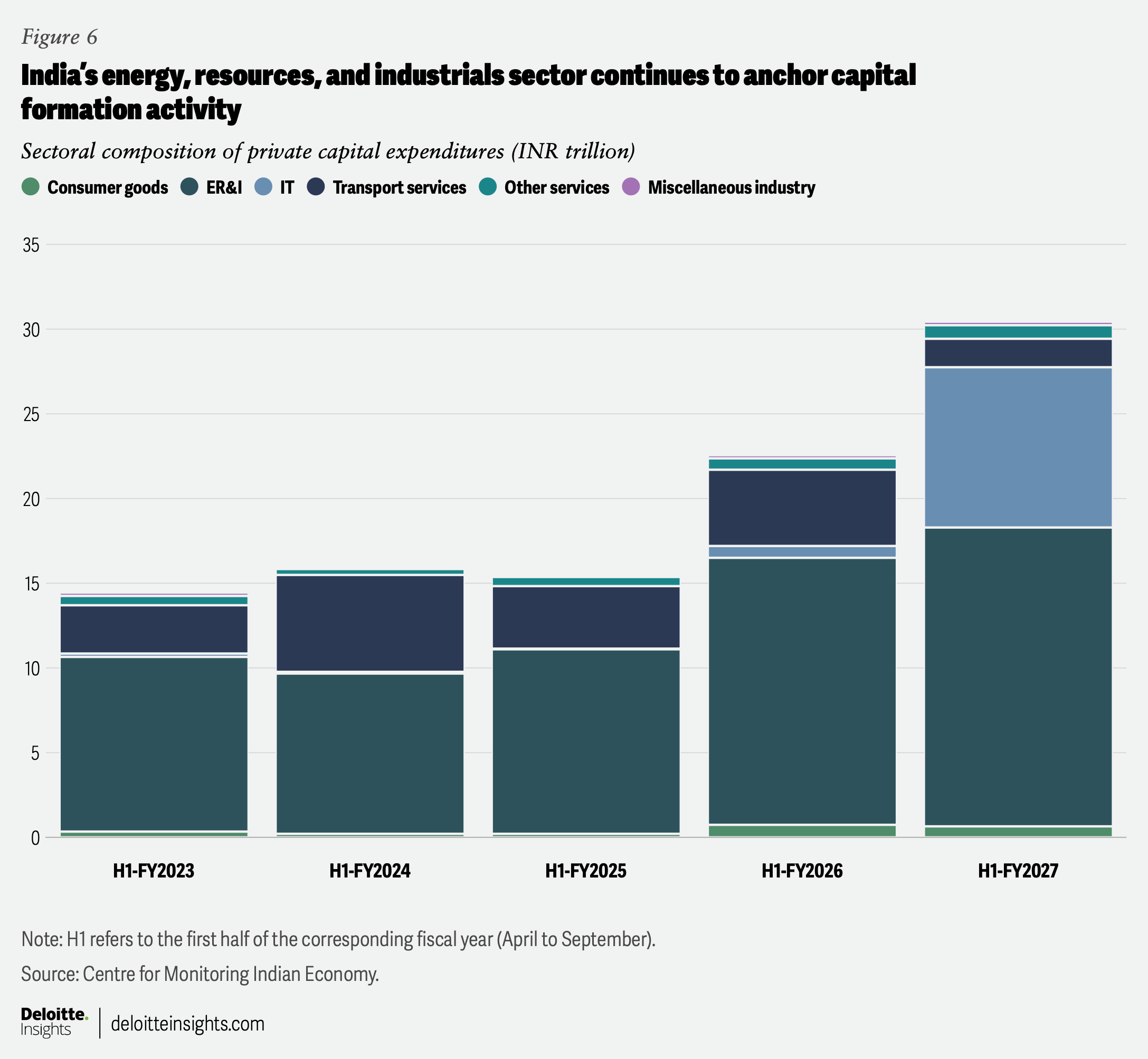
To answer that, we need to look beyond headline numbers for gross fixed capital formation and analyze its cross-sector trends (figure 6). Energy, resources, and industrials continues to anchor activity, with its contribution strengthening over the past year.
The sectoral mix is also broadening, with information technology emerging as a significant new driver of activity. Contributions from transport services, consumer goods, and other sectors also continued (figure 6).
The past two decades suggest cyclical movement of capex, with rapid expansion followed by relatively prolonged moderation. Our analysis indicated that private investment has generally strengthened when several economic conditions are aligned, rather than in response to any single trigger (see “What drives private capex—and when?”).
A regression analysis of quarterly data since 2001 points to the fact that business investments are a sequential outcome of persistent consumer demand, availability of finance, existing capacity utilization, and rising buildup of capital spending and imported machinery, along with higher public investments:
- Private final consumption expenditures: Sustained growth in household consumer spending—measured by PFCE—provides sufficient visibility into future sales before committing to investing. Our model suggests a three-quarter lagged effect of consumer demand on investment. In recent quarters, its share of GDP has peaked at 67.5%.
- Capacity utilization: As existing capacity becomes increasingly stretched, the incentive to invest in new capacity strengthens. Capacity utilization has averaged above 75.7% for six consecutive quarters, with diminishing spare capacity influencing investment decisions with a lag of two quarters.
- Public capex: Improving public infrastructure tends to crowd in private capex with a lag of three quarters or more, and the infrastructure created through several years of elevated public capex is now increasingly available for businesses to use.
- Industry credit growth: Better access to finance usually precedes investments by at least three to four quarters, and low policy rates have enabled growth of industry credit to reach an all-time high of 20% in July 2026.
- Capital-goods production and imports: These are more immediate signals that investment plans are moving toward implementation. Domestic capital-goods production, which captures machinery manufactured within India, has reached all-time highs in recent quarters. Capital-goods imports also capture equipment sourced from abroad and remain elevated.
These suggest cautious optimism on the part of the Indian economy.
Recent national accounts data add to these signals: Real gross fixed capital formation expanded by 11.9% year over year in the first quarter of fiscal 2026 to 2027—the fastest pace in four years—while its share of nominal GDP increased to 34.3%.
While one quarter does not establish a private investment cycle, and aggregate GFCF does not explain the share of private investment, several economic conditions that historically preceded stronger private capital formation make the recent acceleration in private investment harder to dismiss as an isolated development.
The evidence, so far, points to green shoots and that India may be closer to the beginning of a new private investment cycle than headline private capex numbers alone currently suggest.
Indian economy: Growth outlook
If these early signals persist, the implications will extend beyond investment itself. A stronger private capex cycle will add another engine to domestic demand, alongside consumption, while progressively expanding productive capacity and creating more jobs. This emerging investment momentum, therefore, also shapes our expectations for India’s growth over the next two years.
We remain optimistic about India’s growth prospects over the next two years. We expect the economy to grow between 7.1% to 7.3% in fiscal 2026 to 2027, followed by 6.6% to 7% growth in the subsequent year, supported by resilient domestic demand (figure 7). Consumption will likely remain steady, aided by easing inflation later in the year and increased credit growth, while investment is expected to provide an additional impetus to growth as the benefits of past public infrastructure spending increasingly crowd in private capital. The external environment, however, will remain uncertain, with geopolitical tensions, volatile capital flows, and intermittent trade and supply chain disruptions posing downside risks.
Sustaining this momentum will require the investment environment to keep pace with India’s growing capital requirements, as it remains poised to be an important engine of global economic growth.
The next phase of reforms will, therefore, have to focus on making it easier, faster, and more predictable for domestic and foreign capital to be put to productive use.
Investment revival to investment regime
Global uncertainty delayed investment decisions earlier, but now firms may be more willing to invest despite it. Building momentum will require continued next-generation reforms that respond to the needs of a larger, more complex, and increasingly tech-driven economy. We see four areas of particular importance:
- Improving ease of conducting business. India has made considerable progress in digitizing approvals and simplifying regulations. The next phase will have to focus on reducing the actual time and uncertainty involved in setting up and operating businesses—from land acquisitions and environmental clearances to utilities, taxation, contract enforcement, and dispute resolution. Greater regulatory predictability across the investment life cycle will be particularly important for attracting long-term domestic and foreign capital.
- States to be the next stage of investment reforms. The experience of investing in India is ultimately shaped at the state and local levels. States will have to compete increasingly with investment outcomes in mind, including the time taken to operationalize projects, infrastructure quality, availability of land and skills, and the ability of existing businesses to expand. Greater convergence in business conditions across states will also be required to broaden investment beyond established industrial hubs.
- Move from infrastructure creation to investment ecosystems. Infrastructure built over the past several years will have to be leveraged to develop integrated industrial clusters around ports, freight corridors, logistics networks, and urban centers. Strategic sectors such as electronics, semiconductors, clean energy, and advanced manufacturing will require ecosystems that connect large firms with suppliers, skills, technology, research institutions, and export markets. The role of micro, small, and medium enterprises will be critical—something we analyzed in a previous piece.
- Broaden access to long-term capital and technology. India’s investment requirements will be too large to rely predominantly on government resources and bank financing. Deeper capital markets and greater participation by institutional and foreign investors will be critical to mobilize patient capital.
Attracting foreign direct investment will have to be seen not only as a source of financing but also as a means of accessing technology, global supply chains, and markets. During times of global volatility, appropriate financial-market measures will also be important for maintaining investor confidence and limiting disruptions to capital flows.
The recent FCNR(B) measures by the Reserve Bank of India (term deposits held by nonresident Indians in permitted foreign currencies in Indian banks) provide an example of how such interventions can help restore confidence. The special swap scheme helped attract substantial foreign-currency inflows, supported foreign exchange reserves, and eased pressure on the rupee.11
Now, a combination of deeper domestic capital markets and credible policy interventions during periods of external stress will be important to ensure that temporary fluctuations do not constrain longer-term investment ambitions.
The 1991 reforms12 expanded where and how businesses could invest. Future reforms will have to make it easier, faster, and more predictable to put capital to productive use, which will be instrumental to translating today’s growth opportunities into sustained investment momentum.
By
Dr. Rumki Majumdar
Debdatta Ghatak
Editorial (including production and copyediting): Arpan Saha, Preetha Devan, and Anu Augustine
Design: Harry Wedel
Knowledge services: Rohan Singh