
2027 Commercial Real Estate Outlook
As commercial real estate enters 2027, shifting capital flows, uneven property performance, and rapid advances in AI are reshaping investment and operating strategies
Commercial real estate is expected to enter 2027 with capital continuing to flow, but with less room for indiscriminate spending. A more cautious outlook, tighter budgets, and growing disparities across the market are prompting leaders to decide—asset by asset and capability by capability—where investment makes the most sense.
That sorting extends beyond properties to markets, tax strategy, workforce planning, and technology. The firms well-positioned to outperform may not be those that spend the most, but those that act with the greatest discipline, upgrading where demand supports it, selling assets with limited prospects for recovery, bringing tax into investment decisions earlier, governing AI before scaling it, and building the leadership capabilities the next cycle will likely require.
Deloitte’s 2027 Commercial Real Estate Outlook by the numbers
- Business sentiment: Commercial real estate (CRE) executives are preserving capital, according to Deloitte’s survey of 950 industry leaders (see methodology). But they remain confident in their core business operations, with 51% of respondents still expecting their revenues to grow more than 5%.
- Portfolio strategy: Nearly 80% of respondents expect to update or reposition existing assets over the next 12 to 18 months.
- Tax strategy: Over 60% of executives surveyed plan to shift capital to jurisdictions or assets with stronger tax incentives. More than 90% say tax strategy will be more central or is already central to their investment decisions.
- CRE leadership of the future: Two out of three CRE executives say AI and data fluency will be among the most important capabilities for future leaders.
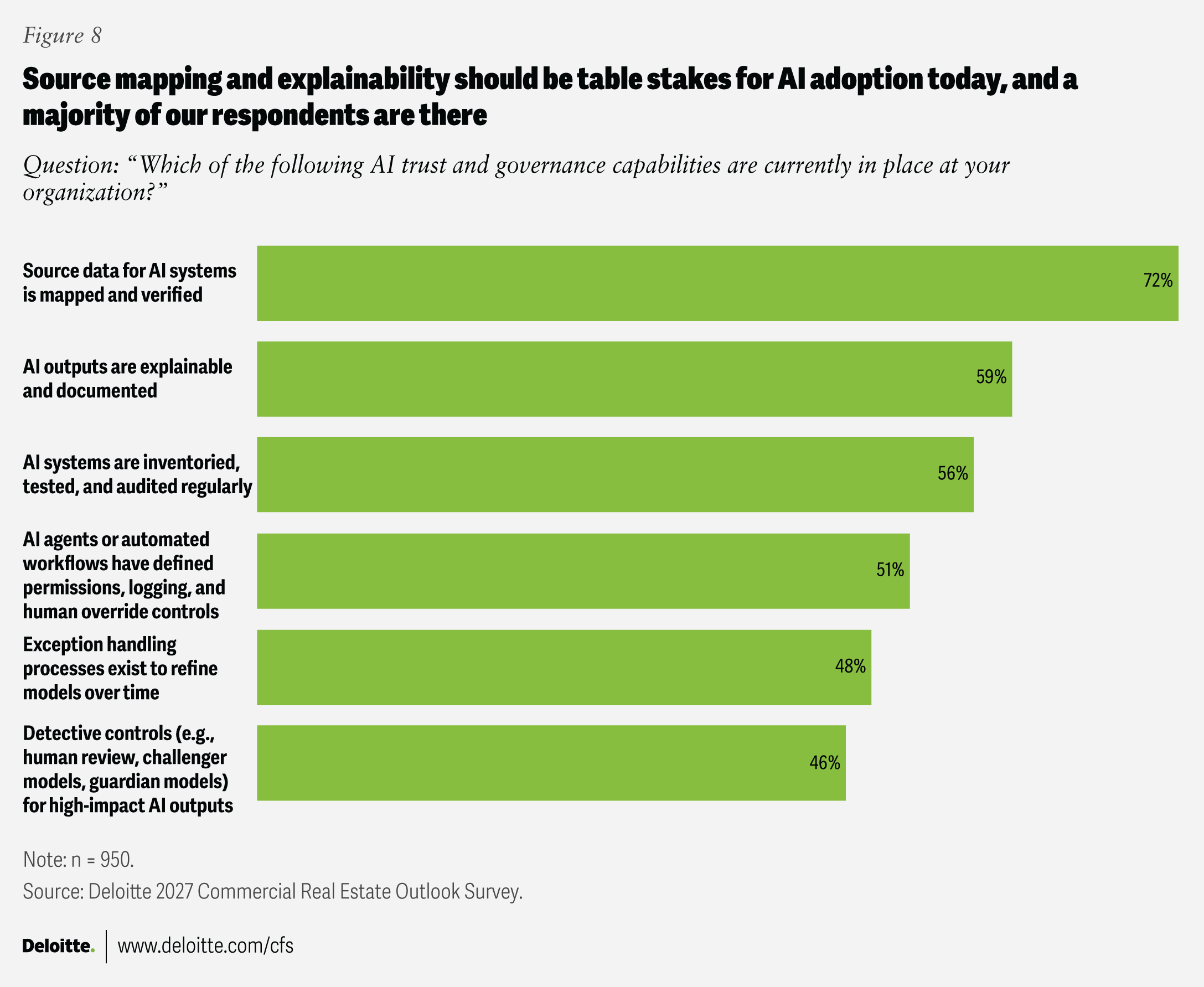
- Artificial intelligence: While 72% of respondents have completed preliminary data mapping and source verification for their AI systems, fewer than half have implemented more advanced process and security controls.
A fluid macroeconomic environment could reroute global CRE capital flows
The global CRE industry is expected to enter 2027 with more capital in motion but less certainty about where to deploy it. That uncertainty reflects an increasingly uneven economic landscape, as divergent growth, persistent inflation, uncertain interest rates, and currency volatility may be widening performance gaps across regions, property types, and assets.
Business sentiment dips, but some CRE organizations may have built up fortifications to defend against further uncertainty
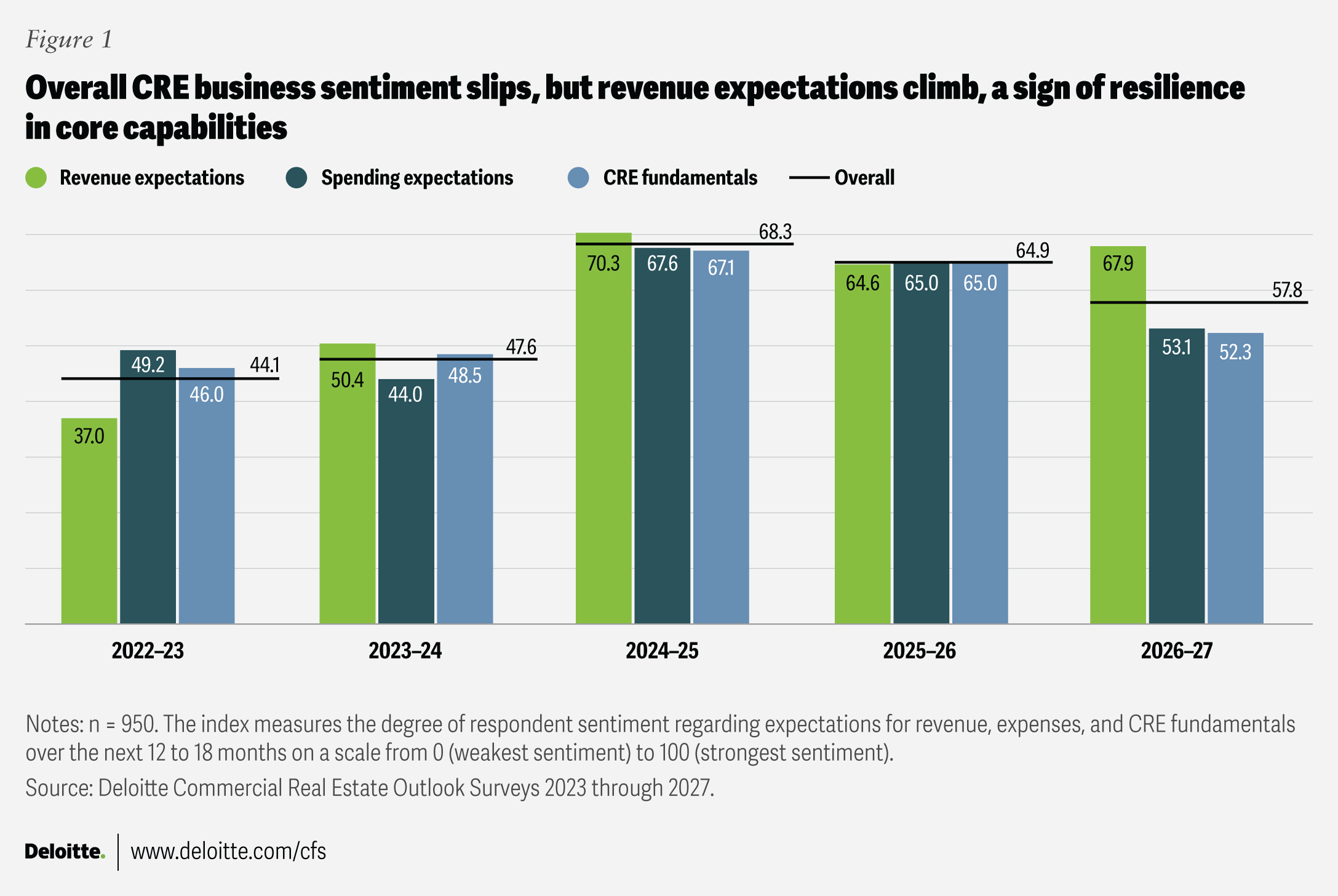
CRE executives surveyed are becoming more cautious about spending and market conditions. The sentiment index declined for the second year in a row, falling to 57.8 out of 100, down from 64.9 last year and 68.3 in 2025. Respondents plan to tighten spending in areas like office space and talent management, and they anticipate slower growth in rents and elevated vacancies.
By contrast, this year is one of the strongest on record for expected growth in revenues among respondents. Forty-one percent of executives expect their revenue to grow between 5% and 10% in the upcoming year, a higher proportion than in 2026. These relatively strong growth expectations pushed the revenue sentiment index to 67.9, just below its 2025 record of 70.3 (figure 1).
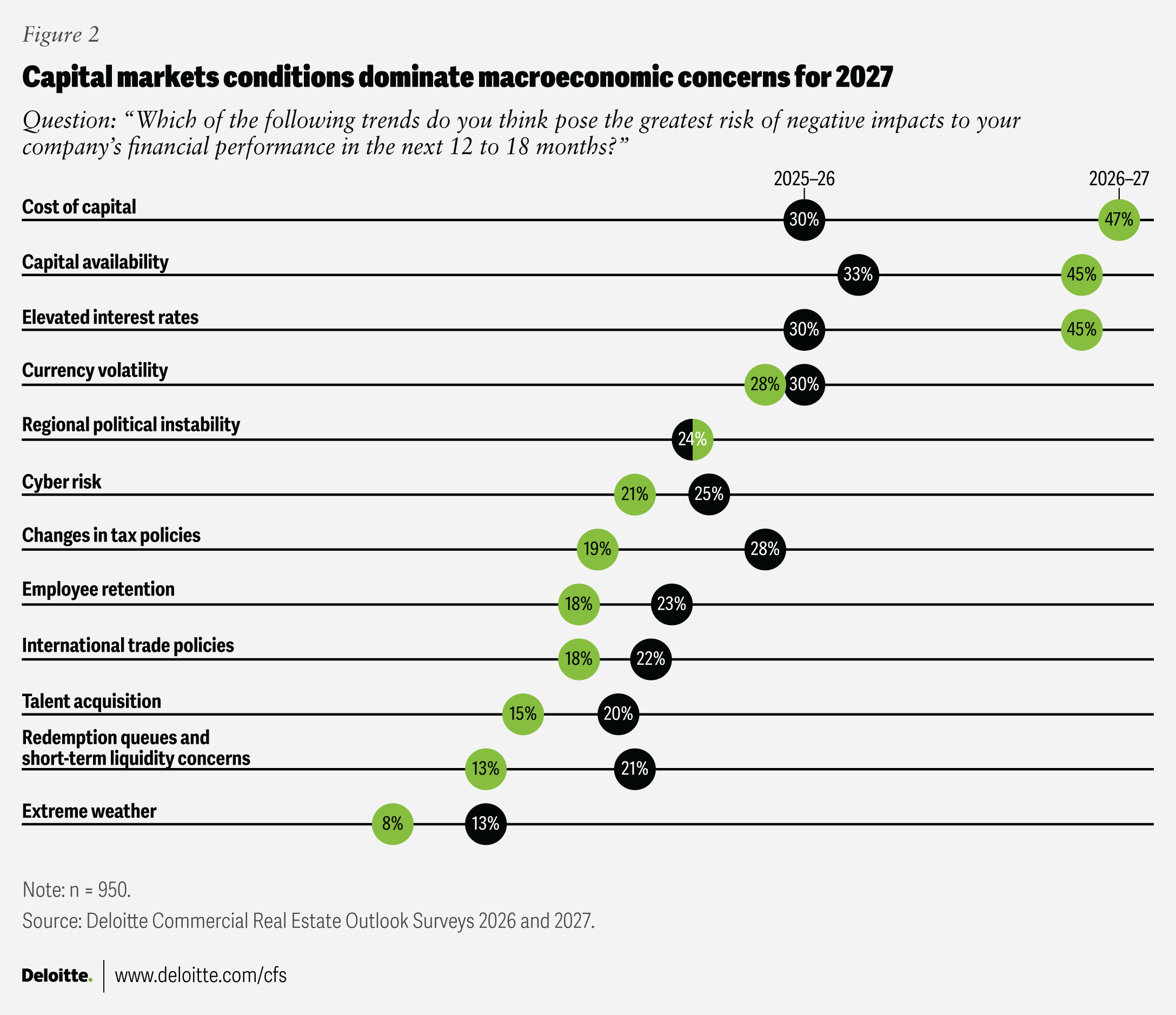
Respondents cited the cost of capital, capital availability, and elevated interest rates as their top three macroeconomic concerns for the next 12 to 18 months—the same three as last year (figure 2). Those concerns could become more pressing as trillions of dollars in CRE loans mature in a potentially higher-for-longer rate environment, which could contribute to valuation stress and distress-led buying opportunities.1
At the same time, available capital has become increasingly concentrated in a handful of sectors and strategies. Together, digital economy and debt strategies accounted for more than two-thirds of capital raised in 2025, potentially limiting the capital available to other sectors and strategies in 2026 and 2027.2
Surveyed CRE investors indicate their preferences for the United States, United Kingdom, and India
Despite ongoing economic uncertainty, investor appetite for real assets remains strong. In fact, cross-border CRE capital was up 18% in the first quarter of 2026 from the same time the previous year.3 What’s more, nearly 80% of survey respondents expect to increase investments in real assets by early 2028 to seek stable or excess returns, while also diversifying their portfolios.
As economic conditions diverge across regions, global CRE capital could increasingly shift toward markets where investors see stronger opportunities. The top geographic targets for investment among respondents, outside of their own countries, are the United States, United Kingdom, and India. The United States remains the top target for 28% of respondents, up from 16% last year (figure 3). This increase may reflect improved CRE liquidity and AI-linked opportunities in US gateway markets.4
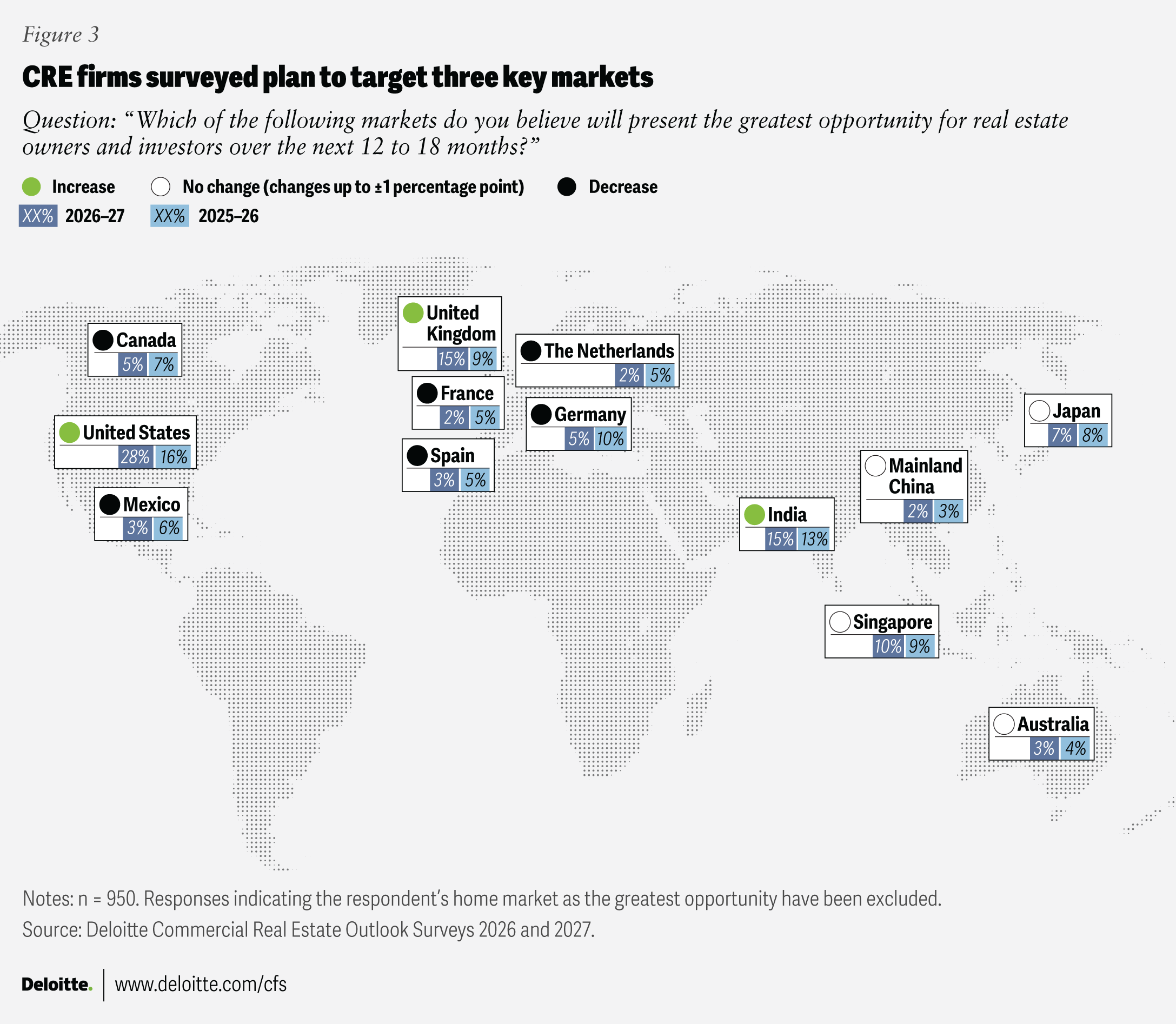
Investment has shifted away from continental Europe amid slower regional recovery and interest-rate sensitivity.5 Transaction activity in the region was down 10% year over year for the second quarter of 2026. US investors, the largest source of European cross-border capital, are weighing opportunities to capture demand driven by AI, primarily in Asia Pacific, when they aren’t looking domestically.6
Actions for management to consider
- Re-underwrite every target market and major property financing and refinancing within the next year using all-in debt costs, currency shocks, and highly localized demand scenarios.
- Set market-specific hurdle rates and pre-agreed triggers to determine if investment, refinance, or exit options exist.
- Reserve dry powder for property acquisitions with clear pricing dislocations and protect capital for opportunities that still clear return thresholds even in downside scenarios.
Diverging property fundamentals may call for more selective asset strategies
Heading into 2027, markets are not lifting all properties equally. Globally, occupier demand is increasingly concentrated in modern, well-located properties. Older or less functional buildings, by contrast, often face higher vacancies and costly upgrades, while physical constraints and conversion economics can leave owners with uncertain paths to recovering value.7
Owners are reassessing which assets to upgrade, reposition, or sell
CRE firms should consider prioritizing portfolio triage this year, directing upgrades toward assets with strong tenant demand and achievable rent premiums. Evolving tenant preferences—such as demand for higher-quality properties, flexible space configurations, and more efficient use of space to ensure longevity—are prompting some organizations to reassess the resilience of their assets.8
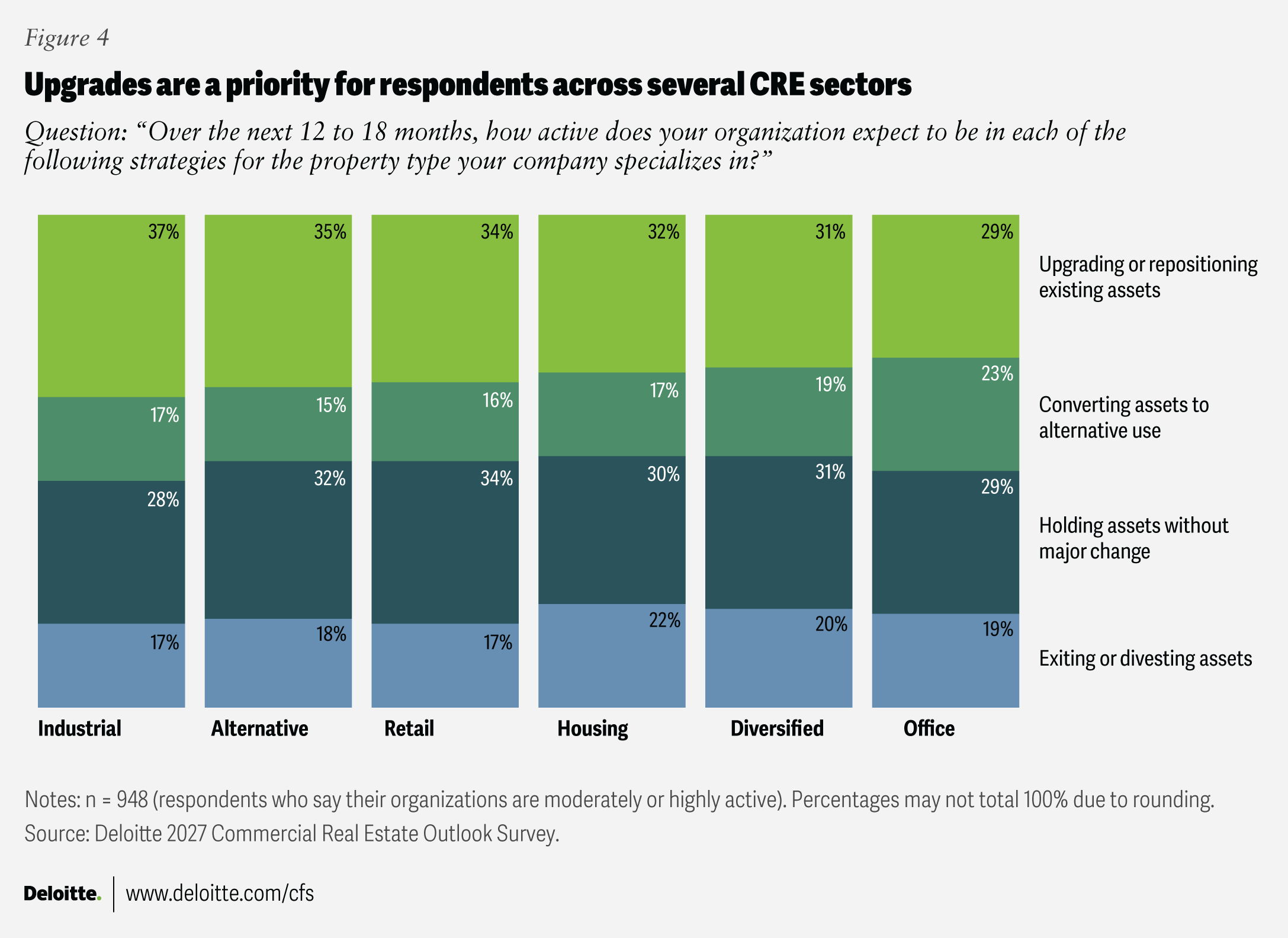
Nearly 80% of respondents expect to upgrade or reposition assets, including 38% who plan to be highly active. By contrast, 39% expect no conversion activity and 46% no sales, suggesting owners remain reluctant to realize potential losses.
Executives specializing in industrial and alternative property types place the most emphasis on upgrading or repositioning existing assets (figure 4). Those specializing in offices were most likely to convert these assets for alternative uses (23%) compared to any other property type. Housing organizations, meanwhile, indicated the most willingness to exit from or divest assets (22%).
Survey respondents reach a consensus on top property sector opportunities
When asked which property types will present the greatest opportunities over the next 12 to 18 months, respondents favored logistics and warehousing, closely followed by digital economy properties (figure 5). Executives showed greater agreement on the top four property types than in recent years.
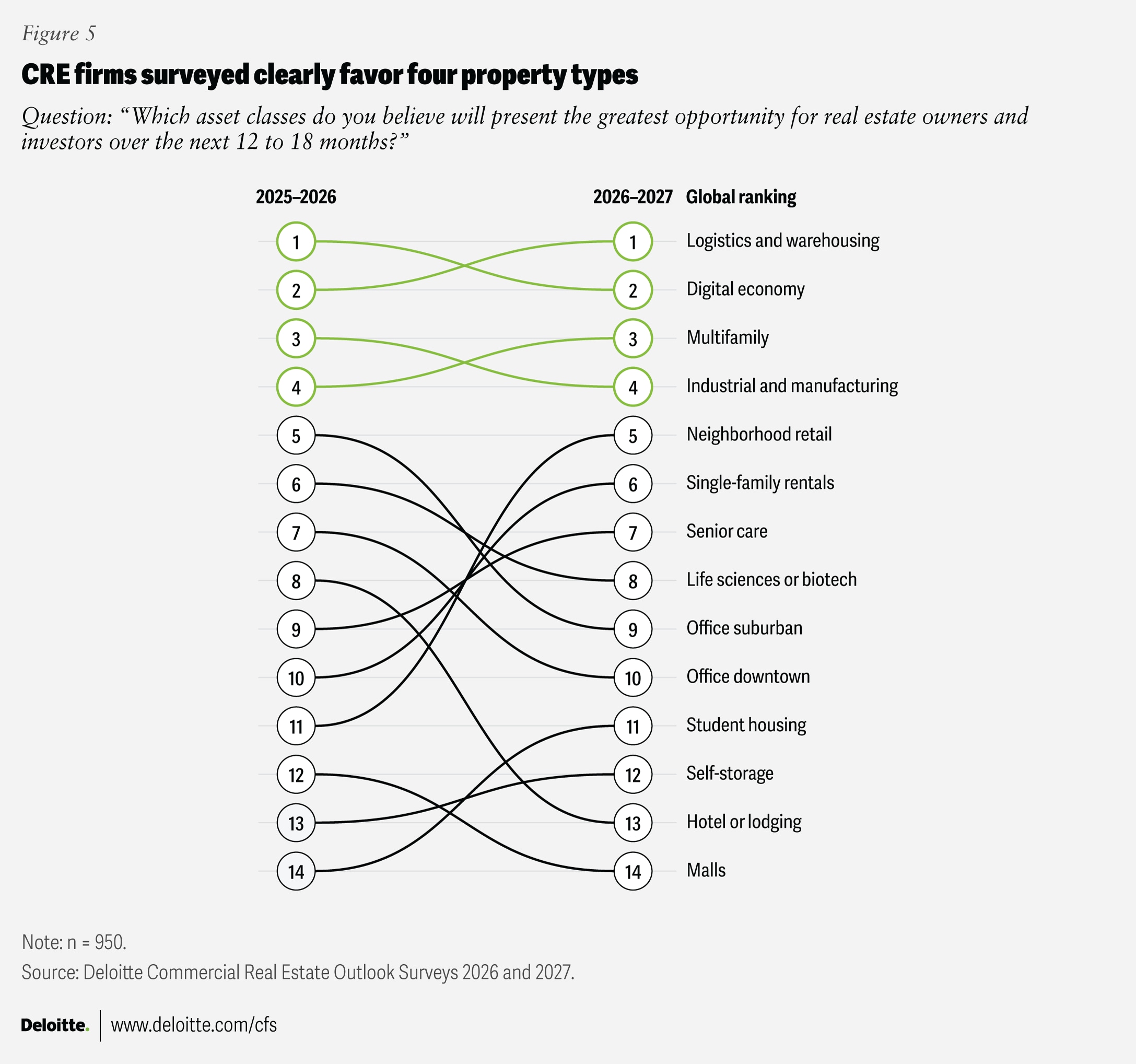
Two consumer-facing property types saw some of the biggest shifts in this year’s rankings—but in opposite directions. Hotel or lodging dropped from eighth place for 2026 to 13th for 2027. This may be because travelers appear to have become more sensitive to prices, safety concerns, and growing competition from lodging alternatives.9 Neighborhood retail, by contrast, jumped six places, from 11th to fifth. Limited availability and development pipelines have supported strong occupancy and rent growth in these areas.10
Actions for management to consider
- Complete asset-by-asset triage within the next six months, assigning properties to an upgrade, hold, convert, or sell designation.
- Prioritize upgrades only for assets where verified demand and rent premiums can cover the capex.
- Explore alternative use options for all assets with upgrade, convert, or sell designations to understand all available options for underperforming parts of the portfolio.
- Begin selling assets that cannot meet a post-investment return hurdle within the next year.
Tax considerations are becoming more central to CRE investment strategy
As CRE firms become more selective about where and how they deploy capital, tax considerations are becoming a more important part of the equation. Decisions about which markets and assets to invest in could benefit from considering not only potential returns, but also the tax implications that can shape them.
Tax strategy can be a more active source of real estate value creation and retention
For CRE owners and investors, 2027 may be the year when tax strategy moves from the back office to the investment committee. Our survey shows 32% of respondents expect tax strategy to play an even more central role in their investment decisions over the next 12 to 18 months. After several years of pressure from higher capital costs, uneven demand, and valuation uncertainty, the ability to translate tax policy, incentives, credits, and structuring choices into after-tax cash flow could give companies an edge.
The opportunity starts with timing. Owners that integrate tax analysis earlier in the deal cycle may identify opportunities for accelerated cost recovery, cost segregation, repair-versus-capitalization treatment, and basis planning before commercial terms are locked.
Incentives and credits should also be treated as factors for location selection and capital allocation. In the United States, 2027 tax planning should account for two shifts: Certain federal tax benefits for energy-efficient commercial buildings were closed to new qualifying activity after June 30, 2026, and a revised, permanent version of the Opportunity Zone program is scheduled to start on Jan. 1, 2027.11 Globally, owners may also consider comparing markets where policy is improving project economics. In the United Kingdom, for example, there are early discussions around a policy of nominating “AI Growth Zones” designed to address power and zoning regulation, though there is no specific tax implication yet.12
Execution can determine who captures value
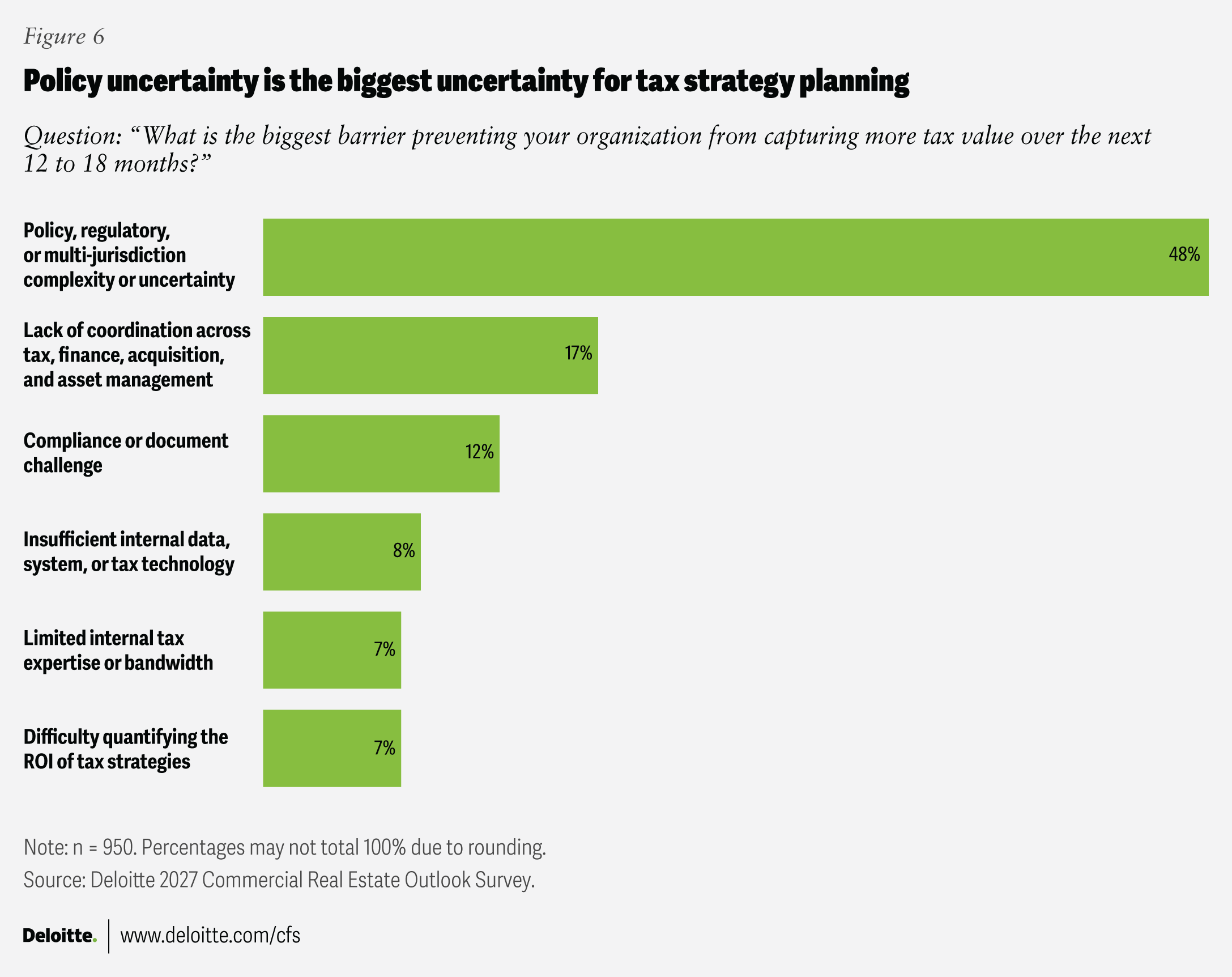
The value that tax planning can provide depends on early involvement, reliable data, thorough documentation, and coordination across tax, finance, acquisitions, development, asset management, and legal. While nearly half of respondents involve tax during underwriting or investment committee review, only 26% do so at origination. Divergent tax regimes and policy uncertainty further impact planning (figure 6). In 2027, firms could consider embedding tax specialists earlier across acquisitions, development, capital projects, asset management, and divestments.
Actions for management to consider
- Address tax planning strategy earlier in the deal process.
- Include considerations such as real estate transfer taxes, property taxes, after-tax internal rate of return calculations, incentive eligibility, and cost-recovery options in the tax department’s review.
- Maintain a quarterly jurisdiction tracker, and make site selection and capital allocation contingent on verified tax benefits, not just potential incentives to be explored later.
Among respondents, AI governance in CRE lags AI innovation
CRE has spent years trailing other industries in technology.13 The speed of AI developments is prompting the industry to play catch-up and raising questions about whether CRE firms can safely adopt and scale AI tools. While a little more than half of survey respondents are already seeing incremental operational gains from AI, the harder test is governance. Organizations need controls governing what they are building, who can access it, which data AI systems can access, how decisions are logged, whether there is an off switch, and how closely systems are monitored.
AI promise meets a rollout reality
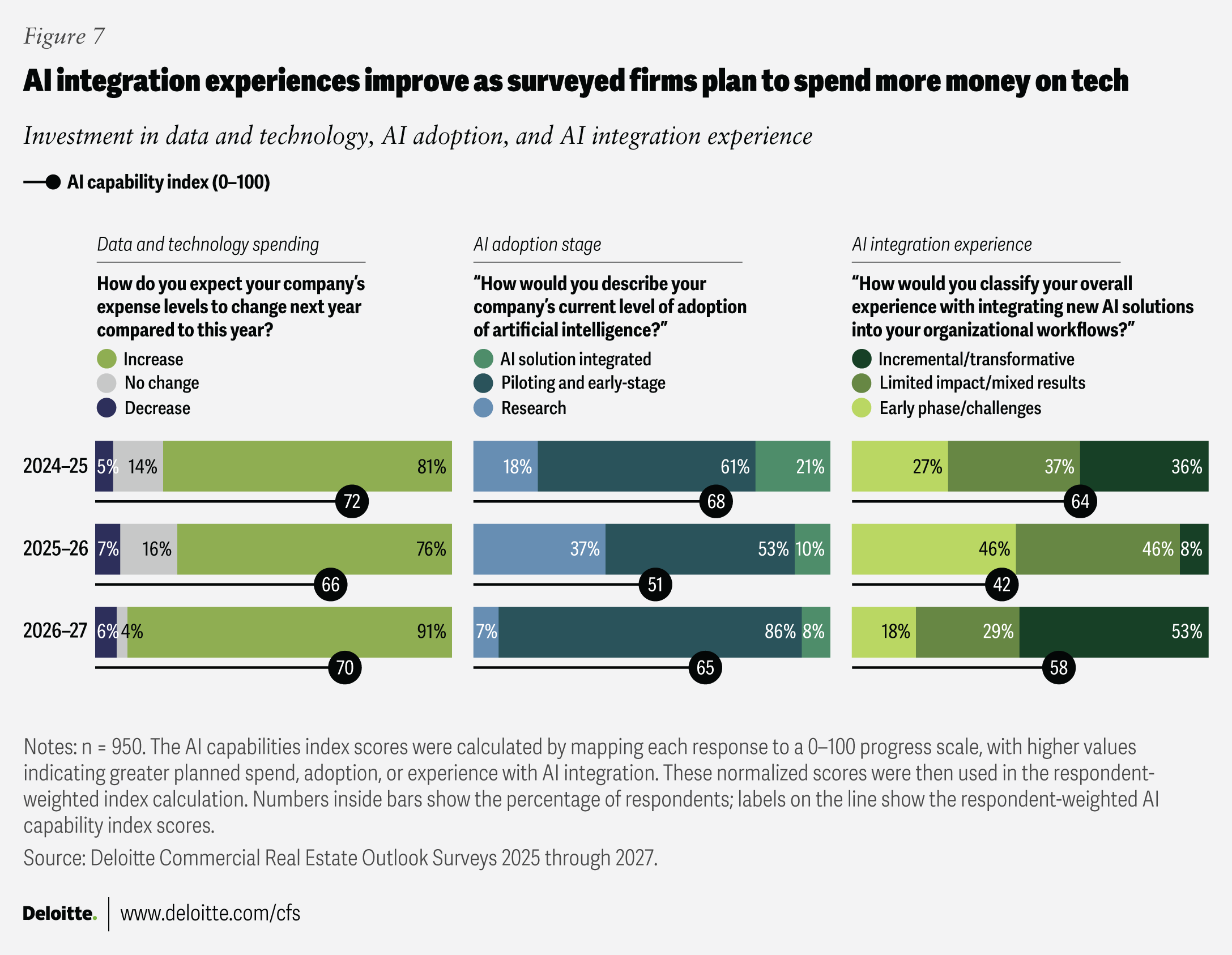
Some CRE firms are pushing past isolated AI experiments and pilots toward autonomous multistep workflows, but the leap from pilot to production remains difficult. Ninety-two percent of the surveyed respondents are in the piloting or research phase, while only 8% have integrated AI solutions. The gap may reflect readiness constraints—not simply interest—including uneven data foundations, legacy processes, governance gaps, and the organizational work required to move promising use cases into production.14 The dip, and subsequent expected 2026–2027 recovery, in the AI Adoption Index could be a reflection of firms resetting their benchmarks, as advanced large language models and enterprise-scale agentic AI may have prompted them to reassess capabilities, identify readiness gaps, and reimagine workflows.
That said, overall experience with AI integration is improving, and investments in data and technology are rising (figure 7). More than 90% of executives plan to increase spending on data and technology next year, up from 76% last year, and 16% expect to raise spending by more than 10%.
Within these new investments, some firms are also incorporating governance by mapping and verifying sourced data for AI systems (figure 8). Fewer than half of respondents reported implementing stronger controls such as challenger models, exception handling, or detective controls, suggesting that many firms may be getting better at explaining where an AI-generated answer came from. Still, AI explainability alone may not satisfy regulatory requirements.
Agentic AI is scaling across some real estate workflows, but so are the risks
Almost half of real estate organizations surveyed already have agentic AI running in some live production workflows. But without proper governance, AI agents are at risk of acting in ways that are operationally biased or non-compliant with internal policies. Some organizations appear further along in addressing these risks than others. Sixty-five percent of respondents at publicly listed companies have selective AI solutions already in production, versus 58% of institutional and private firms. Respondents at public organizations also may be leading on data readiness, with 78% saying source data is mapped and verified, compared to 71% of respondents at institutional firms and 66% at private firms. Regulation may be one of the primary reasons for the gap, encouraging public firms to develop stronger controls and data discipline.
CRE firms could face scrutiny if they do not implement proper governance. For instance, tenant-screening tools could impact applicants based on seemingly neutral factors such as postcode, credit history, or employment gaps, and outputs from pricing algorithms may be considered coordinated pricing behavior if based on biased information.15
Actions for management to consider
- Establish AI governance and compliance structure before scaling AI workflows.
- Take inventory of all AI systems, including third-party processors, within a defined timeframe.
- Conduct regular risk assessments once governance and compliance frameworks are in place.
- Monitor the highest-impact use cases for return on investment on a recurring basis and prioritize funding use cases that can be governed in production.
Technology is changing what CRE firms need from their next generation of leaders
As CRE firms adopt more advanced AI capabilities, they should have leaders equipped to manage the changes those technologies bring. Technology, AI, and data fluency are becoming increasingly important alongside the judgment and industry expertise CRE leaders have traditionally relied on.
AI is redefining what leadership in CRE looks like
More than half of respondents (54%) expect leadership skills to change significantly or fundamentally within 12 to 18 months, and 67% rank AI and data fluency as the top capability for rising leaders (figure 9). CRE leaders should understand how new technologies are changing business processes while maintaining oversight of how those processes operate.
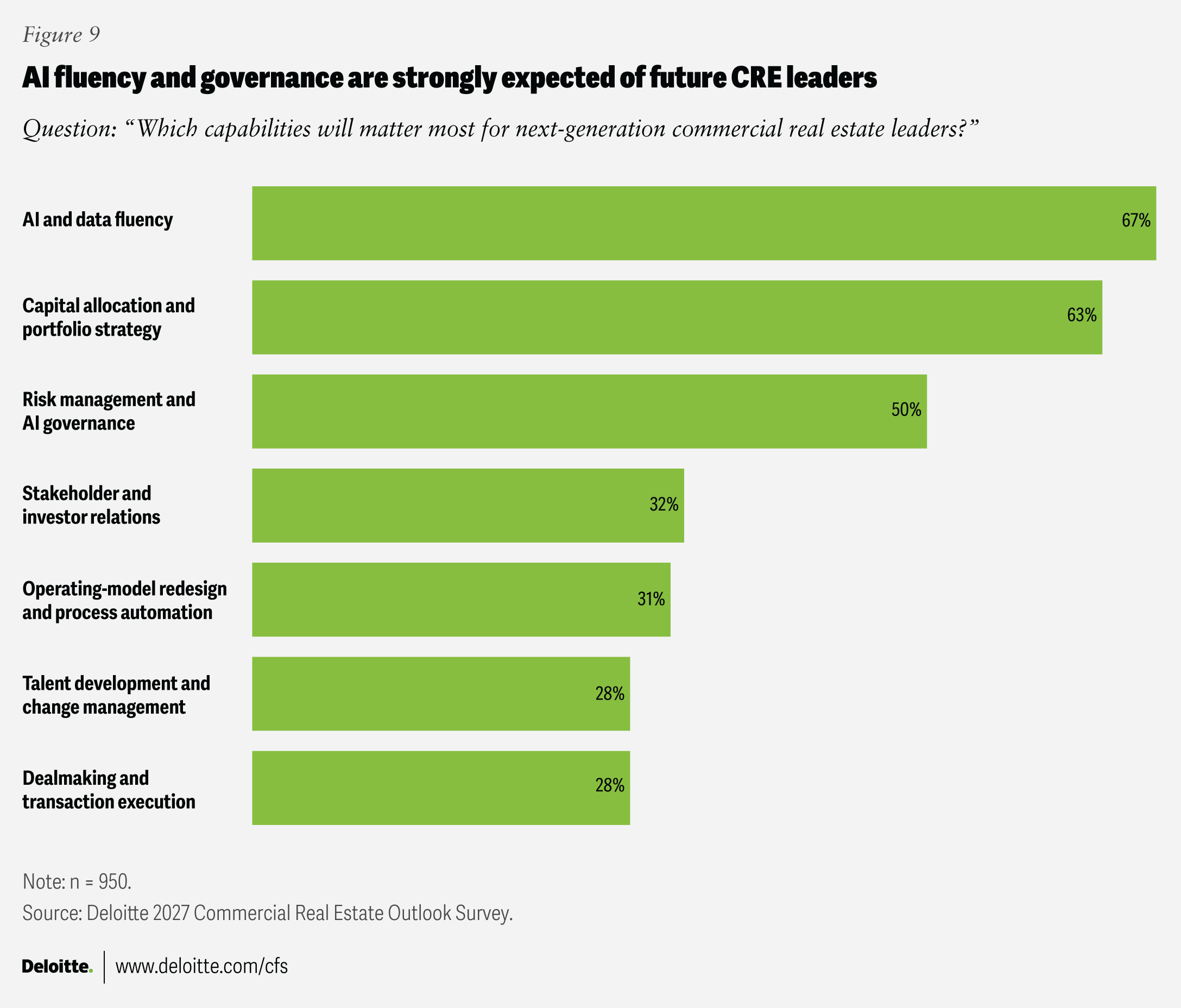
Beyond sponsoring technology deployments, executives should connect experimentation to investment decisions, risk management, governance, cybersecurity, and human oversight. Some organizations are seeking “AI-curious” executives who can operate in complex regulatory environments while preserving the execution discipline needed to create returns through uncertainty and market cycles. As companies move toward agentic workflows, leaders may need to manage multistep execution and oversight of human and machine processes. Competitive advantage will likely come from product innovation and operating models, not just efficiency.
An aging CRE workforce raises the stakes for succession planning
Identifying the capabilities future leaders will need is only part of the challenge. CRE firms should have a pipeline of people prepared to step into leadership roles.
At 48.9 years old, the median age of workers in the real estate industry is the highest of those in any financial services sector, ahead of insurance (44.0), banking (43.5), financial investments (43.1), and non-depository credit (41.9), according to Deloitte research.16 With 40% of the US real estate workforce, and 59% of those in CRE leadership positions, reaching retirement age within a decade, developing the skills of the next generation is paramount.17
While most respondents say their companies have C-suite transitions lined up, only 30% describe themselves as “very prepared.” Their companies could still be vulnerable to leadership turnover and retirement risk. Just over 50% of respondents report they are informally developing promising internal candidates, and only 39% have identified and are cultivating qualified successors. Ten percent have limited or nonexistent succession plans.
Developing the next generation of CRE leaders should include a broader strategy
Firms may need to take a more systematic approach to succession and workforce planning to help close these readiness gaps, with succession treated as a resilience issue. Boards should annually stress-test leadership pipelines, track successor readiness and retirement exposure, and identify areas of concentrated knowledge. In addition, firms should redesign career paths, hire to build AI and data fluency for internal candidates, and use AI to map skills and bench-strength gaps. Technology can support forecasting and learning, but judgment, accountability, creativity, and relationship-based development should remain human-led.
Actions for management to consider
- Turn succession and workforce transformation into a 12-month operating program.
- Identify a succession pipeline and score candidate readiness.
- Require AI and data fluency alongside real estate judgment for top leadership.
- Develop leaders who can create value by redesigning work for humans and AI.
- Instead of waiting for vacancies to reveal gaps, move or hire against them.
2027 may put a premium on disciplined decision-making
2027 is unlikely to reward waiting for certainty. Leaders should fund upgrades where tenant demand and rent premiums are clear, convert where alternative-use economics work, and exit assets unlikely to regain relevance. They should also embed tax in underwriting, set market-specific hurdle rates, govern AI before scaling it, and formalize succession planning. In a year defined by greater selectivity, CRE firms that make disciplined choices about where to invest, adapt, and pull back will likely be well positioned for what comes next.
Continue the conversation
Meet the industry leaders
Lananh Nguyen
Tim Coy
By
Kathy Feucht
Sally Ann Flood
Tim Coy
The authors wish to acknowledge Trevor Jenne, Parul Bhargava, and Gaurashi Sawant for their extensive contributions to the development of this report. We would also like to thank our colleagues, Jamie Baker, Sarah Blonski, Viona Borreman, Jana Borer, David Brown, Darin Buelow, Renea Burns, Rebecca Chapman, Tony Cocuzzo, John D’Angelo, Suzanne Dwyer, Nathan Florio, Lize Griffiths, David Hagger, Rosie Haigh, Lynn Kawaminami, Jonathan Keith, Vijay Kr, Phillip Law, Marco Macagnano, Saurabh Mahajan, Vik Mills, Paul Ni, Brian Ruben, Stuart Rubin, Patrick Scheibel, Nina Schrader, Lauren Shahpar, Wyndham Smith, Takaumi Tamura, Alberto Valls, Jurrien Veldhuizen, and Caroline Waldock, for their insights and guidance.
Editorial (including production and copyediting): Aditi Rao, Stacy Wagner-Kinnear, Aparna Prusty, and Pubali Dey
Design: Molly Piersol
Cover image by: Alexis Werbeck; Adobe Stock
Knowledge services: Agni Wagh
Visit the Deloitte Center for Financial Services
Access more insights for the banking and capital markets, commercial real estate, insurance, and investment management sectors.