
2027 Chemical Industry Outlook
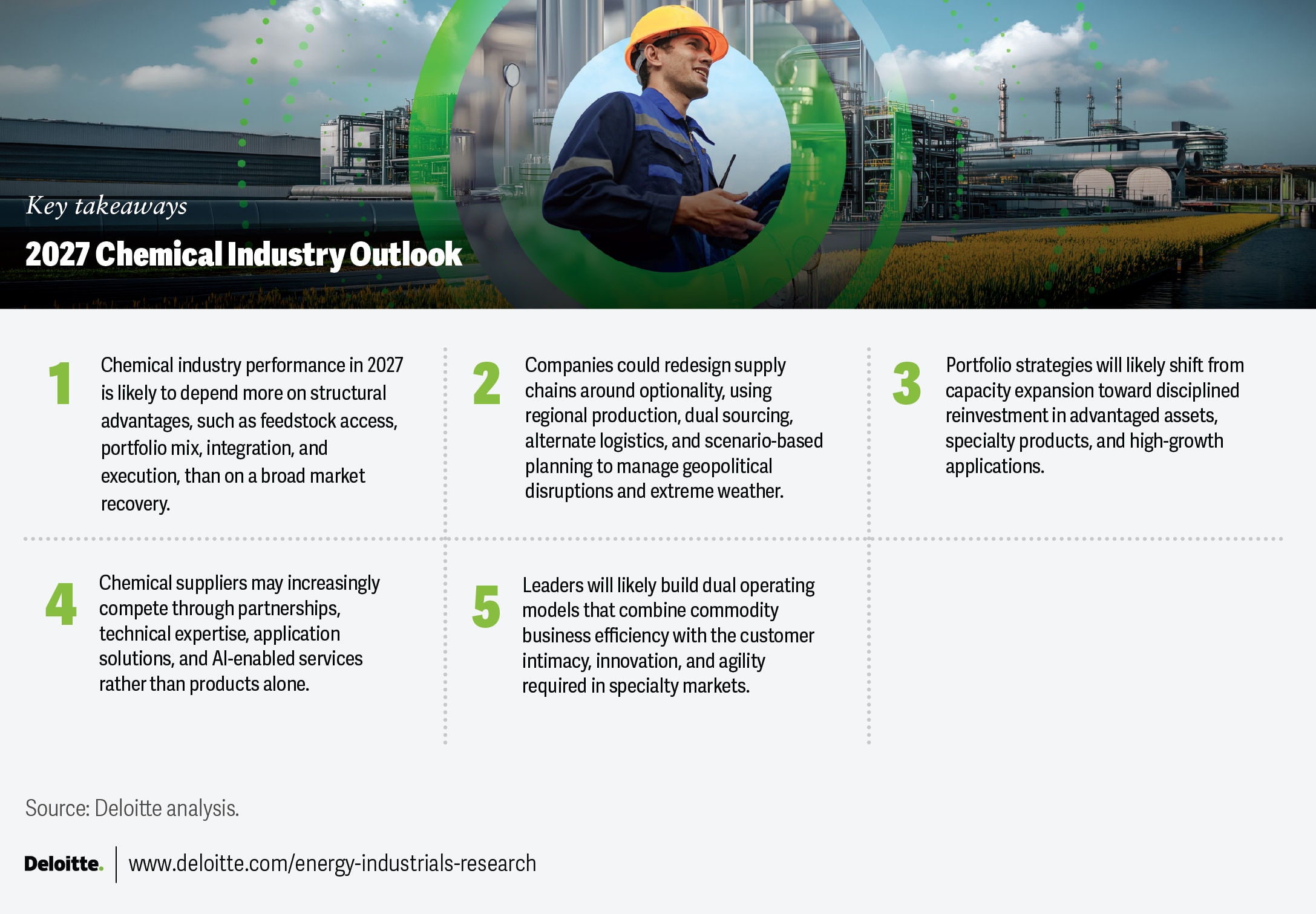
In 2027, company performance may depend on structural advantages and strategic choices rather than a broad-based market recovery
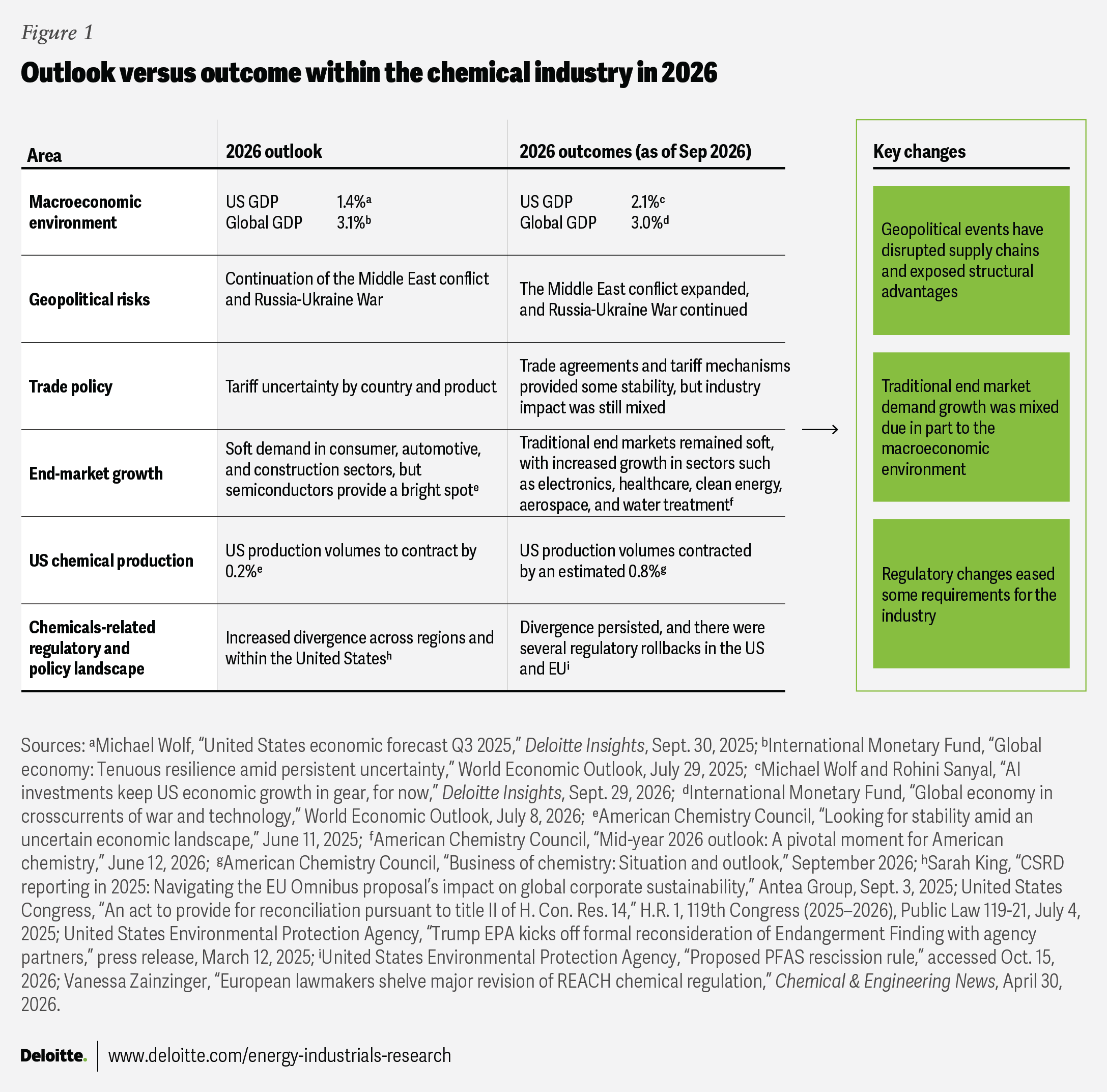
In 2026, persistent overcapacity and uneven end-market demand were among several factors that constrained a broad-based recovery across the chemicals industry. Moreover, geopolitical disruptions became a defining force for the industry, with disruptions in the Middle East reshaping feedstock costs and availability, chemical supply chains, and regional competitiveness. Against the same macroeconomic backdrop, results varied significantly from company to company during the first half of the year, demonstrating that performance is being driven less by the business cycle and more by structural factors such as feedstock position, portfolio mix, and value chain integration.1
Some in the industry are looking to 2027 for anticipated stability and market tailwinds. However, 2026 exposed some structural vulnerabilities in the industry (figure 1). Therefore, restoring balance will likely require a longer time horizon. To help navigate this environment and better position themselves for the future, some chemical companies may focus on areas within their control, such as portfolio management, disciplined capital allocation, operational excellence, commercial sophistication, innovation, and technology adoption.
A strategic question is no longer when the downcycle will end, but how companies can create value despite uncertainties. Some leaders may choose to adjust their portfolio to include specialty products, application solutions, and services, while strengthening customer intimacy, reinvesting in critical capabilities, and reinventing operating models by leveraging artificial intelligence and digital technologies. Some companies may need to manage a dual operating model, combining commodity-business discipline with the innovation, partnership, and technical fluency required for specialty markets.
Against this backdrop, the chemical industry is expected to undergo certain shifts, which frame the five trends we explore in this outlook.
- From disruption to optionality: Redesigning chemical value chains
- From rationalization to reinvestment: Scaling advantaged assets
- From volume to value: Expanding into new, critical markets and applications
- From product to partnership: Capitalizing on expertise and innovation
- From restructuring to reinvention: Building the next-gen operating model
1. From disruption to optionality: Redesigning chemical value chains
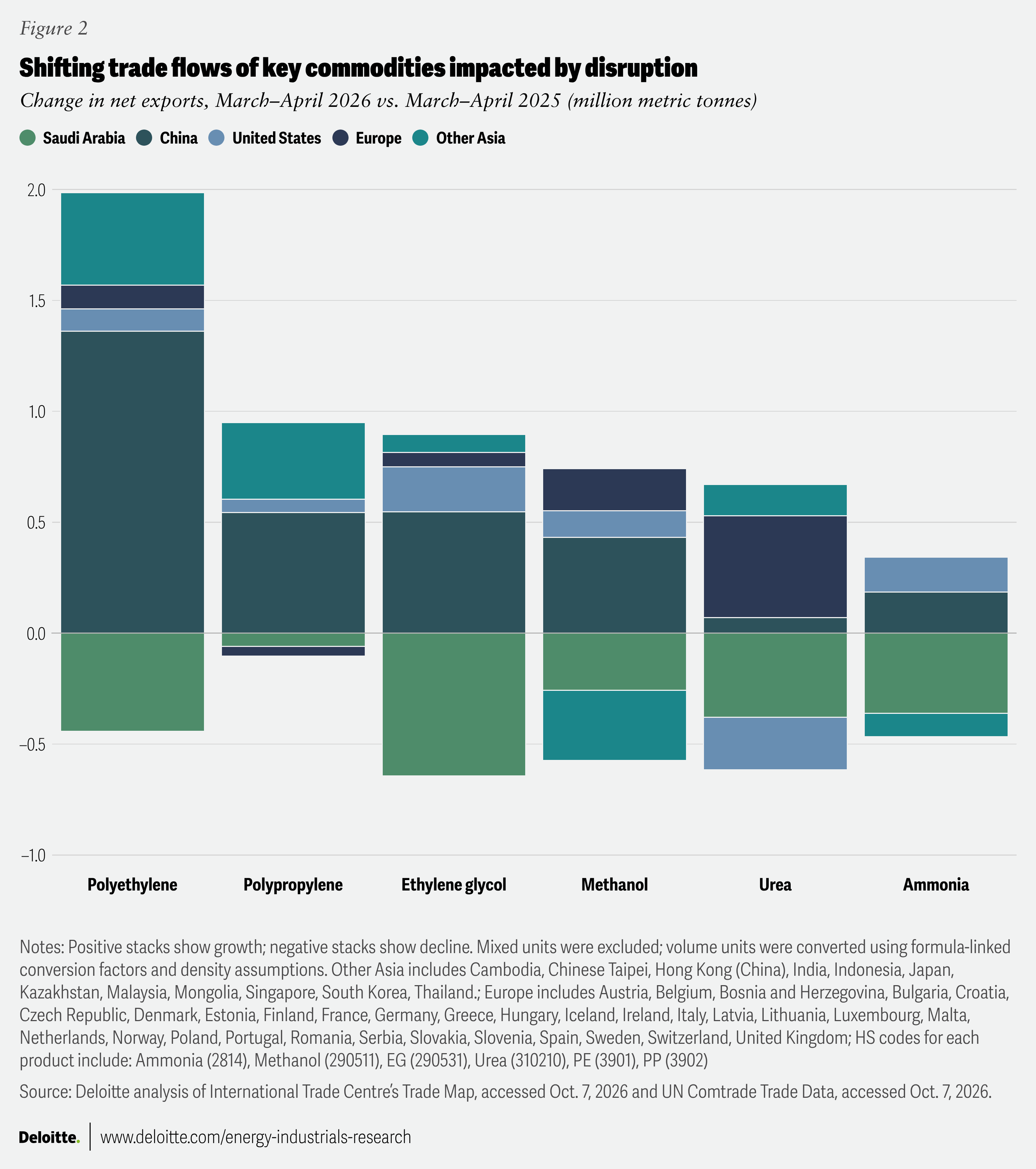
Multiple geopolitical and weather-related disruptions reshaped chemical supply chains in 2026. These disruptions constrained Gulf-linked flows of energy, feedstocks, and certain key chemicals, including polypropylene, methanol, and ammonia.2 In response, some companies have shifted production to plants in unaffected geographies and rerouted cargoes, which led to increased transit times and freight costs (figure 2).3 These diversions initially increased traffic through the Panama Canal.4 Subsequently, lower rainfall reduced water levels and prompted restrictions on transit capacity, creating additional shipping delays.5 Meanwhile, low water levels of the Rhine River and the ongoing Russia-Ukraine war continue to affect supply chains.6
Why it matters
These disruptions are driving companies to view geopolitical, trade, and weather events as key strategic and operational considerations rather than simply as procurement or supply chain risks. Supply continuity now affects production allocation, customer service, working capital, portfolio choices, and capital deployment. Resilience is increasingly viewed as table stakes. An opportunity likely lies in deploying redundancy and flexibility where they create economic value.
What to expect in 2027
In 2027, some chemical companies could move from optimizing a single global supply network to managing a portfolio of supply, inventory, and transport options. However, strategies may vary by subsector and market. Commodity producers will likely seek optionality across feedstocks, production sites, and logistics lanes by expanding flexibility through dual sourcing, regional production, tolling arrangements, and alternate logistics routes. Meanwhile, specialty chemical and industrial gas companies may favor regional production and customer-proximate infrastructure.
Capital allocation should reflect this shift. Some companies may prioritize investments in localized storage, supply chain visibility tools, and scenario-based planning. This may be especially true for regions where even a single disruption could halt a plant or affect a key customer relationship. Companies may also attempt to rebalance portfolios where feedstocks or inputs are concentrated in a few regions or suppliers, reviewing these commitments through a higher geopolitical-risk lens.
2. From rationalization to reinvestment: Scaling advantaged assets
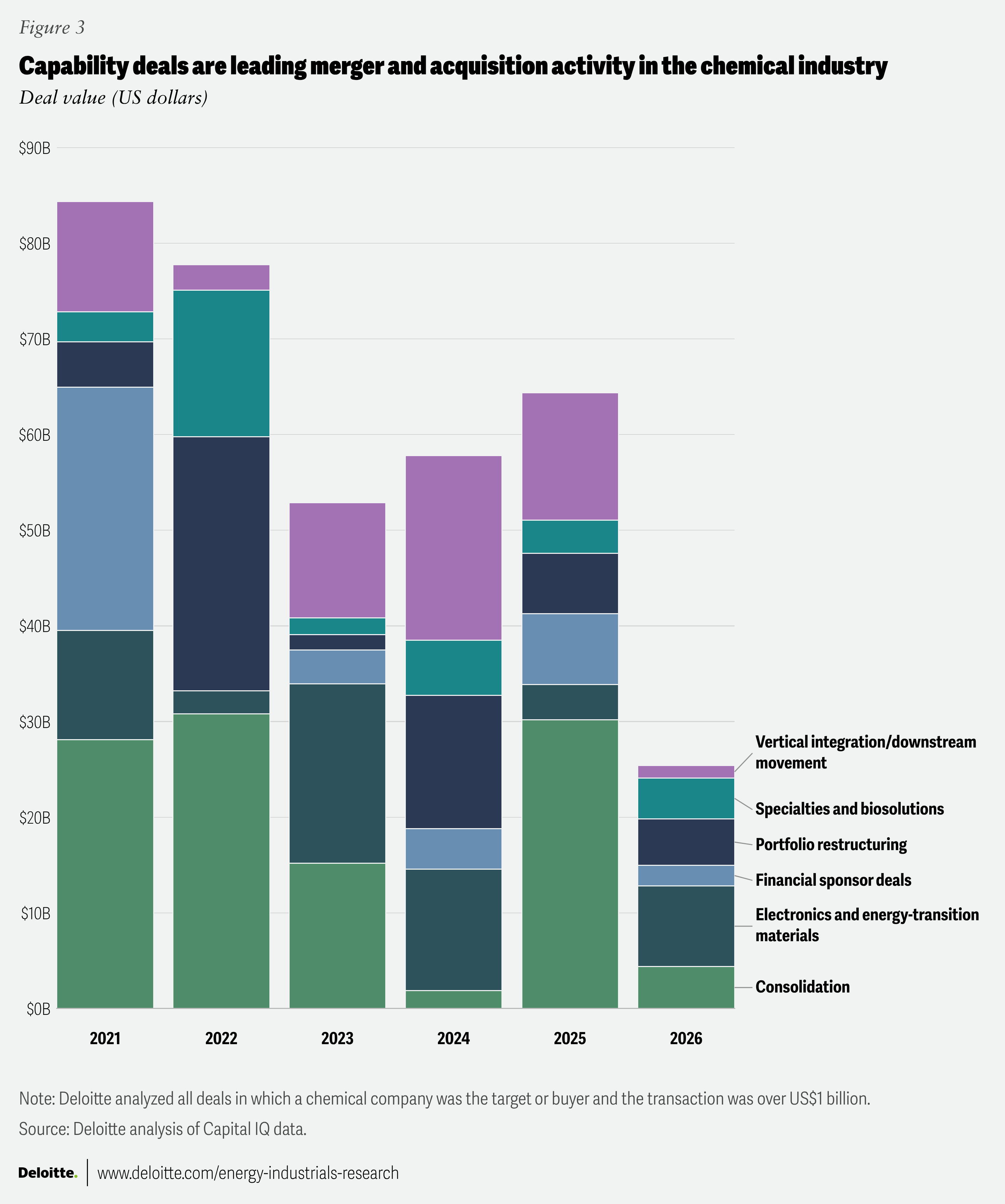
In 2026, companies continued reshaping their portfolios. Following a historically high number of plant-closure announcements in 2025, the pace of new announcements eased as companies increasingly moved from announcing closures to implementing them.7 Divestitures, carve-outs, and proposed spin-offs further separated commodity businesses from higher-value assets. Mergers and acquisitions became increasingly selective and strategic, with buyers prioritizing assets that provide feedstock access, technology, scale, integration, and downstream advantages (figure 3).8 Investment also continued to vary by geography and product. For instance, while China continued adding capacity, investment activity in Europe remained relatively muted; and on the other hand, capital was concentrated in electronics, advanced materials, and advantaged US assets.9
Why it matters
The industry remains structurally oversupplied, particularly in commodity chains exposed to Chinese capacity growth.10 While disruption in the Middle East has temporarily shifted utilization and pricing in favor of some producers, it has not resolved excess capacity.11 Closure announcements may have revealed areas where value can no longer be defended, and mergers and acquisitions appear as though it is being used to improve cost position, integration, and strategic focus—not to simply increase scale. All in all, the industry appears to be shrinking undifferentiated, high-cost capacity while funding assets with stronger structural advantages.
What to expect in 2027
In 2027, chemical companies will likely move from managing broad portfolios to making strategic choices that bring focus to select parts of the business. Announced rationalization programs may continue to be translated into physical closures and permanent capacity reductions. Portfolio separations and sales to strategic or private equity buyers will likely continue, especially in segments where a business could perform better as part of a more focused or consolidated platform. M&A should remain selective, centered on assets with structural cost or market advantages. Due diligence may increasingly examine factors related to existing and potential tariffs, trade measures, customer relationships, feedstock relationships, and applicable regulatory requirements.
Rationalization can create value when it funds a sharper reinvestment strategy. Some companies have identified opportunities but lack the cash, staffing, or management capacity to pursue them all. Partnerships and selective capital commitments may therefore become more important, concentrating resources in assets with structural advantages.12
3. From volume to value: Expanding into new, critical markets and applications
The chemical industry entered 2026 with uneven demand across traditional markets, but stronger activity in selected advanced manufacturing segments.13 Semiconductor-related gases, electronic materials, high-purity water, and fab infrastructure supported growth, while aerospace and space supported demand for specialty materials, helium, and hydrogen.14 Biopharma, cleanroom protection, data-center thermal management, and electric vehicle battery applications added momentum.15 At the same time, some companies appear to have become more selective about large, standalone hydrogen and energy-transition projects, prioritizing opportunities with clear customer commitments and more visible returns.
Why it matters
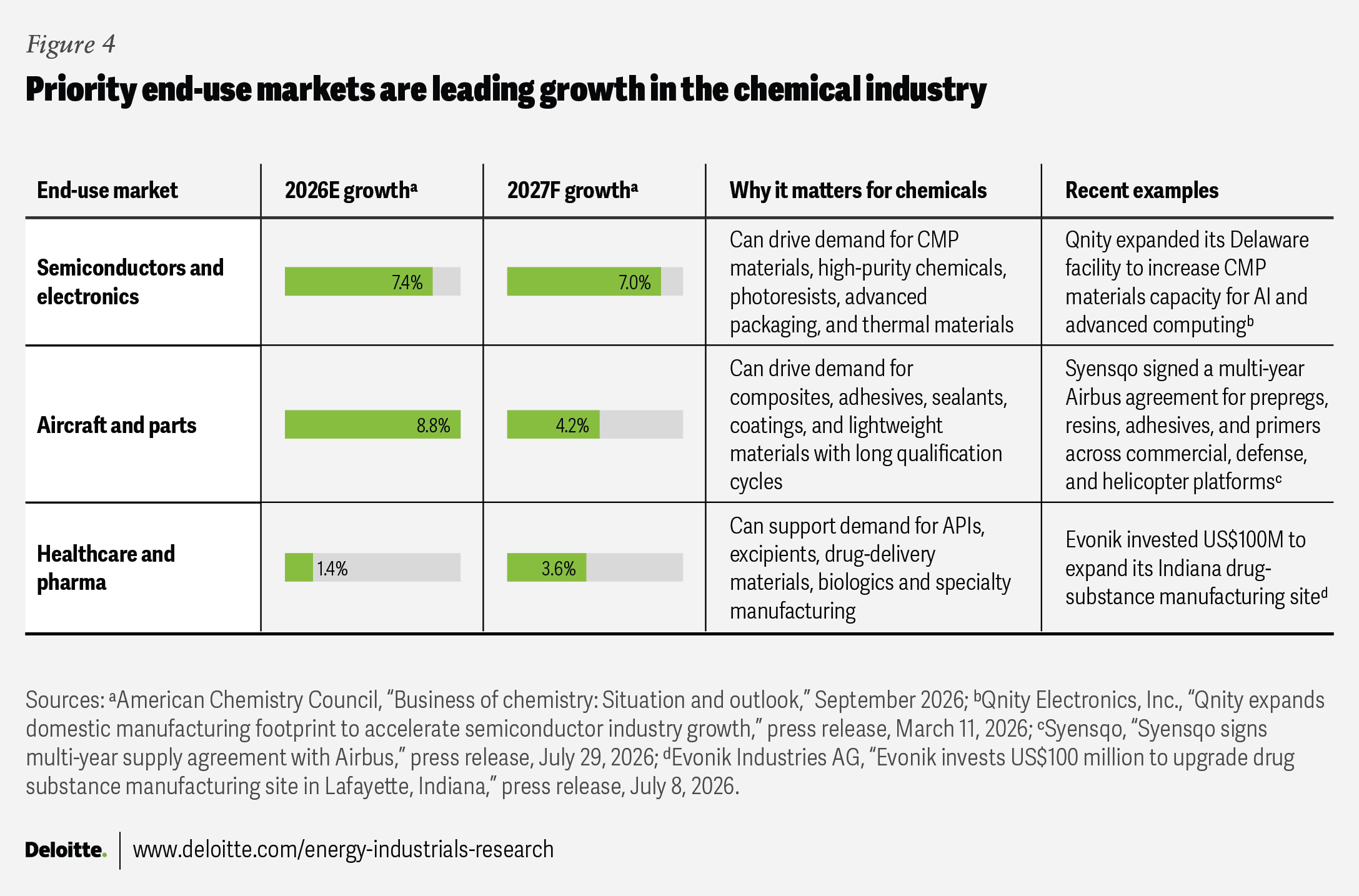
More than 80% of basic and specialty chemicals are purchased directly by industrial sectors, making the industry’s trajectory highly dependent on where industrial customers invest.16 In 2026, industrial sectors tied to semiconductors, aircraft, and pharmaceuticals grew more than most other traditional chemical end markets.17 An opportunity that emerged involved converting existing capabilities into higher-value positions: process-critical materials for chips, qualified materials for aerospace, and healthcare-grade chemistry for complex therapeutics.
What to expect in 2027
In 2027, chemical companies could continue reshaping portfolios toward advanced-manufacturing ecosystems (figure 4). Semiconductor fabs and advanced packaging facilities will likely continue to attract investment in high-purity and specialty gases, electronic chemicals, process-water treatment, hydrogen, and on-site supply systems.18 Companies could continue expanding capacity near major customer clusters in North America and Asia.19
Industrial gases illustrate how customer-production economics can create relative resilience. Demand is linked to several industrial sectors, such as electronics, manufacturing, energy, metallurgy, and healthcare.20 Within these markets, high-purity gases and other specification-critical inputs can support premium economics because qualification requirements and production capabilities raise barriers to substitution.21
The result will likely be a more focused industry—one that is less willing to add undifferentiated commodity volume and more willing to invest in resilient, high-value demand. However, these areas, too, are subject to volatility. Leaders could combine chemical expertise with infrastructure, applications engineering, and life-cycle service.
4. From product to partnership: Capitalizing on expertise and innovation
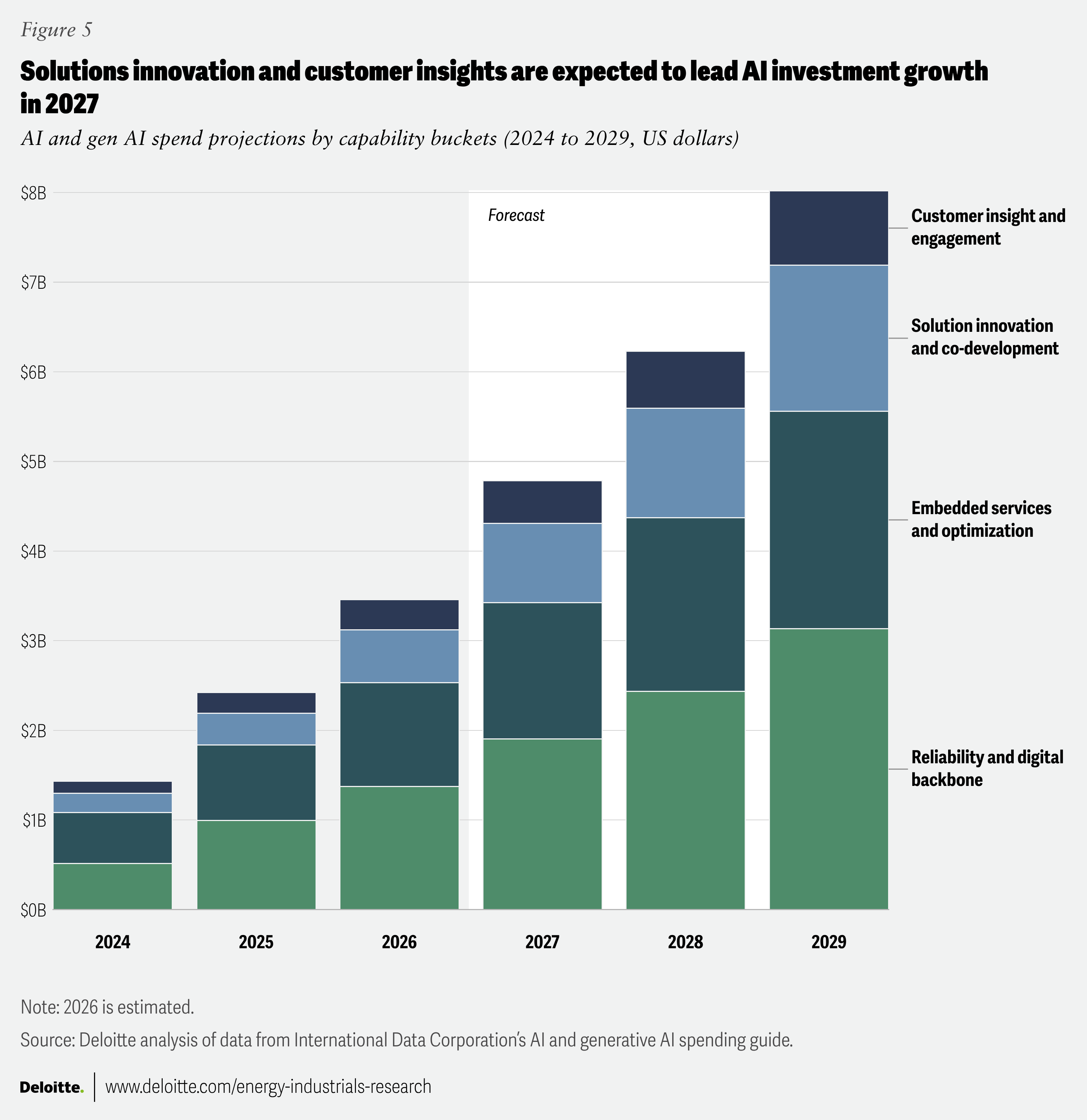
Some chemical customers are increasingly buying for confidence, continuity, and outcomes rather than to simply procure molecules.22 Supply risks and more demanding applications are pushing some suppliers to make reliability, visibility, technical support, and application expertise part of the offer.23 Some chemical companies are leveraging AI to accomplish this, including identifying unmet customer needs, accelerating new formulations, and optimizing plant operations around incremental innovations.24 Consequently, AI spending in the chemical industry is projected to rise from US$1.4 billion in 2024 to US$8 billion in 2029.25
Why it matters
The industry is shifting from selling chemistry at scale to solving customer problems. Defensible opportunities are often specification-critical, qualified into customer processes, and supported by infrastructure or technical services. In aerospace, preformed 3D-printed sealants can reduce manual installation time. In coatings, digital formulation tools can help customers compare additives, troubleshoot defects, and access regulatory information. AI-enabled recipe adjustment in color and fragrance can compress trial-and-error cycles, incorporate consumer feedback, and improve right-first-time performance.26
Chemical companies can create more value by applying their expertise to a customer’s process, rather than simply selling them more products (figure 5). AI can identify unmet needs by analyzing customer usage, performance, and service data; help scientists design tailored formulations; and translate those insights into plant-level improvements in yield, quality, dosing, energy, and waste. This creates a reinforcing cycle: Closer customer collaboration generates better data; better data improves innovation; and better innovation deepens customer relationships.
What to expect in 2027
In 2027, chemical suppliers are expected to package expertise commercially and use AI to help move customers faster from problem definition to solution. Companies will likely build partnership models around priority accounts that link commercial teams with scientists and plant operators. They are expected to continue pursuing long-term supply relationships and technical capabilities to make qualified materials harder to substitute. More companies may treat “beyond the molecule” as a monetizable model: Trusted supply, applied expertise, digital tools, and AI-enabled collaboration could become part of the product itself.
5. From restructuring to reinvention: Building the next-gen operating model
In 2026, some chemical companies began moving beyond restructuring toward redesigning how their businesses operate. Cost-cutting programs and asset closures addressed part of the challenge, but may not be sufficient. As a result, some companies could consider combining portfolio and asset actions with clearer decision rights, process ownership, shared services, enterprise resource planning modernization, and smart operations. The focus has shifted from reducing headcount to removing duplication, simplifying decision rights, and reallocating talent toward higher-value work.
Why it matters
The next margin opportunity will likely focus more on building a structurally lower-cost but more responsive enterprise. Companies often want faster decisions, better asset utilization, stronger working-capital performance, and greater resilience amid regional demand shifts and persistent volatility. Achieving these outcomes involves connecting physical operations, technology, talent, legal entities, and intercompany economics.
What to expect in 2027
Chemical companies may increasingly need to operate across two distinct business archetypes: commodity and specialty businesses. Commodity businesses will likely continue to require scale, cost discipline, asset reliability, feedstock advantage, and supply chain efficiency. Specialty businesses will likely require customer intimacy, faster innovation cycles, technical capability, and application expertise. Managing both within one enterprise could fundamentally reshape the commercial operating model.27
- Workforce and capability redesign: Companies can help simplify core processes, clarify ownership, expand shared services and global capability centers, and shift these centers from transaction processing toward automation, analytics, planning support, process ownership, and continuous improvement. Reskilling and role redesign could help reduce structural cost while protecting safety, reliability, engineering, customer, and innovation capabilities.
- Digital backbone, smart operations, and AI-enabled execution: Enterprise resource planning modernization can help support standardized processes, master data, intercompany workflows, and entity visibility, while smart operations could improve plant and network performance through predictive maintenance, digital twins, automated scheduling, and logistics visibility. AI investments can focus on demand sensing, supply planning, pricing, logistics, and working capital; value will depend on reliable data, clear ownership, implementation capacity, and measurable outcomes.
- Integrated value-chain and commercial models: Companies can connect tax, supply chain, enterprise resource planning, transfer pricing, tolling, legal entities, and performance measures to turn restructuring savings into durable advantage. Customer, market, and usage data can help support better pricing, production, inventory, and qualification decisions—and enable recurring offerings such as application services, managed dosing, replenishment, and digital formulation.
Strategically building structural advantages in 2027
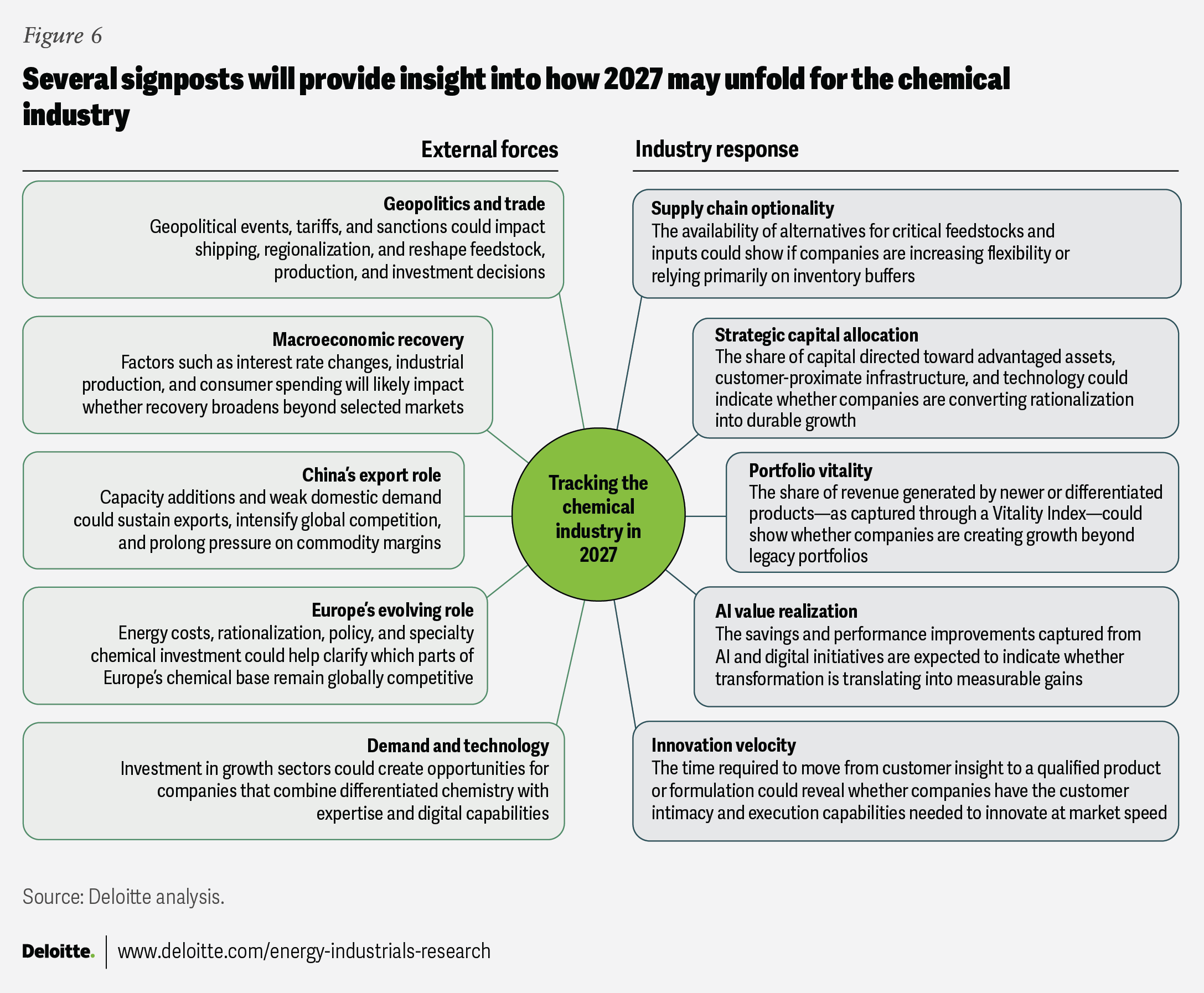
Heading into 2027, the chemical industry has limited evidence that a broad-based cyclical recovery will resolve its core challenges.28 Structural overcapacity, uneven demand, geopolitical volatility, and regional cost differences will likely continue to shape performance. However, the defining advantage for the industry may be its ability to make informed choices about assets, markets, operating models, geographies, technologies, and growth bets and then execute those choices with discipline (figure 6).
In 2027, resilience may mean more than absorbing disruption. It could mean having the flexibility to redirect supply, capital, and talent; the insight to anticipate customer needs; and the operating model to act quickly. Companies that make informed choices, simplify their businesses, improve asset and working-capital performance, and execute selectively on innovation and technology should be well positioned to create value—regardless of when a broad-based recovery ultimately arrives.
Continue the conversation
Meet the industry leaders
Zillah Austin
David Yankovitz
Kate Hardin
By
David Yankovitz
Tom Aldred
Robert Kumpf
Kate Hardin
Ashlee Christian
The authors would like to thank Ankhi Biswas for her key contributions to this report, including research, analysis, and writing.
The authors would like to thank Luis Castro, Peggy Cullen, Ratnang Desai, Shay Eliaz, Bill McFarland, Kevin Gregory, Wolfram S. Lackner, Matthew Marsh, Tarun Sai, Julia Tavlas, Ed Trainor, Rupesh R. Vadapalli, and Scott Welch for their subject matter input and review.
The authors would also like to extend their appreciation to Pankaj Kumar Bansal and Jayesh Prabhu from the M&A team for providing the mergers and acquisitions deal data that supported the analysis in this report.
The authors would also like to acknowledge the support of Clayton Wilkerson for orchestrating resources related to the report; Katrina Drake Hudson and Dario Failla who drove the marketing strategy and related assets to bring the story to life; Mariel Balaban and Katilin Pellerin for their leadership in public relations; Aparna Prusty and Pubali Dey from the Deloitte Insights team who edited the report and supported its publication; and Harry Wedel for the visual design.
Editorial (including production and copyediting): Pubali Dey, Aparna Prusty, and Anu Augustine
Design: Alexis Werbeck, Harry Wedel, and Sanaa Saifi
Cover image by: Sanaa Saifi and Jim Slatton
Knowledge services: Agni Wagh
Visit the Deloitte Center for Energy & Industrials
Access more insights for the aerospace and defense, chemicals and specialty materials, engineering and construction, industrial manufacturing, mining and metals, oil and gas, power and utilities, and renewable energy sectors.