
The future of the digital customer experience in industrial manufacturing and construction
To better lead in the future, Deloitte research suggests companies may need to put the customer at the heart of digital transformation
Key takeaways
- A desire to improve operational efficiency, the pace of digital transformation, changing customer expectations, and competitive pressures seem to be driving a shift toward an enhanced digital customer experience in industrial manufacturing and construction.
- An enhanced digital customer experience is now considered “table stakes” according to industrial manufacturing and construction companies surveyed, and offers the potential to add value across the organization, from presales, design, production, and delivery to aftermarket and operate services.
- Among the industrial manufacturing and construction companies surveyed, 93% are experimenting with, or implementing at least one digital customer experience use case, and on average, they are implementing four.
- An exceptional digital customer experience that encircles the customer with the personalized experience that they need—when they need it—is likely to be a key differentiator for industrial manufacturing and construction companies in the future.
- To help seize the opportunity of establishing an exceptional digital customer experience, key success factors seem to be organizing around customer needs, overcoming interoperability challenges, prioritizing data security, and developing talent with a blend of technical knowledge, digital skills, and soft skills.
Please click here to download the PDF version of the Key takeaways.
The pace of digitalization is transforming traditional business models and operating processes for industrial product manufacturing, aerospace and defense, and engineering and construction companies. (Deloitte refers to these companies collectively as “industrial manufacturing and construction.”) Despite economic uncertainty, companies across the globe have continued their investments in technology and push toward smart operations.1 According to a 2023 Deloitte survey of over 800 manufacturers, 98% of respondents have started their digital transformation journey, compared to 78% in 2019,2 driven in part by the need to improve customer experience, optimize cost, develop or enhance existing products, and improve operational efficiency.3
At the same time, a shift toward customer centricity over the past two decades,4 the challenges laid bare by the COVID-19 pandemic, and the growth of digital technologies have given rise to new services offered by industrial manufacturing and construction companies that can enhance the customer experience, such as aftermarket and “operate” services.5 The goals of this evolution have been to create new and stable sources of revenue, build brand loyalty, and gain competitive advantage. This development is particularly timely, as reduced product development and project delivery cycles have made it increasingly difficult for companies to compete on product and asset design differentiation alone.6 Meanwhile, customer expectations have also evolved with the proliferation of personalized, seamless, and omnichannel digital e-commerce experiences commonly found in business-to-consumer (B2C) interactions in the retail sector.7
In short, an enhanced digital customer experience (DCX) may be a necessity for companies in these industries to differentiate themselves from their competitors in the digital age. However, those companies that are striving to deliver a leading DCX are often challenged by the complex nature of their products, projects, delivery models, and value chain partner network. And the customer landscape can be complex, comprising consumers (B2C), businesses (B2B), and governments (B2G). Projects are delivered and products are often sold and serviced through a network of distributors, dealers, subcontractors, and other partners. Each customer, partner, and even delivery model can have unique needs and requirements, and it can be essential for companies to comprehend these needs to optimize the experience for the end customer, while also working to ensure the success of partners across the value chain.
To understand the common barriers and benefits of an enhanced DCX, and to establish a benchmark for implementation, the Deloitte Center for Energy and Industrials conducted a survey of 250 executives in the US industrial product manufacturing (IP manufacturing), aerospace and defense (A&D), and engineering and construction (E&C) industries in June 2024. The Future of the Digital Customer Experience survey (hereafter, “the survey”), included questions on technology and use case adoption, business drivers, benefits, and expectations for a DCX. The survey findings were supplemented with 15 interviews with executives and subject matter specialists in these industries.
The article and findings are organized to show both the commonalities between the IP manufacturing, A&D, and E&C industries and the unique results. In cases where there is commonality, we refer to these industries collectively as the “industrial manufacturing and construction” sector or “companies,” unless otherwise noted.
The survey results demonstrate that surveyed industrial manufacturing and construction companies seem to have a strong digital foundation in place and they are moving forward with DCX initiatives using two fundamental approaches.
- Enhancing the digital connection to customers and value chain partners to collect important customer behavior data, facilitate collaboration, and share key insights that can improve the customer experience.
- Enhancing the digital connection to products, facilities, and delivered projects to collect usage and operational performance data and improve performance and serviceability.
Surveyed companies are leveraging their digital foundation to enhance their digital customer experience and seem to be reaping the benefits
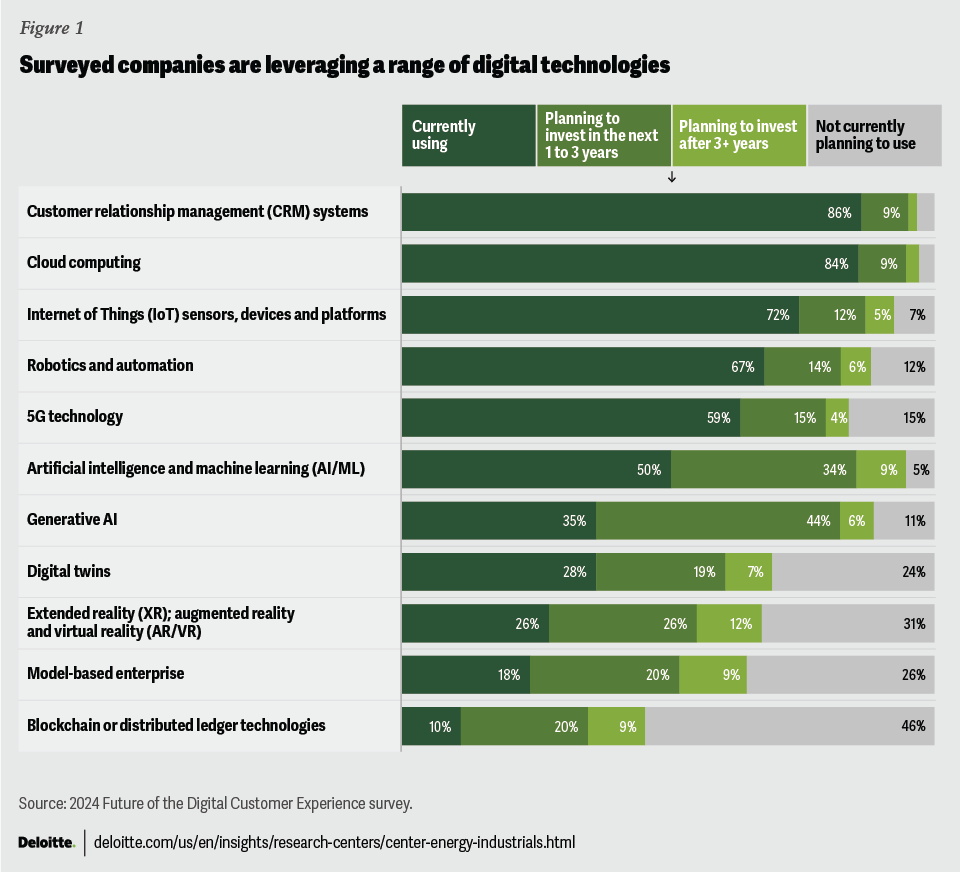
More than 80% of respondents reported that their company is currently using or plans to invest in digital technologies such as customer relationship management systems, cloud computing, Internet of Things (IoT), as well as robotics and automation (figure 1). Respondents also indicated a shift toward investments in emerging technologies such as artificial intelligence and machine learning (AI/ML), generative AI, and extended reality over the next three years, underscoring the sector’s ongoing commitment to embracing innovative digital technologies.
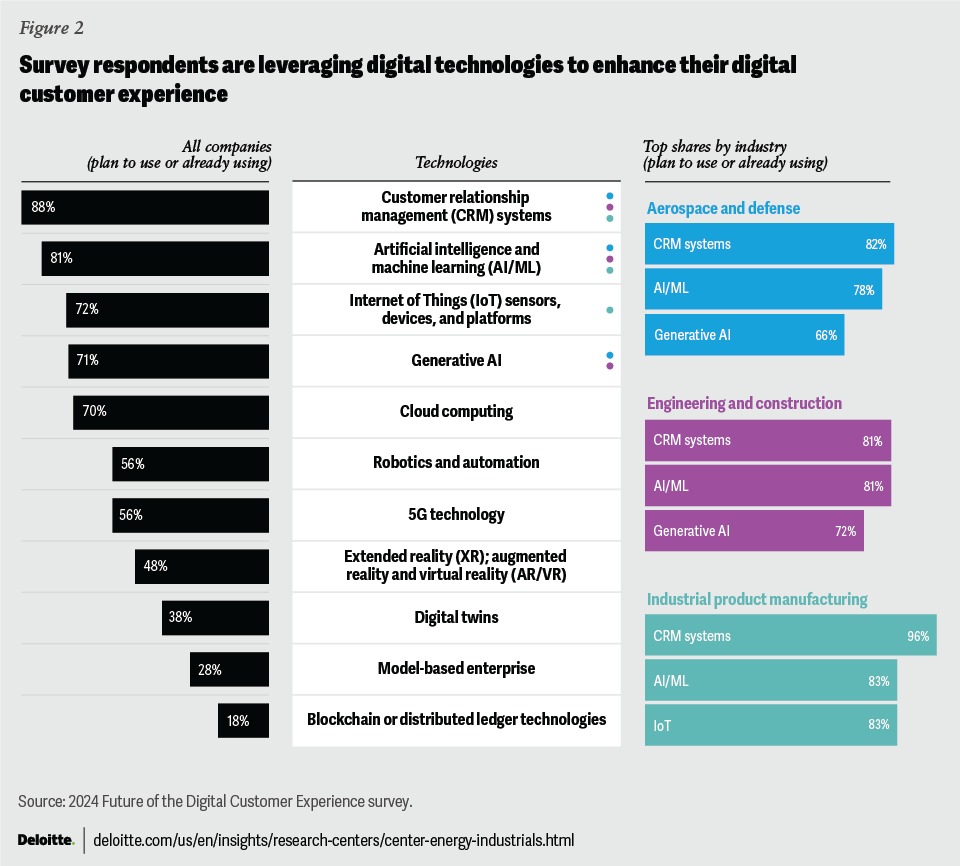
Surveyed companies seem to be leveraging these technologies to improve their DCX: For example, more than 70% of respondents plan to use or are already using AI and ML, IoT, and gen AI technologies to enhance customer experience (figure 2). Customer relationship management systems were chosen as the top technology to boost customer experience by companies in all three industries, closely followed by AI and ML, IoT, and gen AI.
In addition, 93% of survey respondents indicated that they are experimenting with, or implementing at least one DCX use case, and on average, they are implementing four. And investment in an enhanced DCX is expected to continue―81% indicated that they plan to invest in at least one additional use case in the next one to three years, and on average, they plan to invest in three.
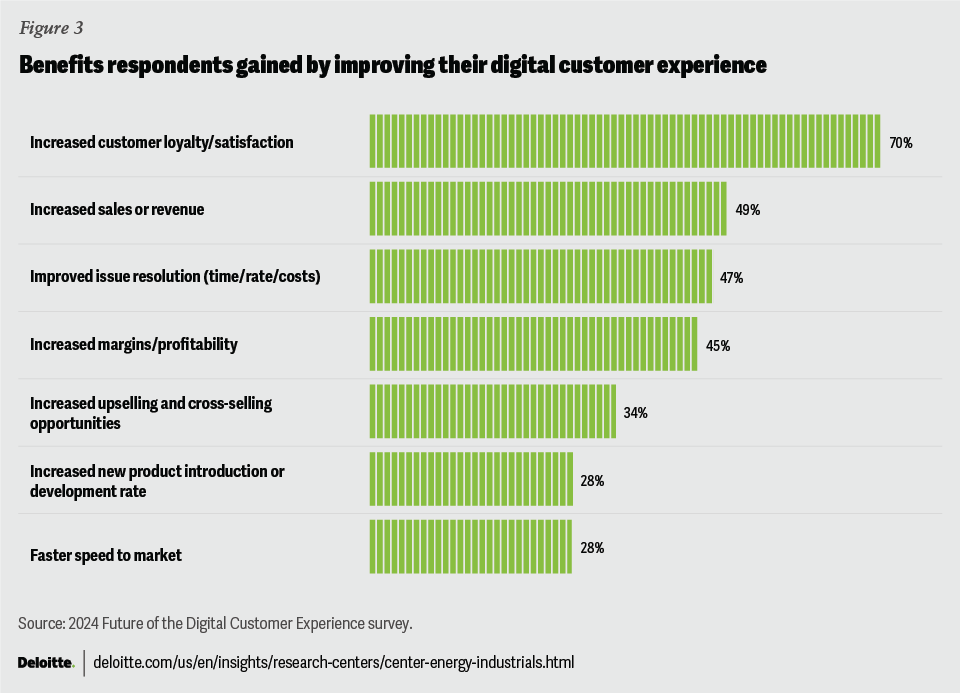
The majority of surveyed executives also reported significant business benefits gained from enhancing their DCX, with increased customer loyalty and satisfaction, higher sales or revenue, improved issue resolution time, and greater margins ranking at the top of the list (figure 3).
Apart from the potential benefits, however, there seem to be other important factors driving a shift toward an enhanced DCX in industrial manufacturing and construction.
Evolving customer expectations and competitive pressures seemed to have changed the customer landscape in industrial manufacturing and construction
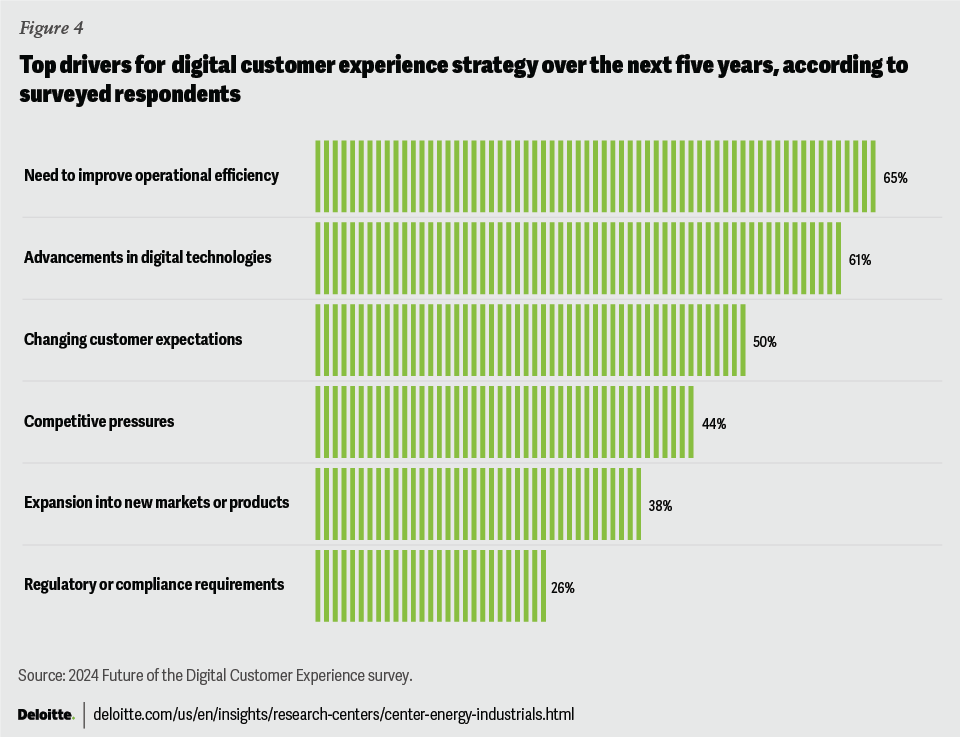
In addition to improving operational efficiency and advancements in digital technologies, nearly half of surveyed respondents included changing customer expectations and competitive pressures as two of the top drivers shaping their DCX strategies over the next five years (figure 4). An enhanced DCX no longer seems to be optional in industrial manufacturing and construction. One industry leader from a heavy equipment manufacturer noted in an interview that “A digital customer experience is becoming table stakes and just one of the things that you have to do to compete. It seems like it’s made the premier brands stronger.”11
The growth in simplified digital purchasing processes and enhanced user interfaces, which have become ubiquitous in consumer interactions, may be raising customer expectations in industrial manufacturing and construction.
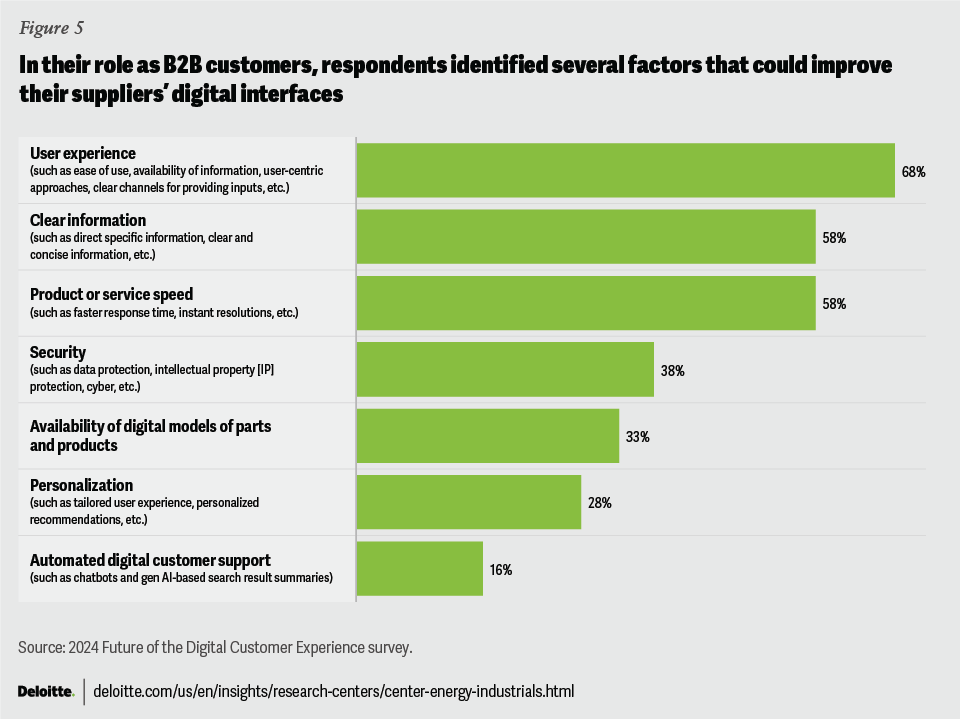
Speaking from the perspective of their own experience as B2B customers, 86% of surveyed respondents either agreed or strongly agreed that they want an improved digital customer interface from their suppliers. They also chose a seamless experience, clear information, and faster response times as their top desires for improved B2B digital interfaces (figure 5). The availability of digital models, which can aid customers in areas such as design and service, is also a top priority for nearly one-third of survey respondents in their role as a B2B customer.
Digital customer experience use cases: Current and future investments
The wide range of digital customer experience (DCX) use cases implemented by industrial manufacturing and construction companies (figures 6 and 7) offer the potential to add value across the organization, from presales, design, production, and delivery through aftermarket and operate services.
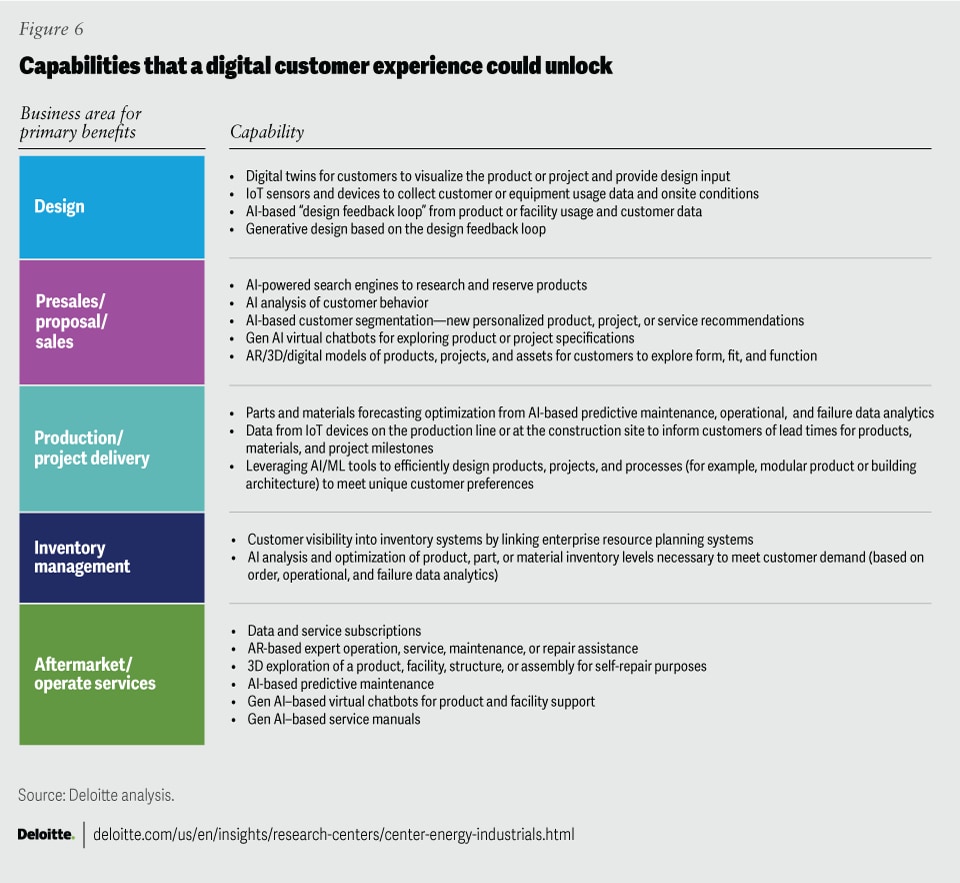
For example, while a product or structure is in use, real-time monitoring systems and predictive analytics can help customers maximize uptime and reduce the life cycle costs of ownership. These systems can also help companies create a dynamic design feedback loop with their customers. Companies can leverage their operational data to improve existing products and facilities and inform the design of new assets and products tailored to meet specific requirements. Remote monitoring and data collection ranked as one of the top two use cases for all three industries (figure 8).
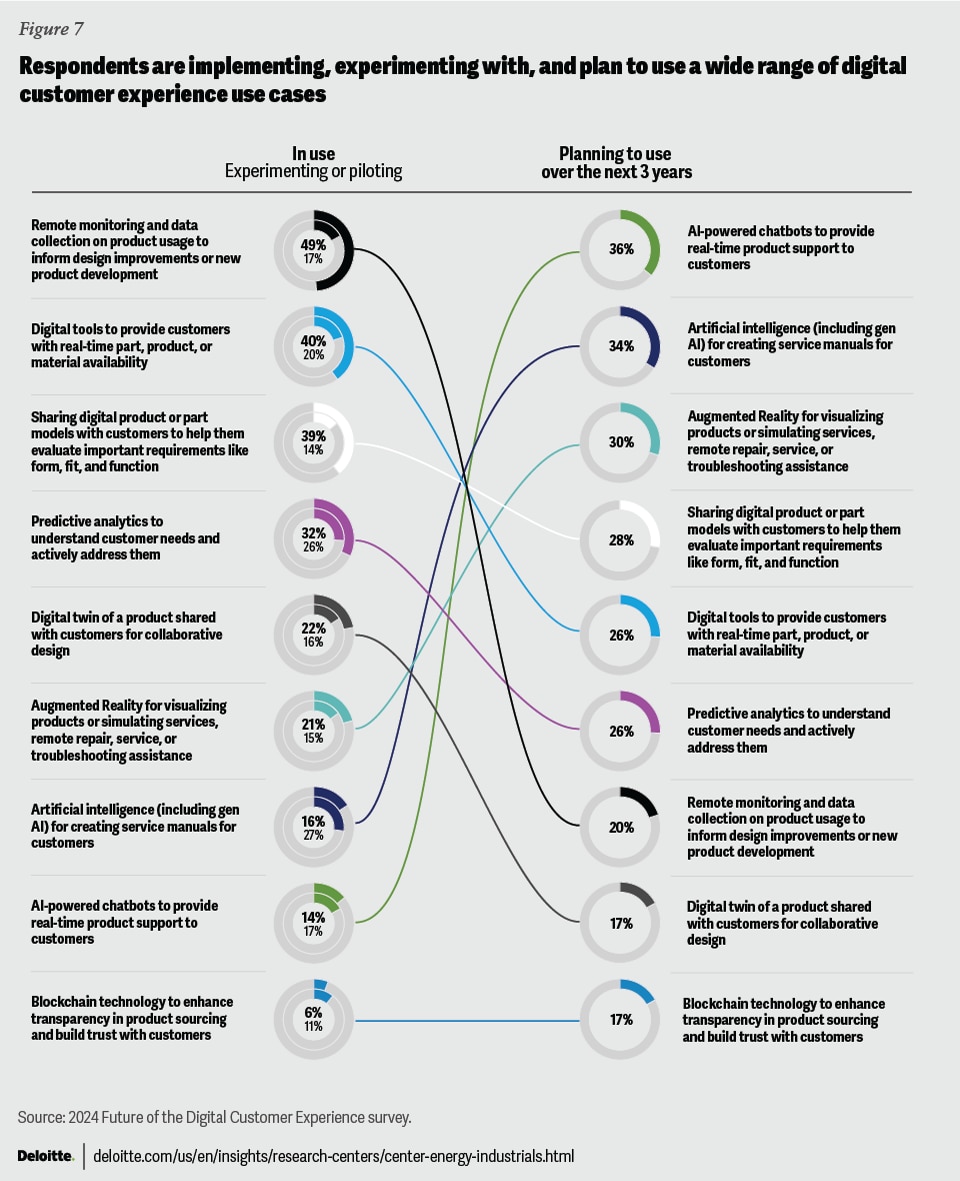
Digital tools like chatbots or augmented reality–based interfaces (remote assistants) can enable companies to support customers with updated product manuals, specifications, and specific requests. They also serve as guides for customers who prefer to undertake maintenance independently. According to the survey, the use of AI for customer service manuals was more prevalent in A&D and IP manufacturing, whereas the use of augmented reality (for example, for visualization of projects, installation procedures, and services) was more common in E&C.
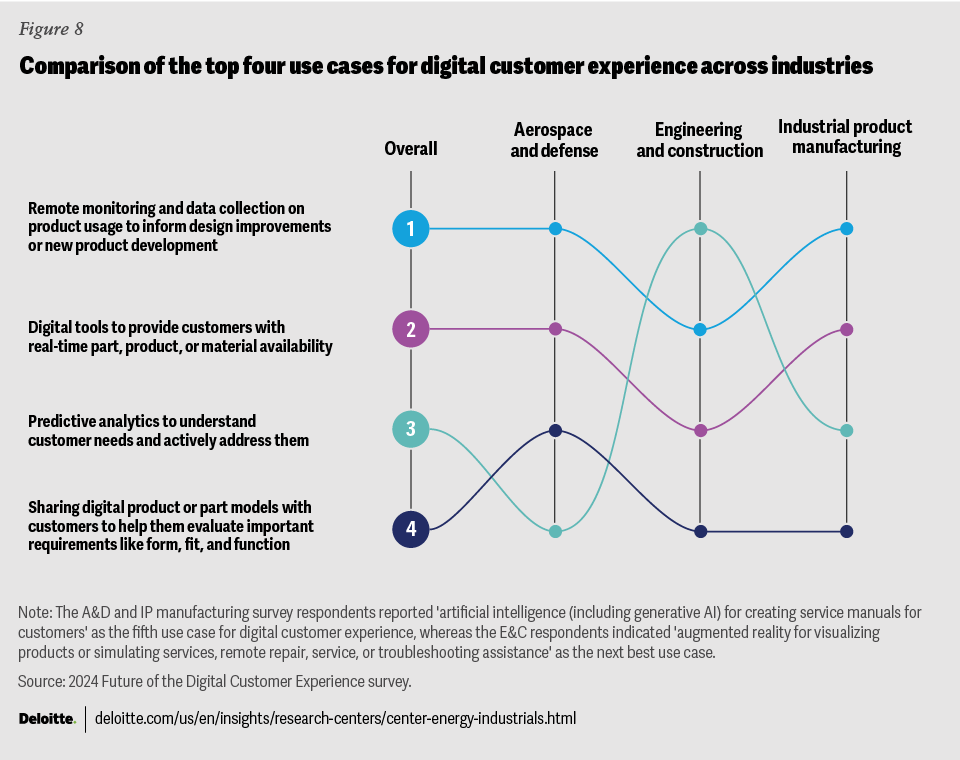
Similar tools can also be deployed in the presales, proposal, or sales phases to better understand customer priorities and behaviors and promote agility in responding to personalized and evolving customer needs. Using predictive analytics to understand customer needs was the top use case in E&C and one of the top five for both A&D and IP manufacturing respondents. Sharing digital product and part models with customers was also a top-five use case for all three industries. This can allow customers to evaluate a product or structure for form, fit, and function before the sale is completed.
Stronger digital connections between companies, their products, project deliverables, and customers can also improve forecasting of demand. This can aid production and delivery planning, which can lead to optimized inventory levels and improved supply chain performance. This can not only create operational efficiencies for the company, but it can also enable customers to gain visibility into the status of their requests, complete projects on time, or receive the parts they need faster, thereby enhancing the reliability and trust of the brand. This can be especially important when customers need a rapid response to ensure product or facility uptime or timely project delivery. The survey results show that digital tools that provide customers with real-time updates on parts, products, installation status, or material availability was one of the top five most prevalent use cases in all three industries.
Organizing for an exceptional DCX: Lessons learned from leaders
Establishing a digitally enabled customer-centric approach that encircles the customer with the personalized experience that they need—when they need it—is likely to be a key differentiator for industrial manufacturing and construction companies in the future.31 The study found that there seem to be four key ingredients to success in reaching this goal.
1. Prioritize and organize around customer needs
Gaining an understanding of customer behaviors, needs, and expectations from a DCX can be an important first step toward creating an enhanced DCX.32 Segmenting customers based on these criteria can then help companies align their offerings and capabilities to focus on how they can best serve each segment.33 However, to help maximize the benefits of these changes, leadership should establish an enhanced DCX as an organizational priority, and then work to break down organizational silos to facilitate strategic alignment and the required flow of information across all stakeholders.
A 2019 Deloitte study of over 50 customer success leaders in the technology industry revealed that 80% of organizations that prioritize customer success maintain well-defined, consistent processes for collaboration with key business areas, including product development, sales, renewals, and support.34 Such interdepartmental coordination and value chain partner integration can help streamline business operations, enhance decision-making processes, and provide customers with a unified cohort that is ready to deliver the unique and personalized experience that customers want at the moment they need it in the customer journey.35 If, for example, a customer downloads a brochure and contacts a sales representative for further information, the representative should have access to that context, and be prepared to advance the customer seamlessly along their buying journey as opposed to having the customer retrace their steps and rehash knowledge they have already gained.36
Effective coordination, communication, and data-sharing between stakeholders, including suppliers, distributors, dealers, subcontractors, and internal departments, can help provide a cohesive, seamless DCX. To achieve this, it is important to cultivate a deep understanding of what the customer wants and needs, as well as the needs of value chain partners and internal departments.37
“Making the experience better for our customer relies on us having a really tight connection with our dealers—we have to make sure that the handoff of the customer—between our systems and process and theirs—is seamless.”
—Interview with an industry leader from a global industrial equipment manufacturer38
An incentive structure can then be designed to foster strategic alignment and enable all stakeholders to share in the benefits of an enhanced DCX.39 This can be especially important if internal teams or value chain partners express initial reluctance or concern about the shift to a more digital customer experience. Digital technologies can be leveraged to help empower internal teams and value chain partners with the tools to access the data they need, measure and optimize the success of DCX initiatives, and ensure that all stakeholders remain informed on operational and financial performance.40 However, while digital tools can serve as a backbone for an enhanced DCX, it is also important for companies to continue to prioritize in-person interactions with customers during moments that matter.41
2. Start small and think big to overcome interoperability challenges
While customers demand increasingly personalized interactions, a study of over 100 companies showed that only 37% of customer experience leaders believe their organizations have the data architecture they need to support data-driven experiences, such as those that can enable an enhanced DCX.42 And despite customers’ expectations for consistent interactions across departments, the majority of the 11,000 consumers and over 3,000 business buyers surveyed for another 2023 report feel they are dealing with siloed departments rather than a unified business.43
For example, companies can face substantial challenges with the interoperability of systems and data, which can hinder their ability to deliver an optimized customer experience. A 2024 report that surveyed over 1,000 enterprise IT leaders found that less than a third (28%) of the average 991 applications in use at a given company are interconnected.44 This challenge stems in part from the need to integrate a complex landscape of new and legacy technologies across the value chain, from online customer portals to dealer systems and enterprise resource planning systems. A common obstacle to DCX is often siloed data across various systems, which can result in an incomplete view of the full customer journey, making it difficult for the company to provide the customer with the information they need—when they need it.45
“On the one hand, we’ve got tremendous legacy systems. However, for AI technology and digital technology more generally, the speed at which they’re operating is far greater than the speed of the life cycle of our business. So our challenge becomes: how do you integrate new technology to be able to make those products that you designed 50 years ago better?”
—Interview with an industry leader from a global aerospace manufacturing company46
To tackle these challenges, several interviewed executives mentioned that, rather than starting with broad sweeping, companywide DCX implementation, their company started by investing in programs with a strong return on investment potential that also aligned with internal and partner capabilities.47 Doing so helped them address interoperability challenges on a smaller scale, making them easier to overcome. However, thinking big and scaling fast were also identified as important goals to drive toward a differentiated future DCX.48 In addition, closer collaboration with partners and suppliers across the value chain often plays a crucial role in tackling interoperability challenges, according to interviewed executives.
3. Prioritize data privacy and security to mitigate risk
Delivering a personalized and seamless customer experience requires industrial manufacturing and construction companies to collect, manage, and analyze vast amounts of data from diverse sources. This demands sophisticated data management processes and the need to secure customer and partner data while complying with stringent privacy regulations. Companies face the challenge of balancing customer access to necessary data while protecting sensitive information such as intellectual property, export-controlled data, and confidential personal information. The increase in digital access can also heighten cybersecurity risks. There is a continuous need for vigilance against cyberattacks to help maintain the integrity and security of both the systems and the data they contain. Prioritizing cybersecurity and data protection during implementation, working with partners to develop standardized security policies, and implementing layered access to sensitive data are all leading practices for minimizing cyber risk.49
4. Take an ecosystem approach to help build the required skills
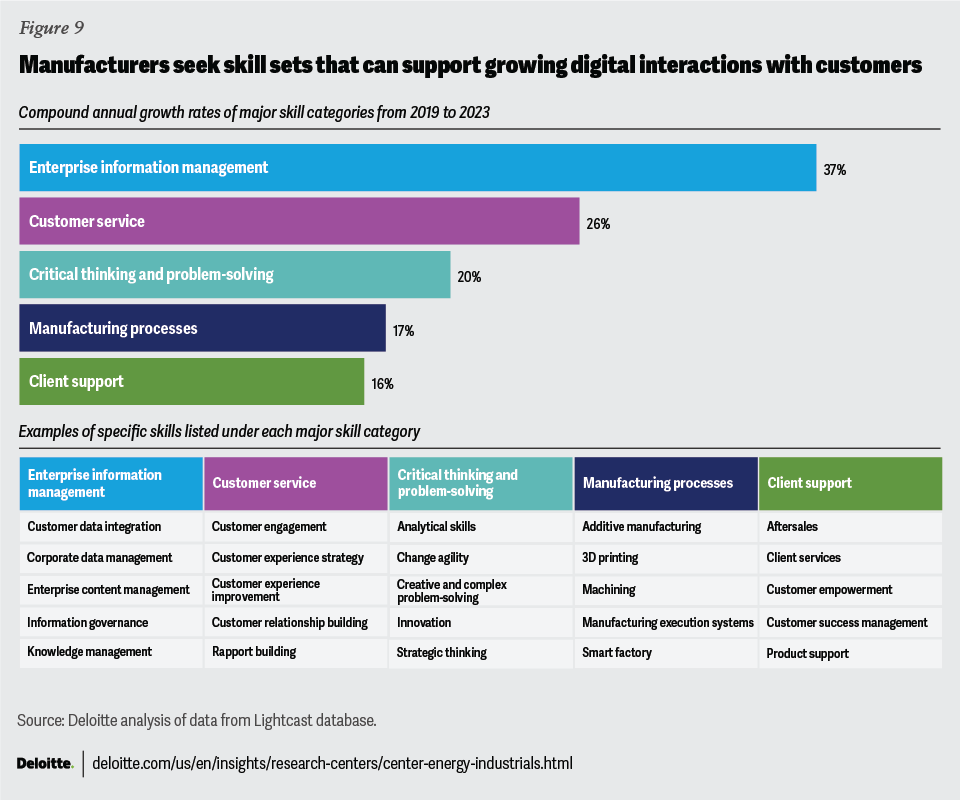
The transition to an enhanced DCX may be helped by having employees with a blend of technical knowledge, digital skills, and soft skills. According to a 2019 Deloitte study of 50 customer success leaders in the technology industry, companies that have already established customer success as a strategic priority have established teams with the right skill sets and face fewer challenges in talent acquisition compared to companies where it is not a strategic priority.50 An analysis of job postings in the manufacturing industry over the last five years, conducted by the Deloitte Center for Energy and Industrials, revealed that companies are not only prioritizing candidates with technical manufacturing knowledge: They increasingly seek a breadth of skills that may be necessary for delivering an enhanced DCX, including client service, customer support, critical thinking, and problem-solving (figure 9).
Multiskilled teams are also becoming more common in customer service because they can offer personalized customer approaches and help achieve faster resolution times.51 In addition, new approaches for existing roles, such as design engineering, may be needed. For example, with the rapid pace of advances in digital technologies, products should be designed such that the useful life of the software and technology matches the expected life of the physical asset.52
However, industrial manufacturing and construction companies face the challenge of bridging a gap between an experienced workforce, who often possesses deep institutional knowledge, and a younger workforce that is generally digitally adept. This intergenerational skills gap requires strategic training, mentorship, and knowledge transfer programs to balance varying levels of expertise. A 2023 Deloitte study of around 300 companies across various industries noted a high correlation between employee satisfaction and higher customer experience ratings,53 emphasizing the importance of workforce development and employee engagement in driving the success of DCX initiatives. According to Deloitte’s 2024 report on the manufacturing workforce, taking an ecosystem approach and focusing on the worker experience can help build a pipeline of workers with requisite skills to help companies advance their DCX goals.54
A path forward
As technology evolves and companies continue to advance on their digital transformation journeys, new opportunities to further enhance the digital customer experience are expected to arise. As one executive explained, “Customers will say to me: ‘I know where my pizza is at any moment in time after I order it. Why doesn't it work that way in our industry?’”55 It might not be standard practice in the industry today, but could it be in the future? Taking advantage of such opportunities can provide a competitive edge for industrial manufacturing and construction companies—in fact, it may serve as a key differentiating factor. Operational models should evolve to seize the opportunity at hand. Identifying targeted applications with the highest potential value and starting small can be important to overcome challenges such as siloed business units, interoperability of new and legacy systems, and shrinking capital budgets, especially when facing headwinds from economic uncertainty. However, thinking big about prioritizing a differentiated future DCX that permeates the organization—and making the investments to create it—may be what’s needed for industrial manufacturing and construction companies to lead in the future.
By
Lindsey Berckman
Ajay Chavali
Pete Robertson
Misha Nikulin
Kate Hardin
John Morehouse
The authors would like to thank Tarun Dronamraju and Anuradha Joshi for their key contributions to this report, including research, analysis, and writing.
Deloitte Advisory Board:
Akshay Seshadrinathan, Brian Barish, Brian Wolfe, Tom Aldred
The authors would like to acknowledge the support of Clayton Wilkerson for orchestrating resources related to the report; David Levin and Oguri Srinivasarao for their support on survey analysis; Kimberly Prauda and Neelu Rajput for driving the marketing strategy and related assets to bring the story to life; Alyssa Weir for her leadership in public relations; and Elizabeth Payes and Aparna Prusty from the Deloitte Insights team who supported the report’s publication.
Cover image by: Rahul Bodiga
Visit the Deloitte Center for Energy & Industrials
Access more insights for the aerospace and defense, chemicals and specialty materials, engineering and construction, industrial manufacturing, mining and metals, oil and gas, power and utilities, and renewable energy sectors.