
MEXICO ECONOMIC OUTLOOK, JULY 2026
Mexico’s exports support growth while USMCA uncertainty weighs on investment sentiment
Mexico is poised to see moderate economic growth due to weak demand, investment hesitation, and high public debt
In 2026, the Mexican economy is expected to experience slow growth, marked by relatively weak domestic demand and persistently low investment levels. During the first quarter, consumer spending posted limited gains, alongside consumer confidence. A contraction in private investment, amid uncertainty surrounding the new annual review mechanism of the United States–Mexico–Canada Agreement (USMCA), can potentially contribute to the slower pace of growth. While this could be partly offset by a potential economic boost from the FIFA World Cup 2026, our estimates suggest only a modest impact.
In contrast, the external sector has reinforced its role as a key growth driver, supported by strong export performance, particularly to the United States, and Mexico’s increasing integration into global value chains. In this context, gross domestic product growth is projected to rise about 1.2% in 2026, which is slightly above the 0.7% recorded in 2025 but still below the average 3% growth recorded in the past five years.
Heightened uncertainty regarding the USMCA review may be driving the postponement of many investment projects. Hence, the key challenge for Mexico will be to encourage productive investment levels and strengthen business and investor confidence.
Private consumer spending shows limited momentum amid weakening consumer confidence
During the first quarter of 2026, Mexico’s economy posted an annual growth rate of 0.4%, reflecting relatively subdued consumer spending and private investment.1 While private consumer spending, the main driver of economic activity, grew by 2.4%,2 its dynamism was largely supported by imported goods (up 12.4% year over year) and retail trade performance (up 3.5% year over year) (figure 1).3 In contrast, spending on domestically produced goods and services declined by 0.3%,4 pointing to continued softness in domestic demand.
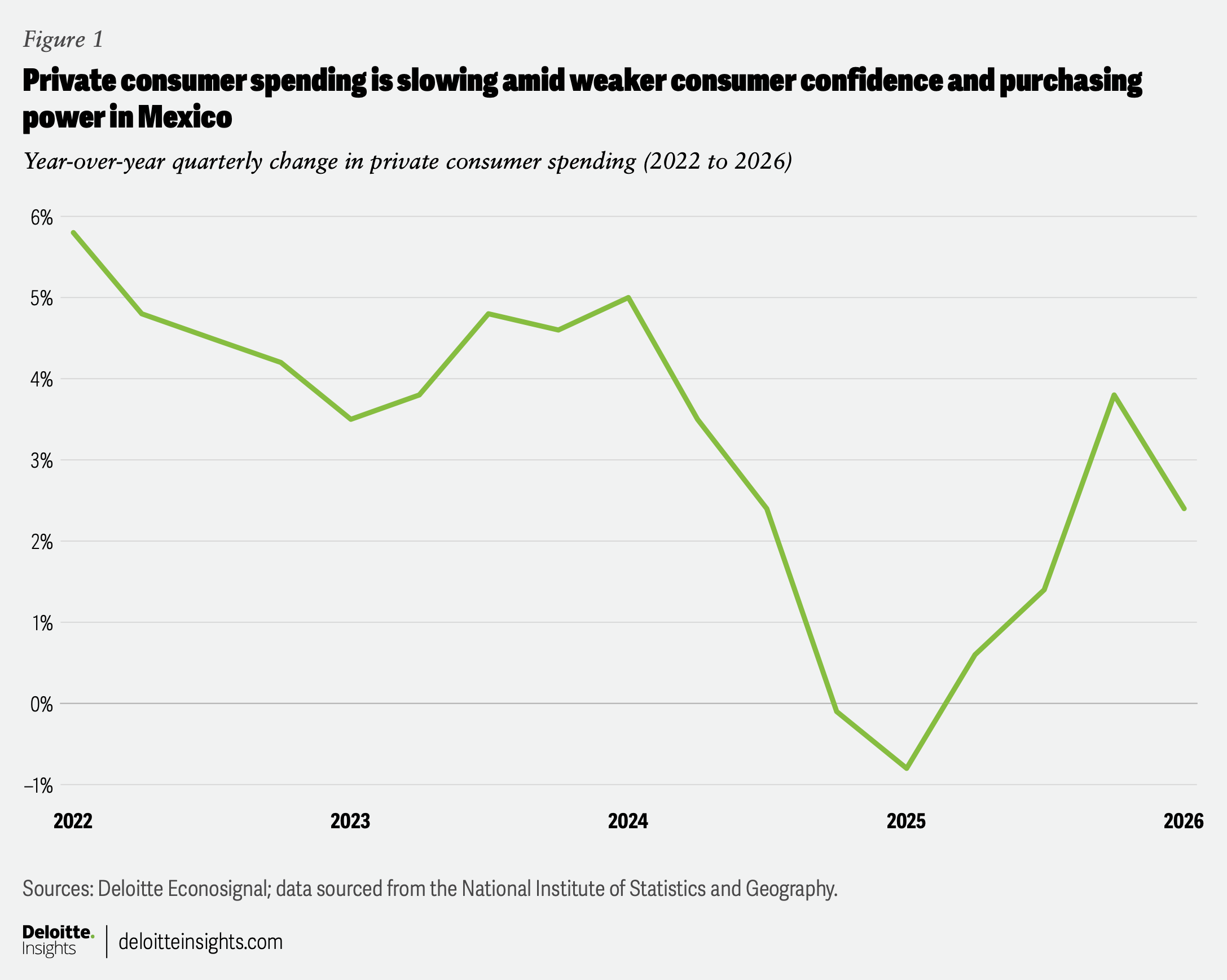
Meanwhile, consumer confidence declined by 4.9% year over year between January and May,5 indicating prolonged weakness and suggesting a more cautious outlook among Mexican households regarding current economic conditions and future prospects.
Remittance inflows denominated in US dollars recovered during the first months of 2026, following a 3.9% annual decline in 2025.6 But the appreciation of the Mexican peso against the US dollar reduced consumers’ purchasing power in local currency by 11.5% in the first four months of 2026, compared with the same period in 2025.7
Nonetheless, several factors continue to support private consumer spending. Consumer credit grew by 11.7% year over year during the first four months of 2026.8 Moreover, the expected positive spillover effects of the 2026 FIFA World Cup would benefit some sectors like accommodation, transportation, food and beverage services, retail, and entertainment.
According to a Deloitte piece titled “What happens after the World Cup?,” the event is estimated to have generated a cumulative economic impact of approximately US$3.58 billion in Mexico between 2024 and 2026, of which, around US$2.54 billion corresponds to value added in 2026 (figure 2).
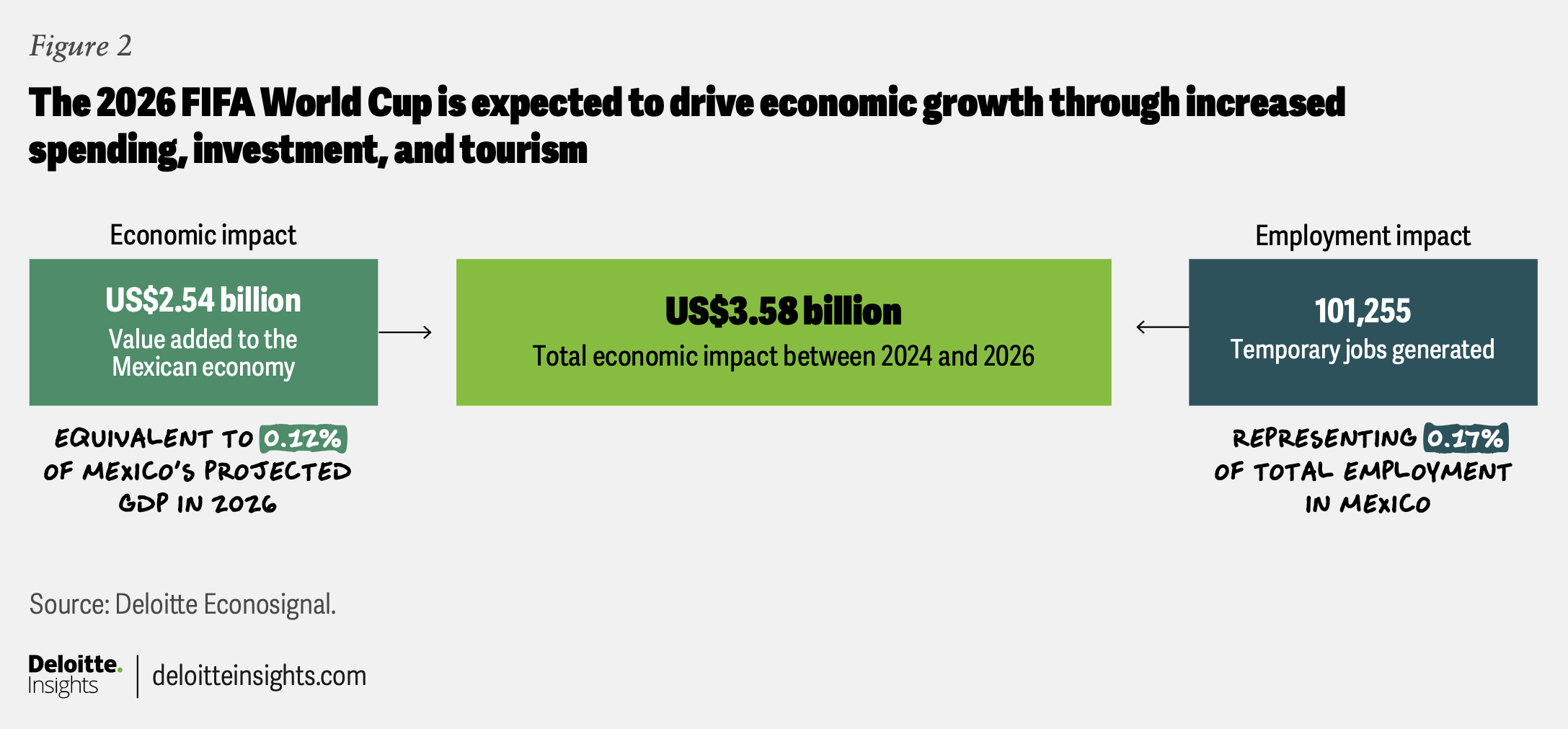
The event is also estimated to have created 101,255 temporary jobs, with the impact being concentrated in tourism, trade, transportation, entertainment, and services, contributing roughly 0.12 percentage points to GDP growth in 2026.
It is worth noting that, between January and May 2026, 201,600 new jobs were created, of which, around 30% were associated with the construction sector, partly driven by infrastructure improvements related to the FIFA World Cup.
Investment: The main constraint on growth
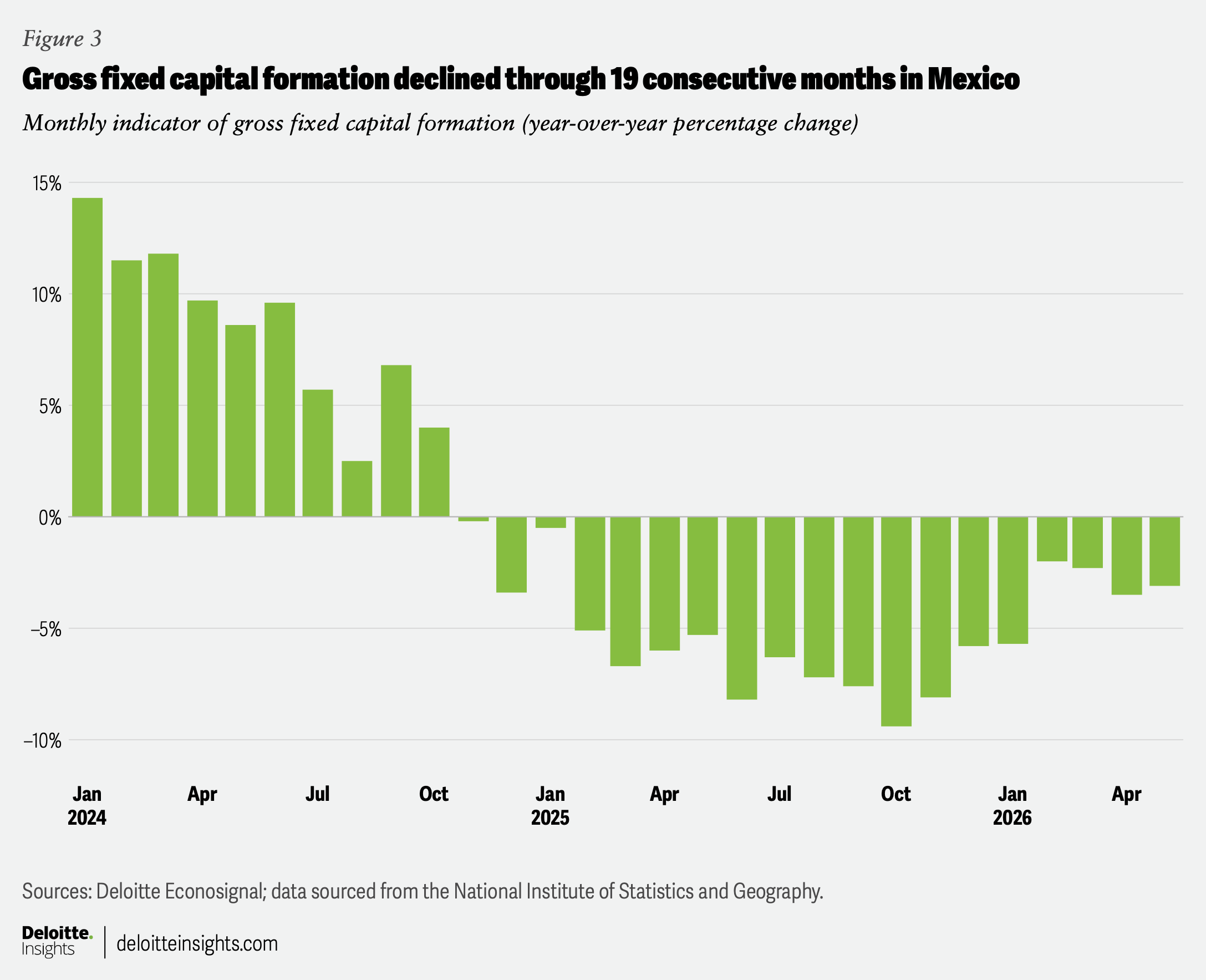
Since 2025, investment has remained the weakest component of aggregate demand in Mexico. In particular, gross fixed capital formation declined by 3% year over year in the first quarter of 2026, following a contraction of nearly 7% in 2025.9 This performance was accompanied by a 4.5% decline in private investment during the quarter,10 amid uncertainty surrounding the USMCA review and a broader environment of rising global protectionism.
These factors may have contributed to a more cautious investment environment, particularly in strategic sectors such as manufacturing. However, the pace of contraction in investments appears to be moderating now, suggesting a gradual deceleration in the decline (figure 3).
While the Banco de México did reduce the policy rate from 6.75% to 6.5% over the past year to stimulate investment, the effects are expected to materialize later in the second quarter of this year. For now, this adjustment may have slightly reduced the attractiveness of government bonds for foreign investors. However, equity-market inflows remain on an upward trend, suggesting sustained investor confidence in Mexico’s long-term growth potential.
Foreign direct investment reached US$40.8 billion in 2025, representing a 7.6% increase compared to 2024.11 However, this positive trend reversed in 2026, with foreign direct investment declining by 3.4% in the first quarter compared with the same period in the previous year.12 At the same time, capital outflows by Mexican investors doubled relative to the first quarter of 2025, reflecting a more cautious investment stance.
External sector: Export strength despite changing trade policy
Amid weak domestic demand and subdued manufacturing activity, the external sector has become an important source of economic dynamism for Mexico. Notably, 91% of the value of all exported goods and services13 came from manufactured goods. Exports grew by 7.2% in 2025 and accelerated significantly to 21% in the first four months of 2026,14 partially offsetting the slowdown in other components of economic activity (figure 4).
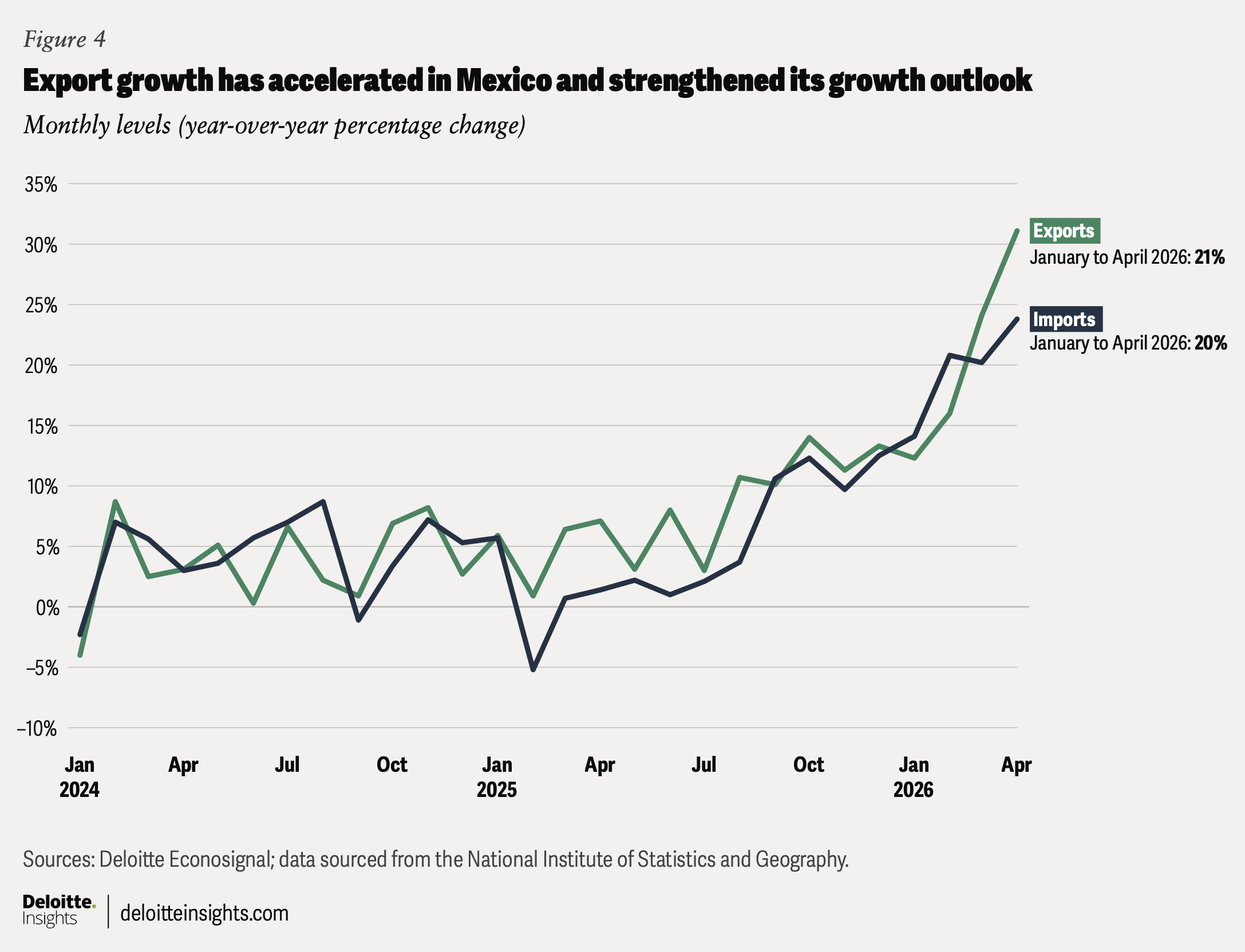
The strength in exports becomes even more relevant when contrasted with industrial performance. While manufacturing GDP stagnated in 2025 and contracted by 1.9% in the first quarter of 2026, exports—especially to the United States, which accounts for 83% of Mexico’s total exports—remained strong, growing 7.7% in 2025 and 21% between January and April 2026.15
Within exports, high value–added goods, such as computers, electrical and electronic equipment, industrial machinery, telecommunications equipment, and medical devices, stand out, reflecting the greater share of tech-intensive goods. This partly aligns with the trend of positive GDP contributions from these industries, particularly computer, communications, and electronic equipment manufacturing (up 2.7% annually in 2025) and electrical equipment and power-generation manufacturing (up 0.8% annually in 2025).
Together, these results suggest that, despite a challenging domestic production environment, Mexico continues to strengthen its position in more complex manufacturing segments. However, this also highlights the continued importance of imports as key inputs to sustain export capacity.16
At the same time, imports increased by 4.7% in 2025 and by 20% in the first four months of 2026,17 driven primarily by inputs from Asian economies like China, Indonesia, Malaysia, Taiwan, Thailand, and Singapore.
This performance reflects the intensification of Mexico’s role in global production chains, through the import of inputs and intermediate goods from Asia for subsequent transformation, assembly, and reexports to the US market. This trend has coincided with shifts in global trade patterns, including changes in US trade policy. In this context, Mexican imports from China, Taiwan, and ASEAN member countries have shown significantly high growth rates since 2025.18
The overall impact of changes in US trade policy on Mexican trade appears to have been relatively limited, as around 84% of Mexican exports to the United States remain tariff-free, with an effective tariff rate equivalent to 3% of the total value of exports, which is much lower than the corresponding tariff rate for China (figure 5).
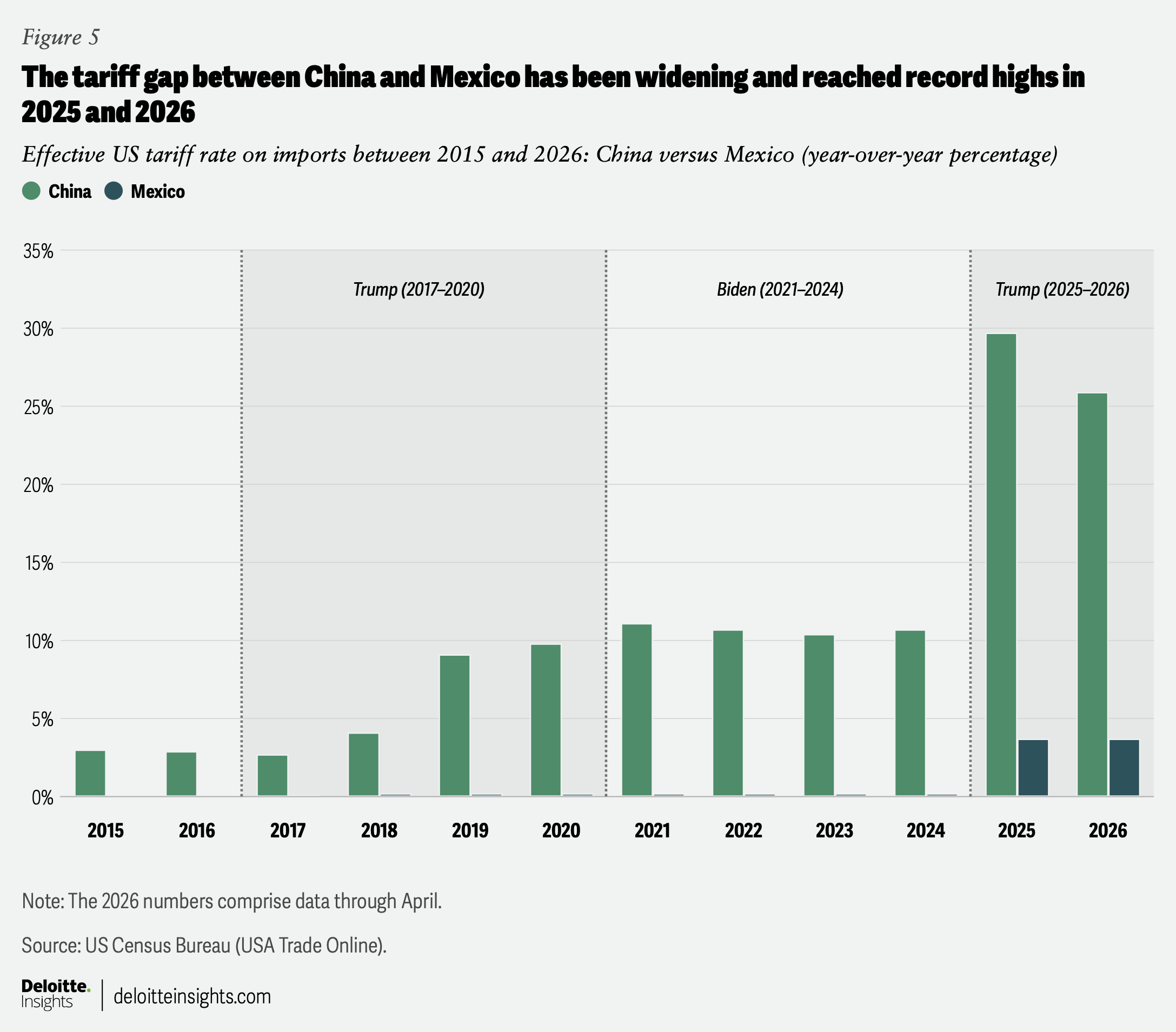
It should be noted that the effects of US tariff hikes on Mexican exports appears to be concentrated in specific sectors such as passenger and cargo vehicles, auto parts, engines, industrial machinery, and steel.
Likewise, Mexico’s strong export performance has supported the generation of trade surpluses, which, during the first four months of 2026, reached approximately US$3.4 billion.19 This performance has contributed to the country maintaining its position as the main trading partner of the United States. Looking ahead, the implementation of the new annual USMCA review mechanism will likely be one of the key factors shaping the evolution of investment flows and foreign trade across North America.
USMCA review: Regulatory pressures and constrained investment
Since 2025, the USMCA review has coincided with a shift in US trade policy toward greater emphasis on regulatory compliance, traceability, and labor standards, as well as a tariff environment that is expected to remain elevated in the near term.
By rejecting an early renewal of the agreement and keeping it in force until 2036, the United States has activated a framework for recurring annual assessments regarding the treaty’s future.20 As a result, some firms may adopt a more cautious approach toward investment decisions and project execution, particularly in the manufacturing sector, where long-term planning often depends heavily on stable and predictable trade rules.
This shift, reinforced by instruments such as Section 301, suggests that the new annual review mechanism could go beyond tariff adjustments to include greater emphasis on nontariff requirements and regulatory considerations in key sectors such as health, energy, agriculture, and intellectual property.
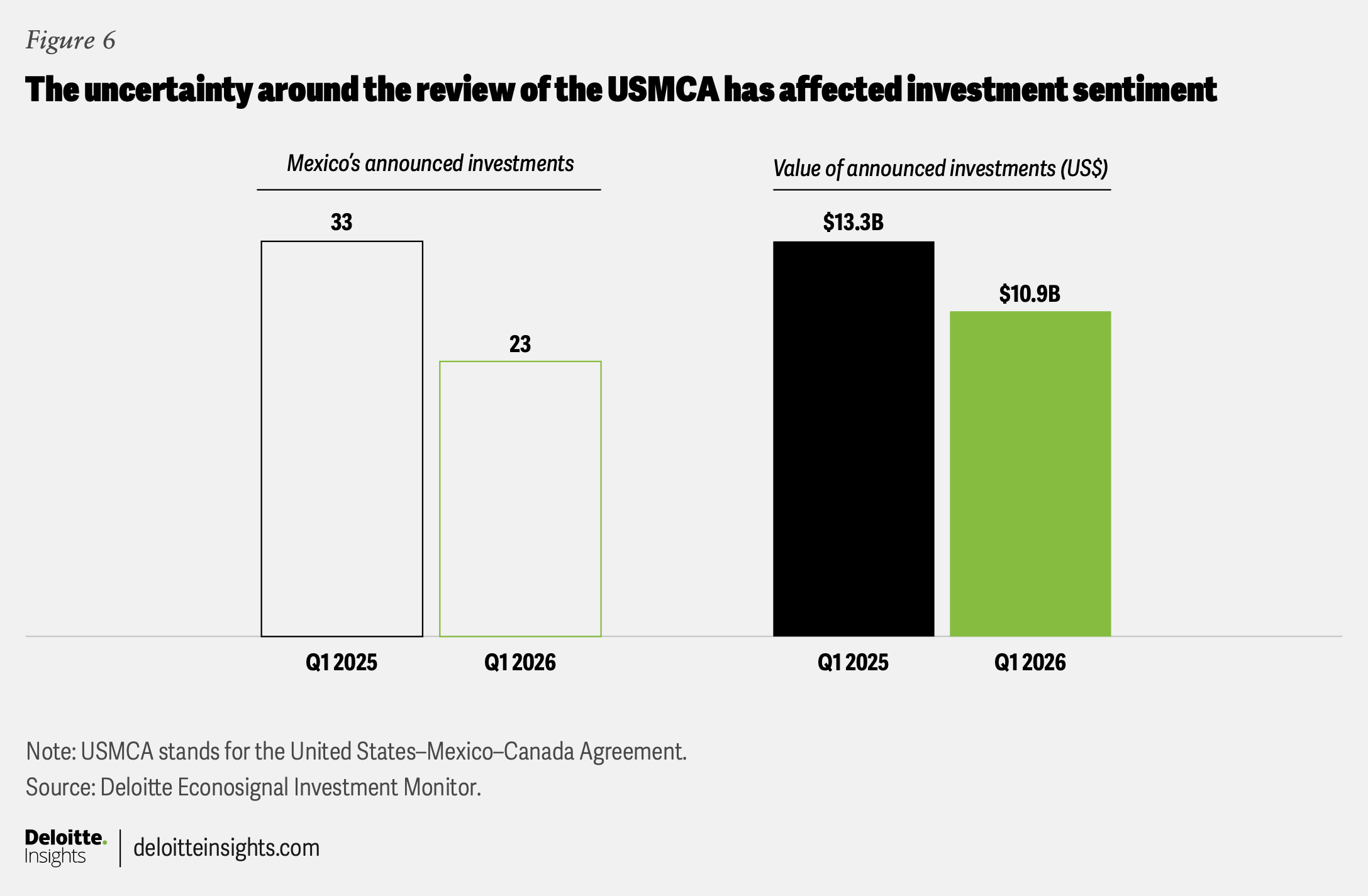
This uncertainty is likely reflected in investment behavior and the materialization of projects (figure 6). During the first quarter of 2026, our investment announcements monitor recorded 23 announcements worth a total of US$10.9 billion in the first quarter—17.7% less than in 2025. Likewise, between 2023 and March 2026, investments worth more than US$261 billion were announced,21 of which, only 12.7% have been executed, highlighting the significant gap between investment expectations and realization. Moreover, 51% of specialists surveyed by the Banco de México in June suggested that it was still not a good time to invest.22
In this environment, the activation of the annual review mechanism of the USMCA is expected to add a new layer of uncertainty for investors. In response, Mexico has sought to strengthen its trade-diversification strategy through the signing of the Modernized Global Agreement and the Interim Trade Agreement with the European Union. These agreements expand the bilateral relationship into areas such as digital trade, investment, and strategic value chains, while also providing for the liberalization of around 94% of trade between Mexico and Europe.23
This shift aims to position Europe as an alternative trade partner in the face of trade tensions with the United States and to mitigate the risks associated with dependence on the US market and the uncertainty linked to the USMCA review, which could persist well into 2027.
Fiscal consolidation with warning signals: Rising debt and pressure on credit rating
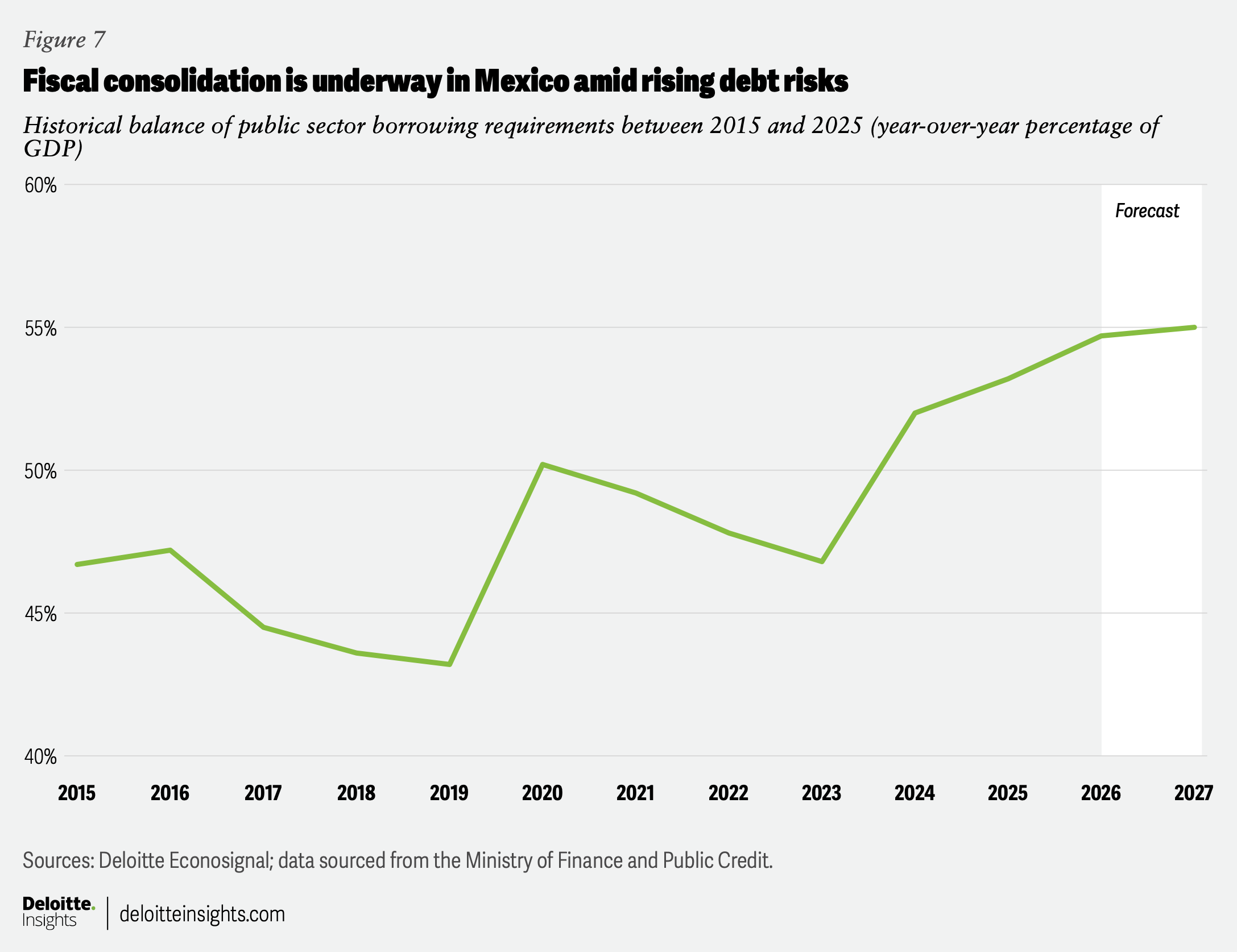
Since 2025, fiscal policy has aimed to preserve economic growth while advancing the reduction of the public deficit, after the public deficit-to-GDP ratio reached 5.8% in 2024—its highest level in the past 20 years.24 This process is expected to be supported, in part, by improvements in tax collection efficiency. As a result, the public sector’s borrowing requirement (a broader measure of the public deficit), which had decreased to 4.8% of GDP in 2025,25 could reach 4.1% in 2026.
However, risks associated with the upward trajectory of public debt persist, which rose from 46.7% of GDP in 2015 to 53.2% in 2025 (figure 7).26 This increase, combined with limited economic growth, may reduce fiscal flexibility. In this context, credit-rating agencies have begun to reflect a change in the country’s credit profile, with Fitch Ratings placing Mexico at the lower bound of medium-grade quality in May, while Standard & Poor’s revised its outlook to “negative,” signaling a higher risk of a downgrade for Mexico.27 If this trend continues, Mexico could approach speculative-grade risk levels, which would increase the country’s risk premium and exert upward pressure on interest rates, affecting economic growth.
However, several structural elements could mitigate these risks and serve as anchors of financial stability, such as the concentration of government debt in pesos and robust international reserves, which can help strengthen investor confidence and contain financial risks. The composition of debt stands out, with a significant portion being denominated in local currency (84%),28 which substantially reduces exposure to exchange-rate shocks.
In addition, approximately 72% of domestic debt carries a fixed rate,29 which helps reduce the sensitivity of financial costs to increases in interest rates. Furthermore, the growing level of foreign reserves—exceeding US$257 billion as of May 202630—strengthens market confidence. Together, these factors have made it possible to maintain the financial cost of debt at around 3% of GDP, comparable to the average set by the Organisation for Economic Co-operation and Development, suggesting that Mexico still retains solid fundamentals that will likely help contain fiscal risks in the short and medium term.
Going forward, maintaining a sustainable debt trajectory will be an important consideration for fiscal policy. While Mexico’s debt-to-GDP ratio remains below levels observed in some emerging economies, including Colombia (60%) and Brazil (80%), continued increases in public debt could place greater pressure on fiscal flexibility over time.31 These higher debt levels are typically associated with higher risk premiums and, consequently, significantly higher financing costs—with monetary policy interest rates of around 11.3% in Colombia and 14.4% in Brazil, compared with Mexico’s 6.5%. Therefore, preserving a sustainable debt trajectory is key to maintaining favorable financing conditions and macroeconomic stability.
Mexico’s growth outlook
The Mexican economy faces a period of lower growth, subdued investment, and soft domestic demand amid uncertainty surrounding the USMCA annual review mechanism. While the external sector has supported economic activity, driven by export dynamism and integration into global value chains, this engine has not fully offset the contraction in productive investment or generated growth closer to its potential. Defining a more stable regulatory framework for the USMCA is expected to be crucial in restoring business confidence and reactivating investment projects, particularly in manufacturing.
Meanwhile, the upward trajectory of public debt is likely to put additional pressure on macroeconomic stability. Although relevant buffers remain, it is essential to advance in an orderly process of fiscal consolidation that preserves the sustainability of public finances. The challenge lies in balancing trade certainty and fiscal discipline in a way that supports financing conditions and lays the groundwork for stronger and more sustained growth for Mexico.
BY
Daniel Zaga
Erika Peralta Baez
Editorial (including production and copyediting): Arpan Saha, Preetha Devan, and Anu Augustine
Design: Harry Wedel
Cover image by: Rahul Bodiga
Knowledge services: Rohan Singh
Visit the Deloitte Global Economics Research Center
Access more insights for the consumer spending, housing, business investment, globalization & international trade, fiscal & monetary policy, sustainability, equity, & climate, labor markets and prices & inflation sectors.