


Certificate in Green and Sustainable Finance
Ongoing Enrolment – Get Your Professional Certificate Today
The Certificate in Green and Sustainable Finance (GSF) is Deloitte’s flagship capability building programme providing a deep dive into green and sustainable finance for banking professionals and participants working or aspiring to work in the broader finance, investment and insurance sector.
The programme equips participants with essential knowledge of the principles and concepts of sustainable finance, an advanced understanding of the latest developments in the field, and an in-depth exploration of the tools, products and risk management needed for advanced knowledge and specialization in climate and sustainability risk management.
The course focuses on the demands facing future sustainable finance leaders and delivers a unique in-person experience that equips participants with the knowledge, resources and networks required to undertake pivotal future work that will drive green finance and sustainable investment forward.
Our green commitment in Hong Kong
Deloitte is a leading provider of sustainability services with unparalleled access to internal resources and external leaders in the field. We follow the latest regulatory and standard setting trends closely and provide leading insights on green and sustainability topics.
Deloitte is committed to near-term (2030) greenhouse gas (GHG) reduction goals validated by the Science Based Targets initiative (SBTi) as 1.5°C-aligned, science-based targets, and has set long-term emissions reduction targets based on the SBTi’s Net-Zero Standard. We are working toward achieving their goals, recognizing the increasing urgency of the climate crisis.
Hong Kong has the vision to become a premier centre for green and sustainable finance that serves the green transformation in mainland China, Asia, and the world.
The global market is seeking solutions to sustainability and climate challenges. Green and sustainable finance professionals are playing a critical role in driving an equitable transition to a more livable world. Professionals in all parts of the finance sector need to expand their knowledge of green and sustainable finance to meet this shared challenge.
Have embraced the green transformation, we take this one step further by sharing our expertise and offering Deloitte’s flagship green and sustainable finance capability building programme in Hong Kong.
Our Programme Partners
Our programme consists of a two-level course serving participants' different career stages, backgrounds and needs:
Core Professional
✓ Equips participants with GSF knowledge and skills they need to initiate and grow a career as a GSF professional from a minimal starting point to achieving a broad understanding of the GSF landscape.
✓ Offers finance sector professionals a refresher GSF course with an up-to-date syllabus bringing participants the latest initiatives and best practices.
Advanced Professional
✓ Gives our core professionals a deeper understanding of GSF to build focused skills and enable participants to handle the more complex practical aspects of GSF work alongside GSF capability-building.
Participants will engage critically with systems and theories in sustainable finance and investment including: green and sustainable financial products; reporting and disclosures for financial institutions and the changing regulatory and policy landscape in our region; green standards and taxonomies and net-zero strategies for banks; climate and sustainability risk management and financed emissions accounting. These topics will be covered at the core professional and advanced professional levels with various levels of detail.
Certificate in Green and Sustainable Finance |
||
Level |
Duration of on-site lecture and workshop |
Suggested coached self-study hour(s) [Note] |
Core Professional |
10 hours |
6 hours |
Advanced Professional |
16.5 hours |
14 hours |
Note: Coached self-study helps participants engage further with the course topics through pre-readings and additional case studies, offering the opportunity to engage directly with subject matter experts on the reading materials and raise questions or comments. Coached self-study does not contribute directly to any attendance or passing requirement but can deepen understanding of the issues covered in the course.
Learning outcomes and syllabus
As a participant you will:
- Develop a broad understanding of the ESG, sustainability and climate change issues of critical importance to the financial sector
- Gain theoretical and foundational knowledge and practical tools to build your green finance career
- Understand the current green and sustainable finance landscape from a local, regional and global perspective
- Increase knowledge of what is driving mounting demand for green and sustainable finance products and instruments
- Identify carbon market compliance, pricing mechanisms, and policy considerations
- Understand the business case for climate action
- Recognize and apply appropriate green and sustainable finance policies, principles and standards to daily banking operations
- Understand approaches to creating and managing portfolios with credible ESG credentials
- Manage GSF related activities that influence investment decisions
- Identify sustainability risks and formulate effective mitigation and risk management strategies.
Course Syllabus – Core Professional
Core Professional Module 1 – Introduction to Sustainability and GSF
Through Module 1, participants will understand the fundamental drivers of green and sustainable finance and the range of solutions and responses from the sector. We will define and summarize fundamental sustainability concepts, such as ESG and climate change, and explore the latest trends and developments in sustainability action for the financial services industry (FSI) sector. This module also discusses co-operation between sustainable finance stakeholders.
Key Concepts and Principles
- Climate change and ESG issues that are driving the growth of green and sustainable finance.
Latest Trends and Development in Sustainability
- Key initiatives, standards, metrics and policy frameworks related to climate and sustainability from international to local level.
- Importance of co-operation between sustainable finance players
- Climate Challenge for China's Development
Core Professional Module 2 - Sustainability in the FSI Sector
Module 2 introduces participants to the latest GSF developments in different markets – China, APAC, and other regions – to identify key strategies and challenges and regulatory developments in ESG disclosures and reporting requirements. Module 2 also broadens the horizon to the latest developments in financing nature-based solutions. This module discusses the latest developments, key drivers, challenges and success factors – bringing these to life with industry case studies.
Nature-based Solutions and Blue Finance
- Nature-based Solutions and Blue Finance
- Mobilizing finance for biodiversity and ecosystem protection
ESG Disclosure and Reporting Requirements (Elementary)
- A brief introduction to -
- Sustainability reporting (e.g., International Financial Reporting Standards (IFRS) S1 General Requirements for Disclosure of Sustainability-related Financial Information, Sustainability Accounting Standards Board (SASB) standards, Global Reporting Initiative (GRI) standards, Value Reporting Foundation (VRF) standards)
- Climate-related disclosures (Carbon Disclosure Project (CDP), Climate Disclosure Standards Board (CDSB), IFRS S2 Climate-related Disclosures, TCFD)
Core Professional Module 3 – GSF Applications and Use-Cases
Module 3 provides an understanding of the fundamentals and applications of GSF products and instruments, sustainable investing, and opportunities and challenges in carbon markets.
GSF Markets and Trends in HK, the GBA, and Around the World
- Introduction to GSF products, markets and latest industry trends. Topics will include growth of GSF markets, history of GSF developments, the Common Ground Taxonomy etc.
- The impact of sustainability developments on the banking and finance sectors and implications for business practices that reduce risks and embrace opportunities.
ESG Updates by HK Regulators* Consultation report, Hong Kong Taxonomy and Supplemental Guidance issued by Hong Kong Monetary Authority |
Green and Sustainable Products and Instruments
- Key GSF products and instruments such as green, social and sustainable bonds and loans, sustainability-linked finance, transition bonds and loans.
Green and Sustainable Investing
- Fundamental sustainable investment concepts, approaches and applications. Screening, ESG integration, thematic investing, impact investing, engagement and stewardship.
Carbon Markets
- International and regional carbon markets. The development of voluntary and mandatory carbon markets including emissions trading systems.
Course Syllabus – Advanced Professional
Advanced Professional Module 1: Sustainability Risk Management
Module 1 discusses and covers the probability and impact of a range of sustainability risks (including climate-related risks) and how the financial sector identifies, manages, and discloses those risks.
Climate and Sustainability Risk Management
- Physical and transition climate-related risks and other sustainability risks related to environmental, social and governance issues.
- Impact of sustainability developments on the banking and finance sectors and implications for business practices that reduce risks and embrace opportunities.
- Impact of climate risk on the banking sector, and ways banks can identify, measure and manage climate risks in the banking industry; Introduction of data, technology tools, and analytics frameworks and metrics.
Climate Models and Scenario Analysis
- Fundamentals of climate stress testing and scenario analysis for finance sector companies. Skillsets for climate scenario analysis for banking practitioners.
Advanced Professional Module 2: Developing Sustainability Strategies for Banks
Module 2 explores how banks can build comprehensive, robust sustainability strategies. Participants will gain profound knowledge about the concept of sustainability strategy and policy for banks (with a focus on governance, targets, risk, and products), and the importance of monitoring, measuring, and reporting impacts, outcomes, and alignment / flows of finance.
Green and Sustainable Banking Fundamentals & Strategy
- GSF impact on the banking sector and the broader financial sector.
- Understand the GSF landscape, and methods available to incorporate GSF strategies into daily banking businesses.
Building a Robust Sustainability Strategy
- Development and implementation of a comprehensive sustainability strategy that embeds sustainability into banks’ plans, measures, operations, risk, capital management.
- Ways of streamlining the reporting framework, processes, and data to align with the strategic targets and goals.
ESG Updates by HK Regulators* Supervisory Policy Manual (SPM): GS-1 Climate Risk management" issued by HKMA on 30 December 2021 Guidelines for Banking Sector Climate Risk Stress Test" issued by HKMA on 21 April 2023 |
Advanced Professional Module 3: ESG/Sustainability Disclosure and Reporting Requirements
Module 3 provides knowledge of regulatory developments in ESG disclosures and reporting requirements. It also offers an in-depth analysis of carbon accounting, featuring hands-on case studies that include portfolio emissions—such as financed emissions and the Partnership for Carbon Accounting Financials (PCAF).
ESG compliance and regulation; common practices in preparing GSF-related disclosures
- Identify the common methodologies and standards used to disclose and report ESG performance such as materiality assessment, stakeholder engagement and data availability, quality and analysis.
Carbon Accounting Deep-dive (incl. financed emissions)
- Deep-dive on carbon accounting including PCAF and financed emissions
* Discussion content will change from time to time for latest ESG updates. The speakers will highlight key updates of the material and participants who are GSF practitioners are welcomed to read through the material and bring discussion with our speakers.
Speaker Profiles
|
Dr. Pascal Vuichard is an advisor with Deloitte in Hong Kong. He is assisting clients in driving sustainability projects spanning across different sectors including the public sector, energy, mobility, waste management, and the buildings sector. Pascal has led various projects focusing on the energy transition including strategic planning, policy development, and research initiatives. His recent focus is on building new business models with the aim to foster growth for sustainable technologies like renewable energies and electric mobility, including by way of public policy interventions to tackle climate change and capture opportunities on the path to a low-carbon economy. Pascal holds a PhD in Renewable Energy Management and Master’s Degrees in International Management and Accounting and Finance from the University of St. Gallen and the London School of Economics and serves as Adjunct Assistant Professor for Climate Solutions at the Hong Kong University of Science and Technology. Experience:
|

|
Jenny has more than 15 years of financial-industrial and advisory experience; she is a Certified Public Accountant (HKICPA), certified Financial Risk Manager (FRM) , and obtained the Sustainability and Climate Risk (SCR®) Certificate from the Global Association of Risk Professionals. She specialized in risk management and quantitative modeling in the banking sector in the fields of counterparty credit risk, recovery and resolution planning, treasury control framework quantitative risk modeling review, interest rate risk on banking books, liquidity risk, booking model, capital planning, interest rate IBOR benchmark reform, independent price verification and derivative valuation. She has implemented or reviewed climate risk management and stress testing for various banks in Hong Kong and is a frequent speaker on sustainability for many banks and forums. |

|
Prof. Stan Ho is the Academic Dean in Institute of Sustainability and Technology, the Adjunct Professor of the Faculty of Business and Economics in University of Hong Kong, the Adjunct Professor (EMBA) in City University of Hong Kong, the Adjunct Professor (School of Business) in Hong Kong Baptist University and the Professor of Practice (MIBF) in Lingnan University. Stan is an experienced investment banking and credit rating expert, with equity capital market, corporate finance and credit rating experience in Credit Suisse, Merrill Lynch, Bear Stearns, Fitch Ratings and Lianhe Ratings Global. Stan has been actively participating in the green finance area for over six years. Currently, he is the Green Finance Certification Scheme Technical Committee Member of Hong Kong Quality Assurance Agency (HKQAA). |
|
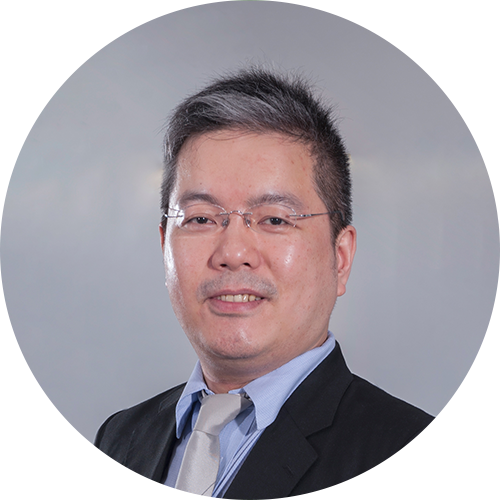
Mr. Ting brings over 8 years of experience across energy markets and sustainability, spanning work with governments and financial institutions. Previously based in London, he has recently relocated to Hong Kong, serving as Associate Director in the Capital Structure and Rating Advisory practice at Standard Chartered Bank. In this role, he guides global clients through their ESG journeys, from shaping ESG strategies to designing transition roadmaps and ESG ratings and disclosures, delivering incremental advisory services that resulted in several market-first financing solutions. Prior to that, Ting worked at S&P Global’s Sustainable1, focusing on product R&D and go-to-market strategies for offerings on carbon accounting, materiality, TCFD/TNFD reporting, targets setting, real asset PAs covering Fortune 500 down to Small-Mid Cap companies. And before that, Ting worked in the UK Government’s energy and climate change department. Ting holds an MSc in Environmental Policy & Regulation from LSE. |

Please note that our speakers will be rotating throughout the programme, ensuring that each cohort receives the same valuable content and expertise from a selection of sustainability specialists and industry professionals.
Award
Certificate of Achievement
Upon successful completion* of our programme, you will be awarded the Certificate in Green and Sustainable Finance - Core Professional/Advanced Professional (referred to as a "Certificate of Achievement") according to the level of courses pursued.
*refer to Completion Requirement section
Each participant who has successfully completed the Core Professional and Advanced Professional levels will be recognised by Deloitte Touche Tohmatsu as an accredited Green & Sustainable Finance (GSF) professional. We maintain a list of participants who have obtained the Certificate of Achievement, and support credential verification with participants' authorisation.
Continuing Professional Development (CPD) programmes
Members of the Hong Kong Institute of Certified Public Accountants (HKICPA) who successfully complete* our programmes are eligible for 25 CPD hours. For members of other professional bodies, please refer to your professional bodies' eligibility requirements for CPD credit.
*refer to the Completion Requirement section
Programme fees
|
Regular |
Regular – |
Full-time students* |
Full-time students – |
Certificate in Green and Sustainable Finance (Core Professional + Advanced Professional Level) in bundle price** |
HK$13,000 |
Up to HK$10,000*** |
HK$10,000 |
Up to HK$10,000*** |
Core Professional Level |
HK$5,600 |
Up to HK$4,480*** |
HK$3,500 |
Up to HK$3,500*** |
Advanced Professional Level |
HK$10,400 |
Up to HK$8,320*** |
HK$8,500 |
Up to HK$8,500*** |
* Full-time student refers to a student studying a full-time course offered by a recognised educational institution as of the date of application.
** Members from the Deloitte Alumni Network and Deloitte INED Club enjoy an exclusively HK$2,000 discount by providing their registered email address in the application form if they join the bundle courses.
***Reimbursement amount is dependent on the actual amount incurred by the programme participant and the applicable percentage of reimbursement based on that participant’s applicant category.
^ Need help with the schedule? Please get in touch with us at enquiry.gsf@deloitte.com.hk for assistance. Application will be closed seven days before programme start date. Grab your chance!
Timetable in 2025
Date |
Time* and delivery mode |
1 Nov 2025 (Sat) |
2:00PM – 6:00PM (Live Zoom) |
8 Nov 2025 (Sat) |
2:00PM – 6:00PM (Live Zoom) |
15 Nov 2025 (Sat) |
2:00PM – 6:00PM (Live Zoom) |
29 Nov 2025 (Sat) |
2:00PM – 5:30PM (Live Zoom) |
6 Dec 2025 (Sat) |
2:00PM – 5:30PM (Live Zoom) |
13 Dec 2025 (Sat) |
2:00PM – 3:00PM (Live Zoom) |
*Participants will complete 16.5 hours of learning throughout our Programme.
Study from anywhere
Study from anywhere via our online learning platform—only an internet connection is required. Our high-quality recorded lectures, interactive course materials, and formative assessments, enabling you to engage meaningfully with our speakers and other participants. Our programme offers scheduling flexibility: complete the certificate in as little as three months and progress at a pace that accommodates professional and personal commitments. You will gain a practical, career relevant expertise in green and sustainable finance, expand your professional network across a global cohort, and earn a recognised certificate from a practitioner‑led programme.
Reimbursement
Eligible applicants can apply for reimbursement of fees upon successful completion of Eligible Programmes, subject to a ceiling of HK$10,000 (conditions apply). Refer to the scheme website for details.
This programme is one of the Eligible Programmes under the Pilot Green and Sustainable Finance Capacity Building Support Scheme, (https://greentalent.org.hk/).
The Scheme provides training subsidies to Hong Kong residents who are market practitioners and prospective practitioners of green and sustainable finance, namely students and graduates in relevant disciplines. After completing Eligible Programmes, applicants can apply for a subsidy of up to 80% of the relevant fees (full-time student applicants can apply for a subsidy of up to 100% of the relevant fees), subject to a ceiling of HK$10,000.
The reimbursement application should be submitted via the application portal of the Scheme (https://www.greentalent.org.hk/auth/login) within 3 months from the date of completion of the Eligible Programme.
Programme Name |
Programme Identification Code |
Effective date under the Scheme* |
Certificate in Green and Sustainable Finance - |
GTP-357227 |
2023/06/07 |
Certificate in Green and Sustainable Finance - |
GTP-674227 |
2023/06/07 |
*The Pilot Green and Sustainable Finance Capacity Building Support Scheme only accepts reimbursement applications in relation to an Eligible Programme with an enrolment date that is on or after the effective date of such Programme.
As part of our online learning approach, we offer live instructor-led sessions conducted through Zoom. Prior to the start of each lesson, we will send the Zoom link to your registered email address for seamless access and participation.
Stay tuned for our upcoming announcement on the new cohorts scheduled in 2025!
Climate Fresk Workshop
Supported By |
||
|
|
What is Climate Fresk?
In just 2.5 hours, the collaborative Climate Fresk workshop will teach you the fundamental science behind climate change and empower you to take action.
Can't wait to become a climate scientist?
Every applicant successfully enrolled in the Core Professional level of our programmes will join this workshop at the beginning of their GSF learning journey.
Grab a chance to meet our practitioners and your fellows!
Programme Highlight
Opens in new window
Entry requirements
Our programme will be delivered mainly in English, supplemented occasionally with Cantonese or Mandarin. Learning materials are in English. We encourage participants to attain a level of English proficiency equivalent to the following qualifications:
- an overall band of 6.0 or above with no subtests lower than 5.5 in IELTS; or
- a score of 550 or above in the paper-based TOEFL, a score of 213 or above in the computer-based TOEFL, or a core of 80 or above in the internet-based TOEFL; or
- HKDSE Examination English Language Level 3 or above; or
- HKALE Use of English at Grade E or above.
Core Professional
There is no entry requirement for this course.
Advanced Professional
We offer special arrangements for experienced senior GSF practitioners who want to participate solely in the advanced course on GSF and learn about market updates. Please email enquiry.gsf@deloitte.com.hk separately for more details.
Completion requirements
